Edison and Edf have unveiled a program worth tens of billions of euros to build Europe’s first ten small modular nuclear reactors, with construction starting in 2030 and the goal of switching on the first Italian unit by 2035.
The announcement comes just days before the Italian Senate’s final vote on the enabling law that reopens the country to nuclear power, expected on Wednesday, September 23. The plan closely concerns San Marino as well, since the Republic imports nearly all of its electricity and pays a price tied to Italy’s wholesale market.
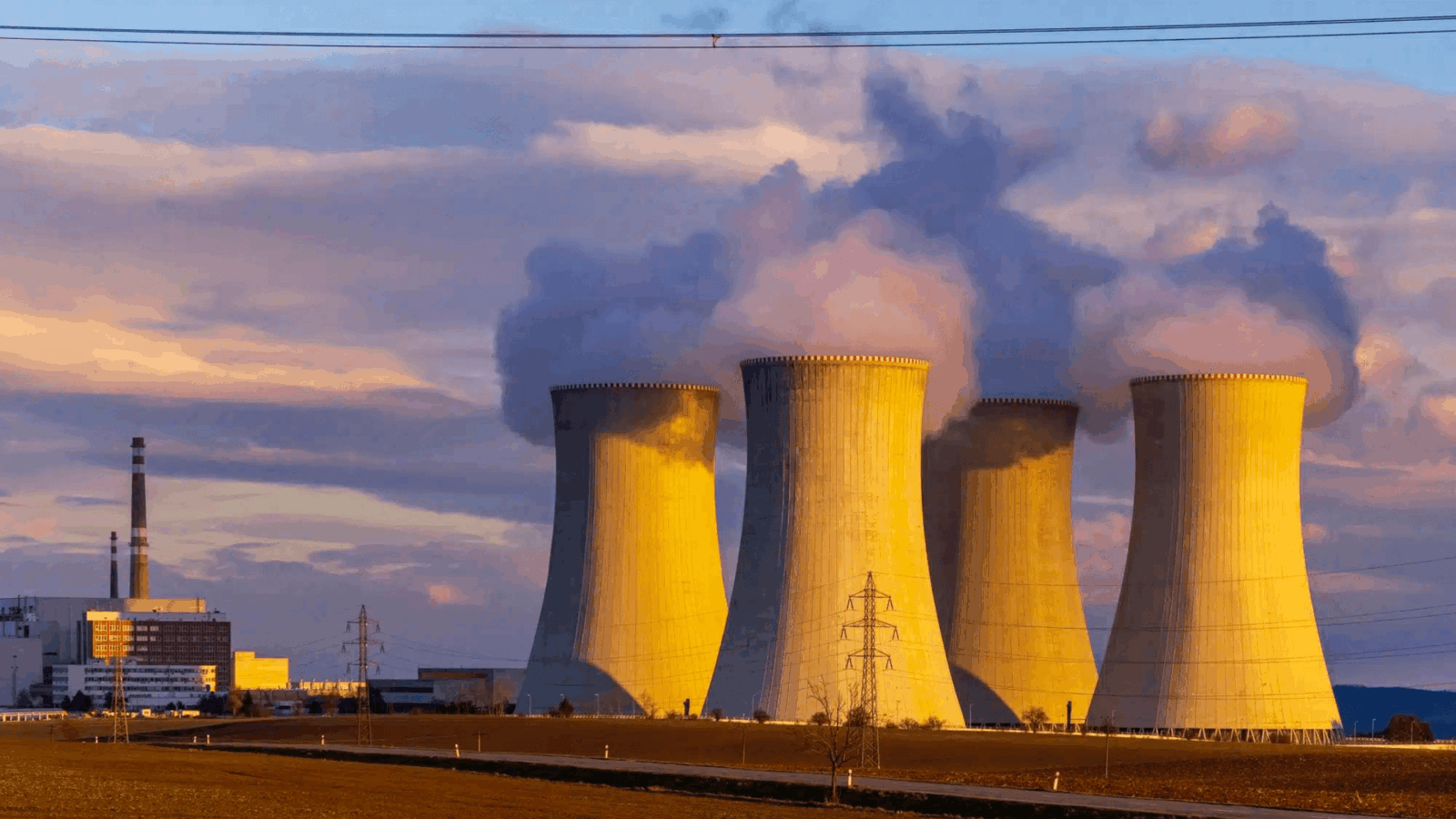
“Mini,” to be honest, is something of an understatement. The reactor is called Nuward, after the Edf subsidiary developing it, and each unit has an output of 400 electric megawatts — greater than three of the four nuclear plants Italy has ever operated. According to Edison, a single plant could meet the needs of more than a million households. On a Titano scale, it would generate in one year more than ten times the electricity consumed by the entire Republic.
It is an advanced third-generation pressurized water reactor capable of supplying both electricity and heat to industrial districts, ports and data centers. It will also be able to run on Mox fuel, made from recycled spent fuel — meaning less uranium to buy, less waste to store, and waste that is less hazardous.
The first series of reactors will, for now, be built in France, Italy, Poland, Belgium and Finland.
The first construction site is under evaluation across the Alps, and Italy will be able to draw on experience from other countries’ reactors before building its own. Edf brings to the table the 66 reactors it has designed, built and operates worldwide. Edison, which is controlled by the French group, is positioning itself as investor, operator and consortium coordinator for the Italian plants.
The most interesting part of the plan, however, is not the reactor itself: it’s the supply chain.
The project involves Saipem, Webuild, Walter Tosto, Atb Riva Calzoni, Simic, Tectubi Raccordi and Aipe, all engaged from the design stage of modules and components. According to The European House – Ambrosetti, around twenty plants in Italy by 2050 could represent 46 billion euros in potential market value and, factoring in related industries, 117,000 jobs. The country that shut down nuclear power through a referendum in 1987, and turned its back on it again in 2011, never actually stopped making reactor components — it simply built them for everyone else.
Then there’s the price. The expected cost of the energy produced is around 100 euros per megawatt-hour. That’s not cut-rate electricity, but it is programmable and decoupled from gas prices. Italy’s wholesale price, by contrast, averaged nearly 116 euros in 2025 and remains, according to the national energy market operator itself, strongly tied to natural gas. Edison’s chief executive, Nicola Monti, put it this way: renewables can still grow considerably, but any electricity system still needs a share of programmable, baseload production.
And this is where the story reaches Mount Titano. San Marino consumes roughly 260 gigawatt-hours a year, 85% of which goes to its productive sector. Domestic solar power covers around 12% of demand. The rest arrives via high-voltage lines from Italy, and AASS’s indexed tariffs are calculated on the monthly average of the PUN — Italy’s wholesale electricity price.
In other words: if gas sets the price in Italy, it also sets the electricity bill in the Republic. Every Italian megawatt-hour that stops depending on natural gas brings a bit more stability for San Marino’s businesses.
The government is well aware of the issue. Secretary of State Alessandro Bevitori has explained that domestic potential, even pushed to its limit, can cover only about 30% of consumption. That’s why AASS has been authorized to create a company that will invest in power plants abroad, and the first project — a 9.3-megawatt solar plant — will alone cover roughly 8% of demand.
The day Italy has nuclear energy available under decades-long contracts, an option that doesn’t currently exist could well land on that company’s table.
For now, 2035 exists only on a slide. First, Italy needs the implementing decrees, which the government has promised by the end of the year.
Then a site will be needed, and finding a municipality willing to say yes will probably be the most “radioactive” part of the whole operation. Finally come the authorizations, which Edf is trying to speed up through an early joint review of the project with eight European safety authorities.
San Marino will never have a reactor of its own.
But its electricity bill has always spoken Italian — and if Italy learns to produce energy without asking gas for permission, San Marino’s bill may finally be able to lower its voice too.