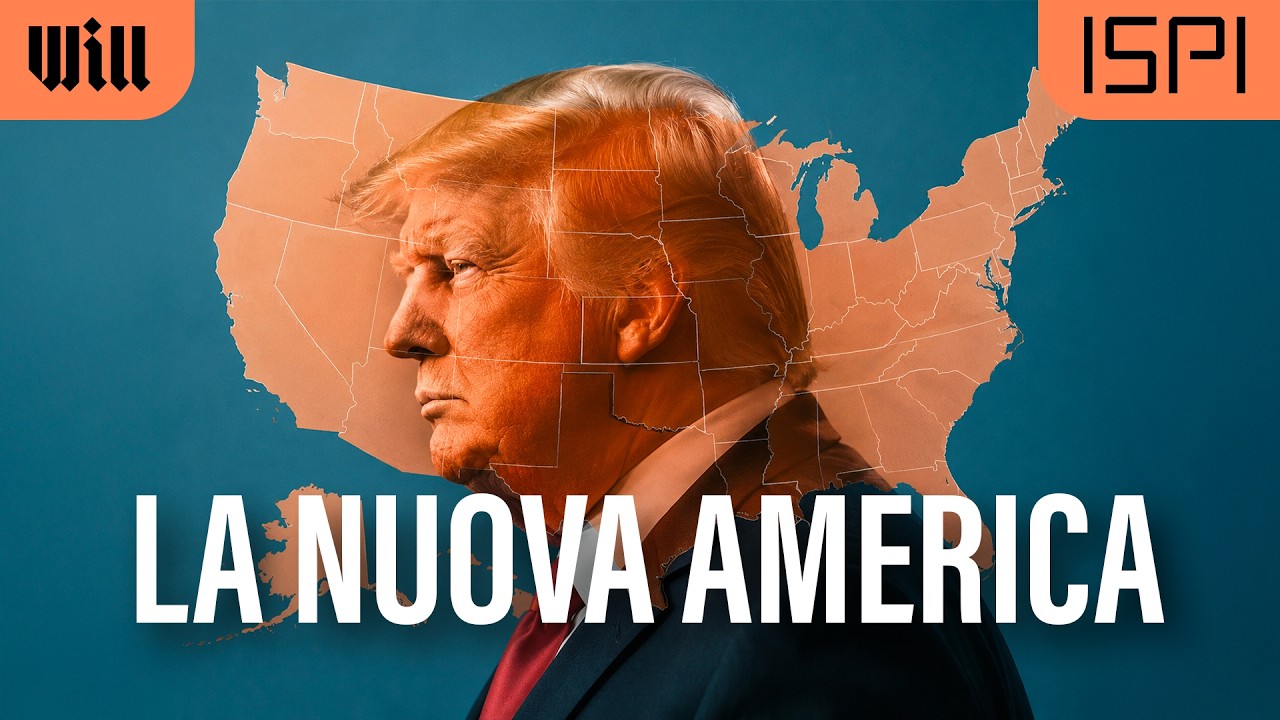
In the video “America First: the end of the world order?”, produced by Globally — the project born from the collaboration between Will and ISPI — a question is raised that sounds technical, the kind of thing only insiders would care about, but which actually touches everyone’s life, even thousands of miles from Washington: is Trump’s America First a temporary parenthesis, or is it the new way the United States will engage with the world?
More than a year and a half into his second term, the facts allow for a far more precise answer than was possible in January 2025. And the answer that emerges is reassuring for neither side: not for those who cheered the break with the postwar liberal order, nor for those who hoped for its swift restoration.
The promise and the bill
America First was born as a double promise: fewer commitments abroad, more strength at home. Tariffs were meant to be the tool holding both together — protecting American industry, hitting competitors, and in the meantime raising revenue to reduce a federal deficit that in 2025 came close to $1.775 trillion. Eight months into 2026, the bill is starting to come due. The effective average tariff rate has hit 6.6%, the highest since 1969, with estimates pointing to an additional cost of around $900 per American household over the course of the year. It isn’t China paying for the tariffs, as claimed at campaign rallies: it’s whoever is doing the grocery shopping in Cleveland or Tucson.
There is also a detail that rarely finds space in sovereigntist rhetoric: in February 2026, the Supreme Court ruled that the administration had exceeded its powers by invoking economic emergency measures to impose tariffs without going through Congress. The most muscular exercise of executive power in decades ran into a domestic institutional limit — proof that “America First” is not a monolith, but a project that must reckon with the checks and balances built into the American Constitution itself.
A power that recognizes its own limits
The Globally video makes a central point: Trump’s unilateralism is not just about rupture — it is also, paradoxically, a way for America to test just how much it can still impose on the world. And here 2026 offers a telling clue: several observers note that the White House’s more recent shifts in tone on certain international files stem not from a sudden diplomatic vocation, but from a more realistic acknowledgment of the limits of American power, not least with the November midterm elections looming. This reading downsizes the narrative of limitless force: the superpower that supposedly reshapes the world order at will is, in practice, negotiating, retreating, recalibrating — much like any other international actor bound by real constraints.
The internal paradox
And this is where the video’s argument touches the rawest nerve: an “America First” foreign policy was supposed to guarantee a return of domestic prosperity, yet Trump’s approval rating hit a new low in July 2026, just as the gap widens between the White House and its own electoral base, fueled by a cost of living that remains stubbornly high. For voters who believed in the promise, the true thermometer isn’t GDP or the number of trade deals touted at press conferences: it’s the price of gasoline at the pump, sensitive to every flare-up in the Strait of Hormuz or every attack on a refinery on the other side of the world — vivid proof that even a power claiming to withdraw from the world remains bound within its own chains of interdependence.
Why this should matter to us
One might think all of this is purely an American domestic affair. It is not. For seventy years the international order — with all its flaws, its hypocrisies, its double standards — rested on the idea that the United States was willing to pay a price to guarantee it: alliances, military bases, multilateral institutions, a dollar serving as the backbone of global trade. If that willingness fades, or becomes transactional — a favor for a favor, a tariff for a tariff — this is not merely a change in style at the White House. It is a question of who will fill the spaces left empty, under what rules, and to whose benefit. China is watching. The Global South is watching. And Europe, Italy included, is being forced to decide whether to keep treating American protection as an entitlement already secured, or to finally start building, in earnest, an autonomy that so far has remained more a slogan in speeches than an actual policy.
The video poses an open question, and rightly leaves it unanswered: we still don’t know whether America First is a detour in American history or the beginning of a new normal. But the signals from 2026 — a power colliding with its own institutional limits, an electorate that feels betrayed by its own promise, a world reorganizing itself in the meantime without waiting for Washington — suggest that the right question is no longer “will the liberal order end?” It is: what are we already replacing it with, and who is writing the new rules while we’re looking the other way?
Sources
ISPI – America First: the end of the world order?
Globalist – Trump and the 2026 midterms
Reason – Trump’s tariffs will cost each American household $900 in 2026