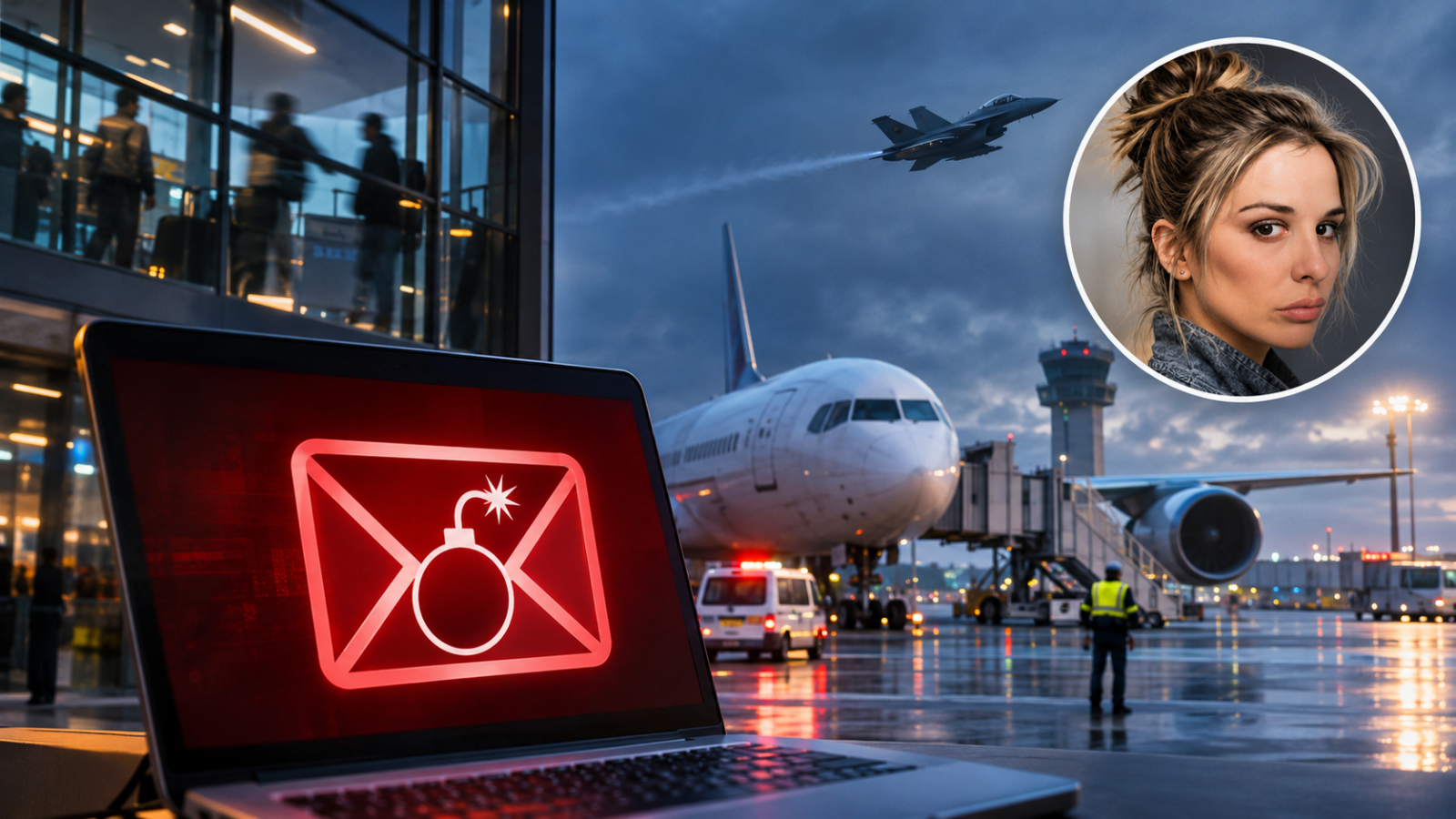
In a single week, fake bomb threats have affected more than fifty European flights, nearly nine thousand passengers and five air forces. If November’s pace continues, between 20 December and the Epiphany the tally could rise to almost two hundred flights and more than thirty thousand people. This isn’t a forecast: it’s simple multiplication.
The math is straightforward. According to the Guardian, between Tuesday and Friday threats struck at least 53 flights — roughly ten a day if you start counting from Monday. On the flights for which we know passenger numbers, there were on average nearly 170 people on board: that adds up to roughly 8,900 passengers in five days.
The holiday season lasts eighteen days, and it’s the busiest stretch of the winter. In December 2025, Italian airports saw nearly 16 million passengers pass through, with Fiumicino alone expecting 2 million between 22 December and 7 January.
At the same rate, the number of flights affected could reach around 190, with passengers topping thirty thousand.
Then there’s the cost.
Eurocontrol estimates that diverting a single-aisle aircraft on a medium-haul European route costs around €55,000. This week there were at least five confirmed diversions in five days — one a day. At that rate, the eighteen days of the holiday season would add up to nearly a million euros — and that’s just the diversions.
Left out of the count are the planes searched on the ground, the passengers who need rebooking, and the fighter jets.
Every hour of flight time for an interceptor jet costs tens of thousands of euros, and this week Italy, France, Austria, Bulgaria and Hungary all scrambled theirs. On the other side of the ledger, the cost of sending an email remains zero.
Anyone who thinks this is a passing phenomenon should look at India. According to New Delhi’s Ministry of Civil Aviation, threats against Indian airlines jumped from 13 in 2022 to 728 in 2024.
In October of that year alone, in just over two weeks, the Indian press estimated losses between 1,200 and 1,400 crore rupees: between €130 and €150 million. All over a handful of anonymous messages.
So far, fear isn’t visible in the numbers: airlines say they have no reports of frightened passengers.
But fear isn’t even necessary — the calendar does the work. One email on 23 December, aimed at a full flight to Bucharest or Tirana — two of the ten most popular destinations from Bologna last December — would be enough.
And a holiday can turn into what the passengers on the Dublin–Rome flight experienced: a military base in Normandy, a coach ride to Paris, and a return home in the dead of night.
Those left stranded are entitled to meals and hotel accommodation, but almost certainly not to the €250, €400 or €600 compensation: under EU regulations, a security threat counts as an extraordinary circumstance.
And planes might not be the only target. Schools are closing for the holidays, but the email sent to Irish newsrooms had already listed the next potential targets: planes, cruise ships, subways and trains.
According to Federalberghi, last year 19.3 million Italians travelled between Christmas and the Epiphany. There’s no shortage of doors to knock on, and the first real test comes before Christmas: the European summit in Dublin on 12 and 13 November.
For those who only read the numbers: an email costs nothing, a diversion costs €55,000, and eighteen days of holidays could cost nearly a million.
The rest depends on whoever writes the next one.