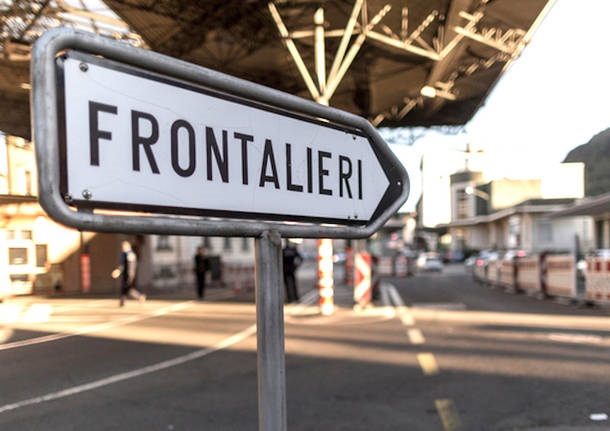
A permanent table to tackle taxes, pensions, healthcare and transport links between Italy and San Marino. This is the request from the CSIR following the signing of the Association Agreement with the European Union. The Interregional Trade Union Council of San Marino, Emilia-Romagna and Marche is calling for talks to begin immediately between institutions and social partners, so that the European milestone translates into tangible results in the daily lives of cross-border workers.
The union also lays claim to the work carried out over the years. The protection of those who cross the border to work, it stresses, did not begin with the current political phase: behind it lie decades of proposals and initiatives across the territories, alongside action carried out through the European Trade Union Confederation and the network of Interregional Trade Union Councils. It is a pointed reminder to anyone attempting to credit the outcome to individual figures or to political circumstance alone.
“The value of this agreement will be measured above all by its ability to concretely improve the living and working conditions of people who cross the border every day,” the CSIR stresses.
The first issue is income protection. The Council is calling for the full application of bilateral tax agreements, stability for the tax allowances granted to cross-border workers, and a definitive solution to the double taxation affecting former frontier workers now retired. The goal is a fair and predictable tax framework that gives certainty to workers and families.
On the welfare front, the demands concern coordination between social security systems, full healthcare coverage and simpler procedures for transmitting medical certificates. Still to be addressed are the disparities in leave entitlements for caring for dependents who cannot look after themselves, along with recognition of contributions and pension rights accrued in both countries.
There is also the question of mobility. The CSIR is pushing for more efficient cross-border public transport, better connections with neighbouring areas, and measures to cut commuting times and costs.
To give continuity to the dialogue, the proposal is to build a Pact for Cross-Border Employment, involving the Emilia-Romagna Region and drawing on the model of the regional Pact for Work and Climate. The CSIR is awaiting a meeting with President Michele de Pascale.
“The experience of Emilia-Romagna’s Pact for Work gives us a method based on the participation of institutions and social partners, on job quality, on tax fairness and on a socially sustainable ecological and digital transition. The time has come to apply this method to cross-border relations between Italy and San Marino as well.”
The Council also highlights the recent visit to San Marino by Italian deputy ministers Maurizio Leo and Edmondo Cirielli, pointing to it as a useful step toward addressing the still-open tax, pension and economic issues. As San Marino moves closer to the single market, the CSIR is also calling for attention to the recognition of professional qualifications and equal treatment.
The call to swiftly establish the table is addressed to San Marino’s institutions, the Italian government and the Emilia-Romagna Region, with the involvement of trade unions and other interested social partners. The CSIR is offering its accumulated experience and its relationships with Italian, Sammarinese and European trade unions to begin work on the priorities it has outlined.