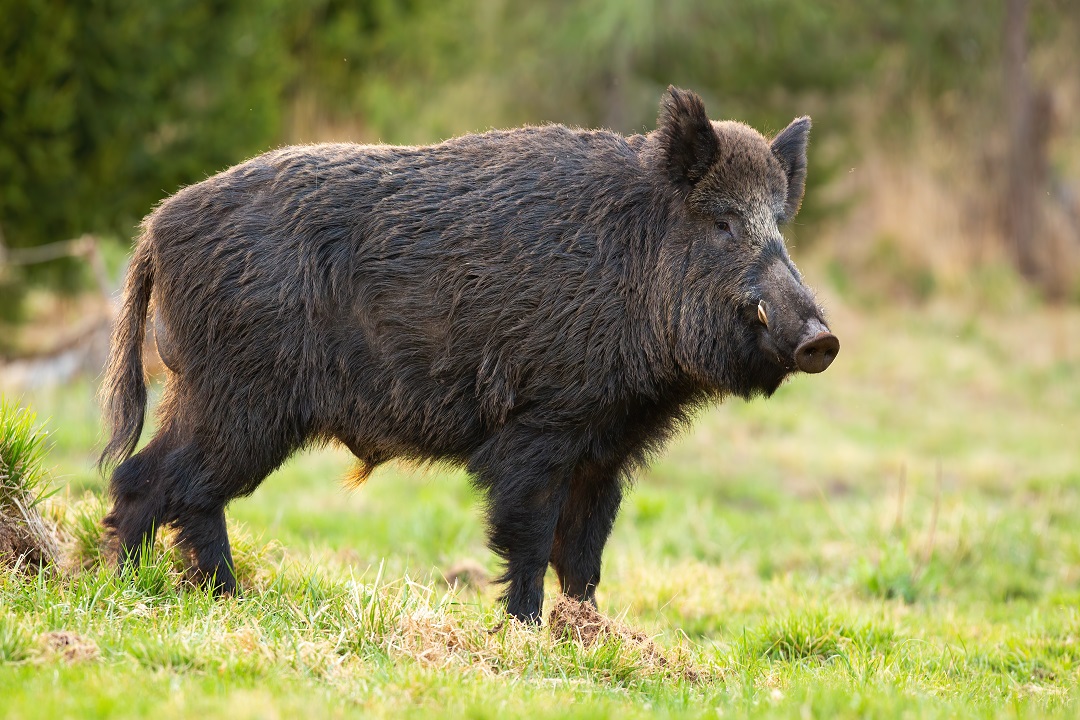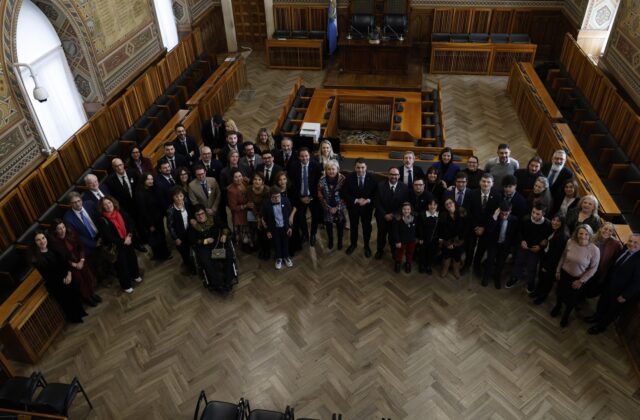
The “braccata” — a large-scale drive hunt for wild boar — has been excluded from San Marino’s hunting calendar, but the “girata,” a form of collective hunting carried out in smaller groups, remains permitted. It is this distinction, along with the risks faced by residents living near hunting areas, that lies at the heart of today’s discussion in the IV Commission.
State Secretary for Territory Matteo Ciacci confirmed the ban on the braccata and outlined a new training programme accompanying the girata. However, the debate raised a key question: how much does this actually change in terms of safety, given San Marino’s small territory and the proximity of homes to hunting areas?
Matteo Casali (RF) argued that simply banning the braccata is not enough if other forms of group hunting continue. He recalled the incident in January 2025, when a shotgun blast shattered a home’s window, and questioned why the administrative investigation was entrusted to the same office involved in organising the hunt.
His proposal is to strengthen selective hunting, including by expanding its calendar, as a way to control the boar population using methods he considers safer. “Since it is not a mobile hunting method, it presents far fewer risks, especially for civilians,” he said.
Gian Carlo Venturini (PDCS) also called for greater attention to the areas where hunting is authorised, urging that it be kept away from residential zones and that all safety regulations be properly enforced. For Venturini, simply switching from one method to another does not resolve the issue: “I agree that if this type of hunting continues, the problem is not solved by moving from the braccata to the girata, which is similar in nature but comes with fewer reporting requirements and less attention to the safety of both citizens and hunters themselves.”
Aida Maria Adele Selva (PDCS), however, emphasised the technical differences between the two, describing the girata as a more selective and quieter practice. “The girata is a hunting method better suited to areas close to parks, homes and residential zones, as it involves smaller teams, fewer mobile stations and the use of dogs.”
Ciacci confirmed the distinction but acknowledged that San Marino’s small size calls for further assessment. “It is, however, true and undeniable that, in a territory as limited as ours, groups of hunters can in practice end up resembling a form of braccata: on this point, I agree,” he said.
Identifying more suitable areas, establishing safe distances from homes, and defining containment methods will therefore be explored further through the new wildlife and hunting management plan, as well as through discussions within the Observatory. Among the options mentioned by the Secretary is the strengthening of selective hunting.
Emanuele Santi (Rete) welcomed the exclusion of the braccata and also raised the issue of animal welfare, calling for dignity and decorum in culling methods.
The discussion also touched on the relationship between the State and the San Marino Hunting Federation (Federazione Sammarinese della Caccia), covering matters such as the availability of staff seconded from the UGRAA and the costs of the Federation’s headquarters and utilities. Ciacci acknowledged that the requested changes have not yet been implemented and announced that the matter would be addressed within the Observatory, pointing to the services the Federation provides for the UGRAA and the fact that its headquarters occupies public space. Casali, while noting that he had voted against the measure, and Santi both called for the Council’s previous decision to be respected.