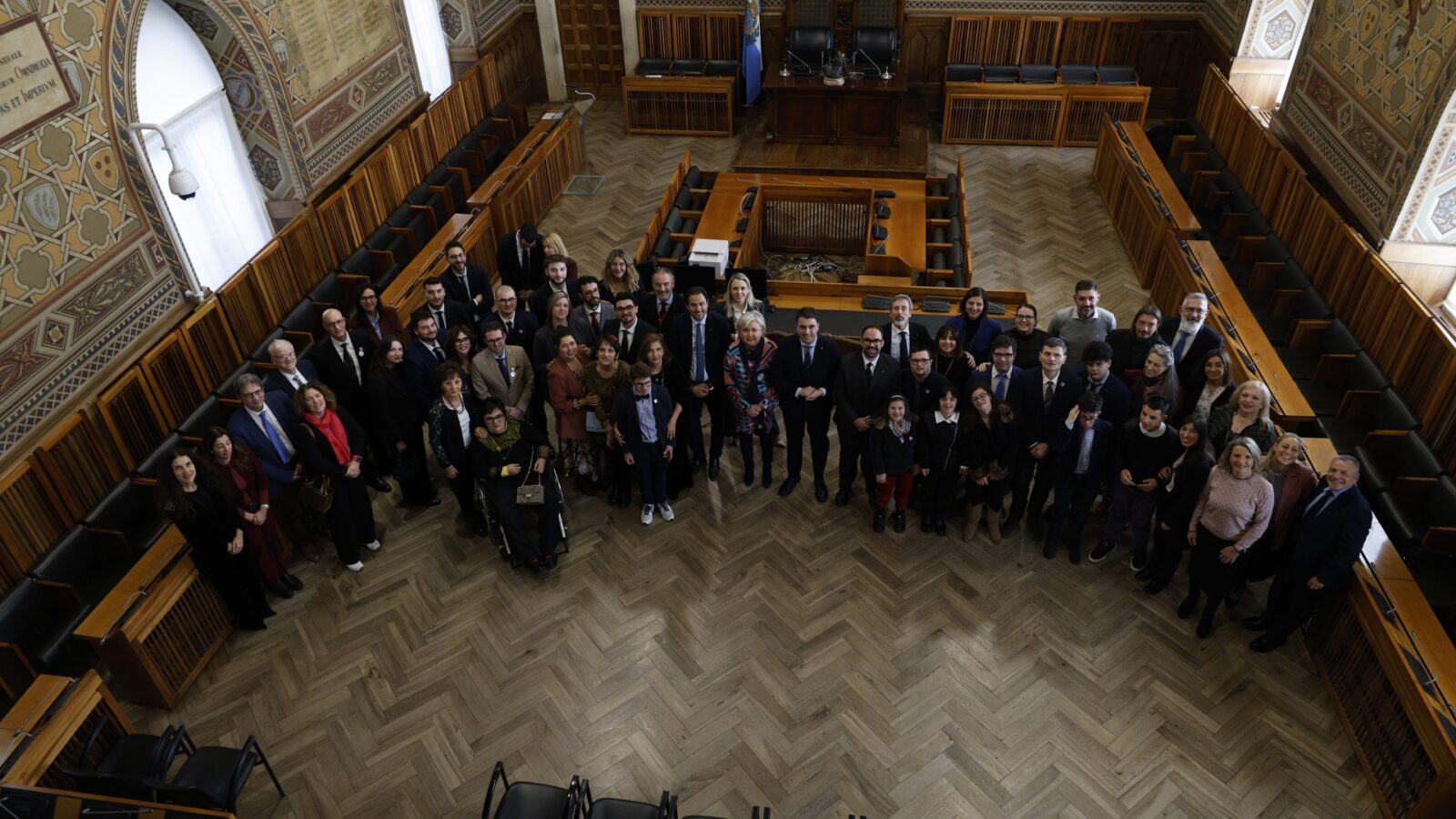
The San Marino Commission for the Implementation of the UN Convention on the Rights of Persons with Disabilities (CSD ONU) has drawn up a balance sheet of its mandate — and does so by starting from an observation rarely found in an institutional document: much of a commission’s work “goes unseen”, unfolding instead in meetings, in the analysis of legislation, in the drafting of position papers, and in dialogue with associations, families and services.
The starting point is the gap that separates principles from rights that can actually be exercised. The UN Convention was adopted by the General Assembly in 2006 and ratified by the Republic of San Marino in 2008, but the real challenge, the CSD ONU writes, is not knowing its principles — it is turning them into concrete rights.
The battle over employment
The sharpest passage concerns workplace inclusion. In discussions on the relevant legislation, the Commission argued that inclusion could not be limited to the public sector but had to extend to the private sector as well. The reasoning is explicit: the right to work cannot depend on whether a person happens to find a place only within public administration.
The CSD ONU says it worked on the definitions, criteria and instruments contained in the law, with many of its observations accepted during the drafting process — work it describes as “perhaps less immediate to recount, but fundamental”.
On the issue of the family caregiver, the Commission put forward proposals on training, support and respite periods for those who provide daily care; here too, some of these proposals were taken on board.
New York and the Special Rapporteur
On the international stage, the Commission took part in the 19th Conference of States Parties to the UN Convention in New York. That experience opened a dialogue with the UN Special Rapporteur on the Rights of Persons with Disabilities, who has been invited to visit San Marino and see its situation first-hand.
Affection and prevention
On the cultural front, the CSD ONU promoted the “The Power of Love” project, dedicated to affection, relationships and awareness, followed by a weekend aimed at young people with disabilities, families, educators, teachers and volunteers. The underlying reasoning: affection, relationships and the right to choose are part of everyone’s life and cannot become “dimensions denied or postponed because of disability”.
A campaign was also carried out, with posters displayed at the State Hospital, on preventing violence and abuse against people with disabilities, with the explicit aim of bringing a sensitive issue out of the private sphere.
The “life project” and an opening from the Health Secretariat
The challenge the Commission sets out for the coming years is the life project: building pathways that start from the person — from their abilities and their choices — rather than from the services already on offer. The formula used is blunt: it should not be the person who has to adapt to the services; it is the services that must be organised around the person.
With this in mind, the CSD ONU says it looks “favourably” on the willingness shown by the new Secretariat of State for Health to open a dialogue with associations, families and other stakeholders, and states it is ready to bring to the table the work carried out over these years.
Independent, not neutral
The document closes with a claim about its own role. The Commission, it states, is not there to represent a political side but a principle, and it will continue to maintain “its own independence of judgement and the freedom to advocate for what it considers necessary”. A clarification follows that reads almost as a warning: “Being independent does not mean being neutral in the face of discrimination. It means being free to defend rights, regardless of who is in government, who proposes a law, or whose interests are at stake”.
On participation, the final warning is clear: the voice of people with disabilities “is there” — the challenge is making it count in decision-making. Because “Nothing about us without us” cannot remain a slogan: “It must become a method”.