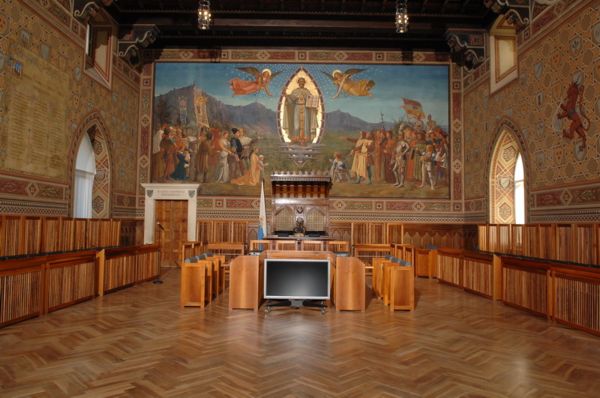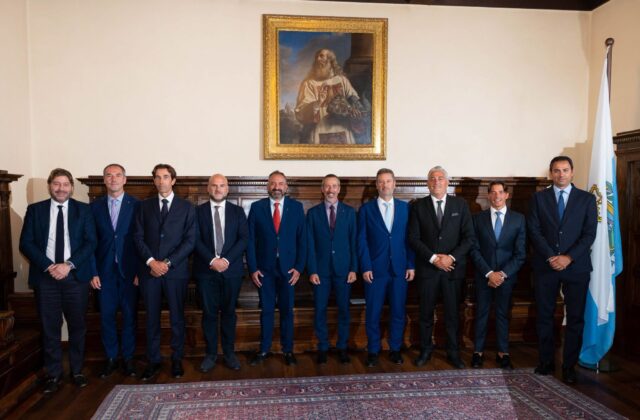
The institutional reform process in San Marino is back under way. After several months of pause, the special council committee (Commissione consiliare speciale) has resumed meeting, putting a new work programme on the table. Discussions initially grew heated, particularly over the recent amendment to the Council Regulations, but ended with shared agreement on the next steps.
The first point concerns the association agreement with the European Union and the consequences that the transposition of EU legislation could have on San Marino’s legal system. The Presidency will contact the Secretariats of State for Foreign Affairs and Internal Affairs to request a hearing with Luca Beccari and Andrea Belluzzi, possibly as early as next week. The aim is to understand which regulatory instruments should be used and whether constitutional changes will also be necessary.
Also on the table is the broader reform effort. The mandate given by the Grand and General Council (Consiglio Grande e Generale) calls for draft revisions of laws and regulations to be ready by May 2027. The chosen approach is to divide the work into a few major chapters, first reach political consensus, and then entrust technical experts with drafting the actual legislation.
Committee chairman Filippo Tamagnini outlined three initial macro-areas: the Regulations and organisation of council proceedings; the status of councillors, with particular attention to tools, technical support and access to information; and the hierarchy of legal sources along with the broader regulatory and institutional framework, also in light of European integration.
The role of councillors took up a significant part of the debate. The opposition called for stronger access to information, greater technical support for parliamentary groups, and enhanced protections in carrying out their mandate, alongside the need to rebalance the relationship between the Grand and General Council and the Congress of State. The issue of professionalising councillors also resurfaced, though positions on this remain divided.
Tensions were not absent. Rete, D-ML and other opposition representatives accused the majority of having amended the Council Regulations while the committee was inactive, calling into question the shared process. The majority, for its part, defended the need to make the Council’s work more efficient. Manuel Ciavatta (Pdcs) nonetheless acknowledged that the regulatory change may have gone “a step too far” in being carried out unilaterally, confirming his willingness to resume joint work.
The session, however, ended on more common ground. Libera, Psd, Rf, Rete, D-ML, Ar and Pdcs all expressed support for the approach proposed by the Presidency. The goal is to address the main macro-areas by the end of the year, so as to enter 2027 with the political guidelines needed to move forward with drafting the reforms.