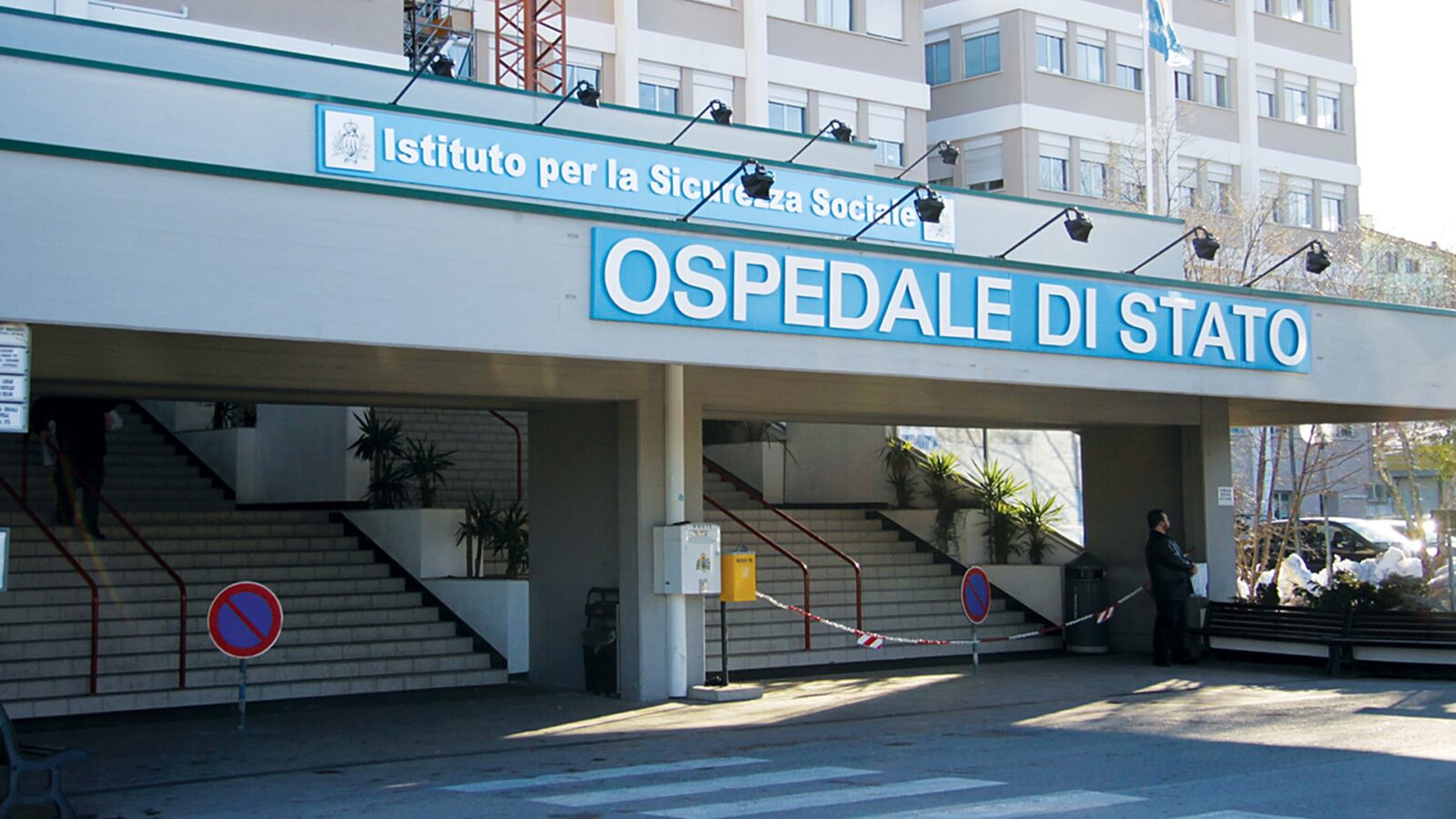
Work on the hospital’s new pharmacy begins on 12 October, the oncology department is expected to be completed by the end of the year, and a provisional hospice is due to open at the hospital by the start of the new year. These are some of the deadlines contained in a joint statement from the majority parties, released following the ISS Executive Committee‘s hearing before the Commission and signed by PDCS, Libera, PSD, AR, by councillor Giovanna Cecchetti and by the independent PSRS councillor. This article is based on that text.
The document sets out the Executive Committee’s first year in office along with the timetable for the coming months, and comes just days after a session in which no date was given for the new hospital. The stated framework is a shift from emergency care towards prevention and community-based care — that is, “services close to where people live, able to follow them over time.”
On the prevention front, the majority highlights the expansion of screening programmes: the Cardio 40 programme for those turning forty, the lowering to 45 years of the age for colorectal screening, and a new free test for hepatitis C. Since May, proactive home medicine has been operating, with family doctors visiting frail or less mobile patients at home “without waiting for them to ask for help,” and during October home paediatric care will begin for the most vulnerable children. At the same time, the “Towards community care” (“Verso le cure di prossimità”) programme is preparing staff for a new organisation of the Health Centres (Centri Sanitari), which are set to become the main reference points across the territory.
On waiting lists, described as “one of the concerns most strongly felt by citizens,” two levers are identified: additional services provided by doctors, which increase the availability of appointments and tests, and the hiring of staff where shortages exist, alongside more efficient use of facilities and equipment.
The most detailed section concerns construction works. At the hospital, besides oncology and the pharmacy, the blood-sampling area and the new mortuary are at the design stage, with an estimated timeline of about six months, while plans are also underway to expand the emergency department waiting room and create a new recovery room for endoscopy. These, the majority writes, are “less visible interventions than a major project, but they affect the daily quality of experience for patients, families and staff alike.” Within the territory, the Borgo Maggiore Health Centre will be inaugurated “very soon,” and in Murata work will begin to renovate the existing building, with no new land use involved.
For the elderly, the key issue is Fiorina, where the expansion of the nursing home (RSA) will create around fifty new places for non-self-sufficient residents, with construction expected to start between next spring and summer. Next to the residence, a permanent hospice will be built, preceded by an agreement with the San Marino Oncology Association (Associazione Oncologica Sammarinese), which promoted the project and will later hand it over to the State. There is also a proposal that has so far received little attention: a new contracted nursing home in Chiesanuova, in the former Karnak building, with around seventy-six places, still to be assessed for feasibility, which would complement public capacity with accredited private facilities under ISS oversight.
On the new hospital, however, the majority sets no date and defends its choice to “proceed with method and without shortcuts.” The goal, it states, is a “modern, modular and adaptable” facility, capable of hosting specialised, high-technology services over time. Before any decision is made, the document says, there must be discussion on the project’s features, clarity on the institutional steps involved, and “a serious assessment of the different financing options, including project financing, along with their respective advantages, risks and impact on the State’s finances.” This is the most politically significant passage in the text, as it explicitly opens the door to project financing for a project that, so far, has neither a timeline nor a defined model.
The statement closes with a declaration of principle accompanied by a commitment. The healthcare system of the future, the signatories write, must remain “public, universal and free for those insured,” with shorter waiting lists, simplified access through digital tools, and stronger home care, while also exploring ways to make better use of its capacities — including towards non-residents — to increase the Institute’s revenue. This will serve as the starting point for discussions on the next Health and Social-Health Plan (Piano Sanitario e Socio-Sanitario), to be drafted in the early months of 2027. The majority acknowledges that the Executive Committee has worked “in line with the guidelines it was given,” but adds that “citizens will judge the results: services that work, construction sites that open, and projects delivered within the announced timeframe.”