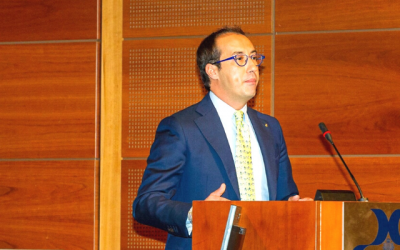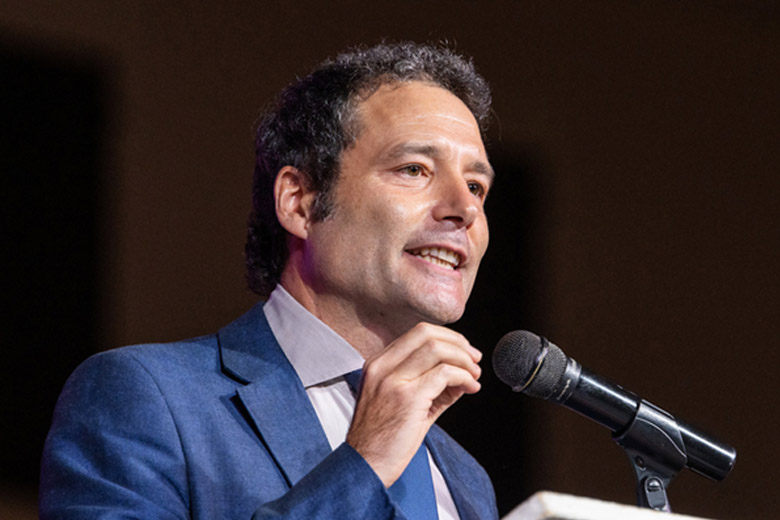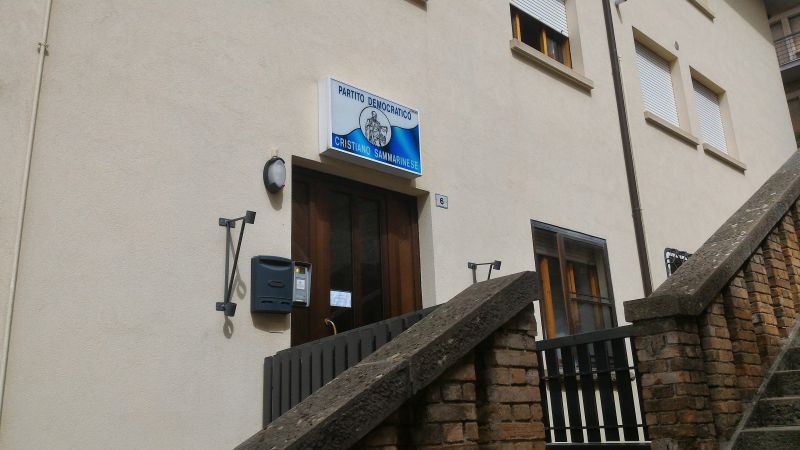
“A modern country is measured by its ability to guarantee rights, and plurality and inclusion are not a fixed destination but a path of continuous evolution.” This was one of the key passages from the speech delivered yesterday in the Grand and General Council (Consiglio Grande e Generale) by Alessandro Scarano (PDCS) during the debate on Arengo Petition No. 47, which calls for the introduction of rules governing the rectification of gender in civil registry records and documents for people who have undergone a gender-affirmation process.
Below is the full text of his speech:
Alessandro Scarano (PDCS): I would like to share a few reflections on the Arengo Petition currently under discussion, as well as on those that follow, starting from the premise that when dealing with issues concerning civil rights and the protection of minors, we must make a joint effort to move beyond ideological positions, partisan zeal and extremism, and address the matter with the greatest possible objectivity. Our country has taken significant steps forward in recent years, and I am thinking in particular of the 2018 law on civil unions, legislation that allowed same-sex couples to enter into civil unions and form their own families with clearly defined rights and duties, profoundly renewing the reality of the Republic of San Marino. We must look at reality through the lens of the present and acknowledge what is actually happening within our community, since these petitions do not present us with abstract concepts or unattainable wishes, but with real issues that some couples are already experiencing on a daily basis. Our law on family status, Law No. 49 of 1986, is undoubtedly a sound piece of legislation, but one that inevitably needs to be updated to keep pace with changing times; and this in no way means taking anything away from the traditional family, but rather adding value and ensuring comprehensive protections. The absolute priority and guiding principle of our work must be the protection, safeguarding and best interests of the child, to whom we owe clear answers and legal certainty. Since these are complex issues, including from a technical standpoint, touching on the functioning of the civil registry and its coordination with international law, careful, rigorous and professional work will be needed to bring existing regulations into alignment and identify the solutions best suited to reality, involving all those engaged on the front line of rights. A modern country is measured by its ability to guarantee rights, and plurality and inclusion are not a fixed destination but a path of continuous evolution. At the same time, it is essential that the utmost respect for others’ opinions always be maintained, even when they differ, avoiding any slide into rhetoric, victimhood or demagoguery.