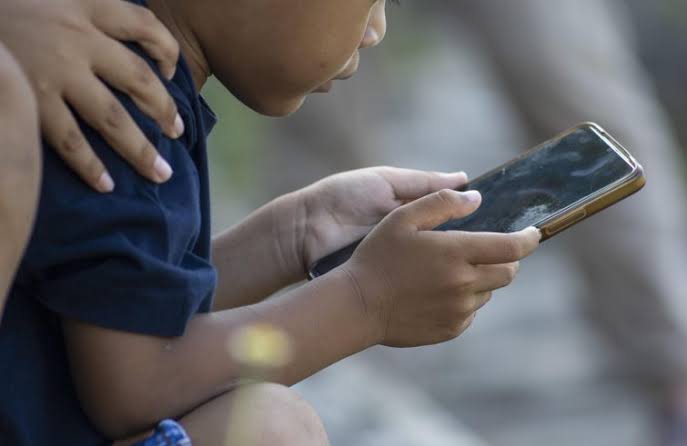
Should smartphones be banned for children under 14? San Marino says no. The Grand and General Council (Consiglio Grande e Generale) voted by majority to reject an Arengo Motion calling for a ban on smartphone use among the youngest citizens. Yet the vote opened up a much broader political debate in the chamber: how far can the law go, and how much should instead be left to parents, schools and institutions to teach young people responsible use of technology?
On one point there was little disagreement: early, unsupervised use of smartphones and social media is a problem that needs to be addressed. It is on how to address it that opinions diverge.
The Government chose not to pursue an outright ban. Secretary of State Teodoro Lonfernini said he shared the concerns behind the Motion, but ruled out a blanket smartphone ban as the most effective solution. The Executive’s approach instead favors “training and support,” bringing together schools, families, health services and digital education, while strengthening prevention initiatives already underway.
This position found broad support in the chamber. Michele Muratori (Libera) said he was opposed to “prohibitionism,” while Nicola Renzi (Rf) shifted the focus of the debate: in his view, the real issue is not the smartphone as a device, but rather minors’ access to social networks. He therefore expressed openness to stricter limits on platforms, while considering an outright ban on the device itself excessive.
Gian Matteo Zeppa (Rete) instead brought the discussion back to adult responsibility, noting that excessive use of digital devices is not limited to children and teenagers but runs through society as a whole. Matteo Rossi (Psd) pointed to education and the work of parliamentary Commissions as the way forward.
The clearest break from this consensus came from Mirko Dolcini (D-ML), who spoke in a personal capacity. While leaving open the possibility of revisiting the age threshold of 14, Dolcini argued for a much firmer response to the phenomenon of addiction: “We need a clear ban, and we need a strong one.” In his view, such a measure would also give families a concrete tool to rely on.
Matteo Casali (Rf) took a more practical approach, raising the question of how any ban could actually be enforced and monitored. The same issue was raised by Giovanna Cecchetti (Mixed Group) and Aida Maria Adele Selva (Pdcs), who both stressed the educational role of parents and the difficulty of legally enforcing a ban that would inevitably reach into the private and domestic lives of families.
A middle-ground position came from Carlotta Andruccioli (D-ML). She expressed doubts about an outright smartphone ban, particularly given the difficulty of actually verifying compliance, but showed openness to tougher rules on social networks. Her proposal calls for a system combining “proper restrictions on social media for minors with investment in digital education.”
In the end, then, the ban on smartphones for under-14s failed to pass. But the Council debate has left behind a discussion that is far from settled. More than the existence of a problem, the political debate centered on which tools to use: outright bans, targeted restrictions on social media, or digital education paired with greater responsibility on the part of adults. On this ground positions remain divided, and the Arengo Motion was rejected by majority vote.