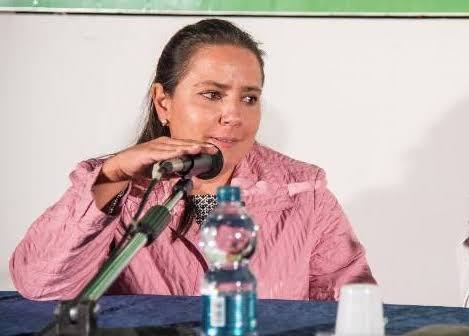
A law that does not claim to single-handedly solve the declining birth rate or families’ economic difficulties, but which introduces concrete measures and represents a starting point. This was the assessment given by Maria Luisa Berti (AR) in her explanation of vote on the bill dedicated to family and birth rate, discussed and approved by the Grand and General Council (Consiglio Grande e Generale). Alleanza Riformista voted in favour.
Berti praised the work carried out by the Secretariat of State and the Commission, noting that dialogue had allowed the text to be amended and improved. Among the measures highlighted were those concerning school expenses and meals, family allowances, financial contributions, and support for families caring for their most vulnerable members.
Particular attention was given to the family caregiver provision, described as an “absolute novelty” and one of the most significant elements of the reform. The new framework, which also includes training, aims to support those who care within the family for people with disabilities, the elderly, and other relatives in need of assistance.
According to Berti, the support introduced from pregnancy onward can also ease the financial burden on young couples and encourage them in the decision to have children. However, she added, political action must be accompanied by cultural and social work as well: the issue of the declining birth rate cannot be tackled through laws and financial contributions alone.
Below is the full statement.
Maria Luisa Berti (AR): «I am speaking on behalf of Alleanza Riformista to express satisfaction with the work carried out, and also gratitude to the Secretariat of State, which brought the text to the Council’s attention at first reading, and to the responsible Commission, which examined it and, following discussion, introduced further amendments precisely in order to improve it. This is a text that certainly does not solve the problems of the birth rate, nor does it solve families’ economic problems, but it does provide answers and introduces measures that are absolutely useful in addressing certain difficult situations — both in terms of caring for those most in need within the family, and in terms of the financial costs borne by families. I am referring to school expenses, family income in terms of state contributions, school meals, family allowances, and the other measures envisaged. These are certainly useful and effective responses. Someone rightly noted that this is not a piece of legislation claiming to provide definitive answers to every need, but it is certainly a starting point projected toward the future, while at the same time immediately introducing measures of concrete usefulness in response to families’ current needs. I believe it is also worth highlighting how this measure fits within a broader set of initiatives that the Government and the majority have sought to introduce in our legal system, all aimed at responding to the increasingly pressing needs of our citizens, including in economic terms. We did so recently to address educational needs, and there will be further measures on the whole social front. Those who spoke before me have already summarised the reforms introduced. I would like to particularly highlight what represents an absolute novelty: the introduction of the caregiver, with its own distinct framework that also includes training. I believe this is a qualifying response within the legislation to families’ need to genuinely care for those within the household who require the help of their relatives. I am thinking in particular of people with disabilities and the elderly. This is certainly a qualifying element. Then there are all the measures that we hope and trust will help young couples somewhat reconsider their approach and face the choice of having children with less economic weight on their shoulders, since contributions for young couples exist both from the moment of pregnancy and from the moment the child is born. These too are forms of assistance and financial support that will certainly help. There are many other measures besides, and I will not list them again here, as those who spoke before me have already done so. However, there must also be another mission — one that is not purely and solely political — namely working on the cultural front. To address the issue of the birth rate and to help our young people share in and make the choice to have children, much needs to be invested in social and cultural terms as well, in order to support them in this decision. As legislators, with this measure we have certainly made a significant contribution in support of the family, ensuring that, above all, certain needs of an economic nature can find assistance. I will stop here and reaffirm Alleanza Riformista’s favourable vote on this piece of legislation».