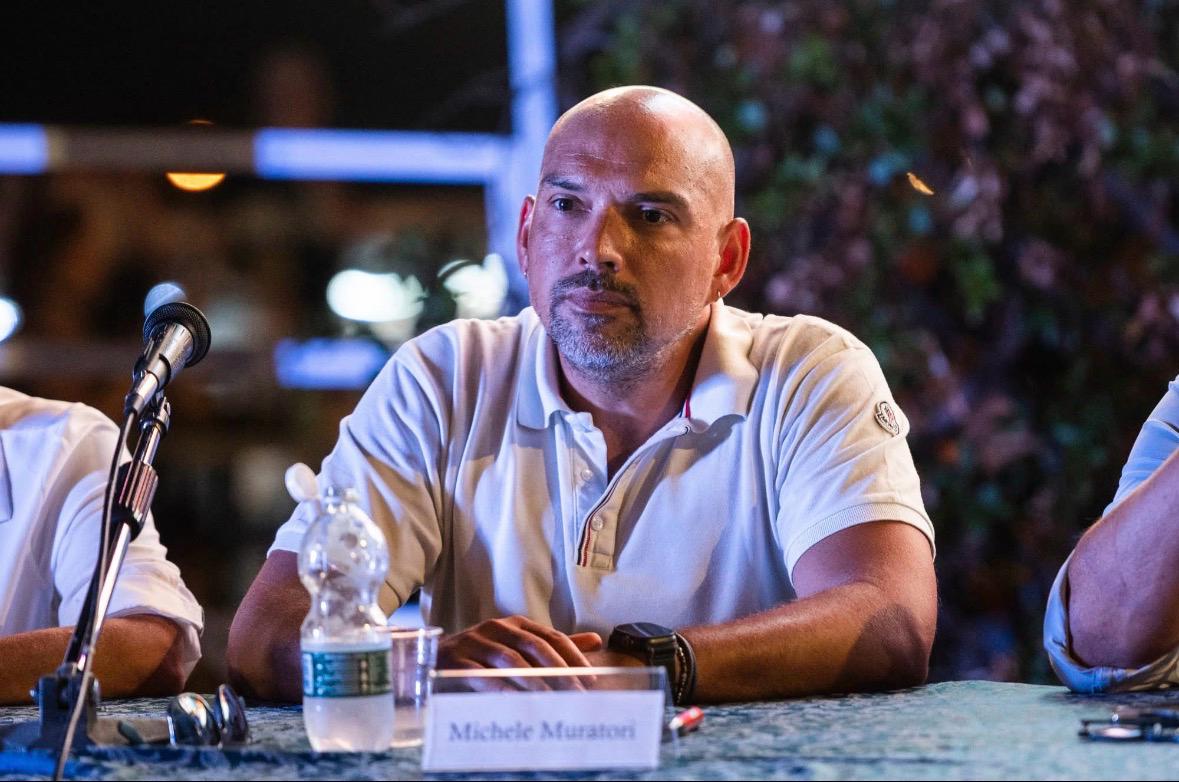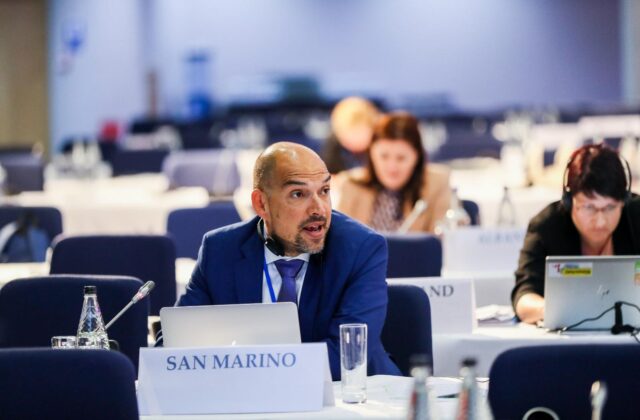
The series of in-depth columns curated by Michele Muratori, group leader of Libera, continues, dedicated to analysing current political affairs, the main institutional challenges and the topics of greatest interest to the Republic of San Marino.
There are pieces of news that wound the conscience of an entire community. The hospitalisation at the State Hospital of a twelve-year-old girl who fell into an alcoholic coma after consuming a toxic amount of alcohol is one of those events in the face of which it is impossible to look away.
The girl has returned home and her physical health is no longer at risk, but the relief of the moment must not become an acquittal for our society.
At twelve, one should still be playing, looking to the future with curiosity, taking one’s first steps into the world. Ending up in the Emergency Room due to alcohol intoxication is not a minor slip or a “prank” that simply got out of hand.
The figures emerging from surveys carried out in our own territory tell a very specific story. According to data from the Health Authority and the HBSC reports on the behaviour of adolescents in San Marino, alcohol becomes part of daily habits well before adulthood.
More than 12% of thirteen-year-olds in San Marino have already experienced binge drinking – rapid, sequential drinking aimed purely at getting drunk. By the age of 17, this practice involves almost six out of ten teenagers, and more than 80% of adolescents say they have been drunk at least once in their lives.
Among younger age groups, the trend also shows a clear rise in spirits consumption among girls compared to boys of the same age. Added to this is an early onset of substance use and tobacco consumption.
Traditional and electronic cigarettes now involve 43% of fifteen-year-olds on Titano, while our ISS health service is reporting a growing number of cases involving severe anxiety, self-harm and eating disorders – a sign of emotional fragility that often begins as early as middle school.
The picture becomes even starker when we widen our view to include the relationship with technology and mental health. Recent surveys indicate that more than 13% of the youngest respondents show signs of pathological hyper-connectivity, and as many as 38% admit they cannot put their screens down even when in the company of family members.
At the same time, data from Italy’s Istituto Superiore di Sanità estimate that the tendency toward social isolation and voluntary withdrawal now affects more than 65,000 Italian students between the ages of 11 and 17, with the phenomenon most commonly beginning around age 13 – coinciding with the final years of middle school.
Blaming the mere availability of alcohol or the presence of smartphones, however, would be a foolish error of perspective. Alcohol and other substances are the means, not the cause. They are the anaesthetic for an underlying unease that today takes on different, often opposite, forms.
On one side there is visible deviance: the thrill-seeking, vandalism, group aggression and excessive consumption aimed at feeling part of the pack. On the other, there is silent deviance – the kind that plays out within the walls of one’s own home, such as self-harm and the voluntary isolation of the hikikomori, young people who withdraw entirely into their own room, cutting off all contact with the outside world. In Italy, this phenomenon now affects nearly 100,000 young people who are completely withdrawn from social life, and San Marino is not immune to it.
Seeking the shortcut of prohibition – perhaps by considering a decree banning social media or digital platforms for minors – amounts to little more than chasing an illusion.
Bans imposed from above have never stopped addiction or risky behaviour; they only create digital clandestinity and let adults off the hook, fostering the false belief that a simple filter can solve a problem that is, first and foremost, educational in nature.
In this context, it is worth highlighting the concrete work being carried out by San Marino’s Youth Policy Commission (Commissione Politiche Giovanili), a body that is tackling the issue without limiting itself to a purely emergency-driven response.
But for these efforts to produce concrete results, a genuine social pact must be forged. Everyone must go back to exercising their responsibility in full, without delegating it to others or looking for excuses.
Families must be families, rediscovering the courage to be present, to listen, and to say the necessary “no” when needed. Schools must necessarily be places of human growth, not just academic instruction. Institutions must be institutions, guaranteeing the resources, healthcare provisions and social infrastructure across the territory that are essential to identifying distress before it becomes entrenched.
When a twelve-year-old girl collapses on the pavement, anaesthetised by alcohol, or a teenager turns the key in the lock of their own room never to come out again, we are not witnessing the mere fragility of a single individual.
It is the muffled sound of an entire generation trying to disappear so as not to feel the weight of the world.
We will not be saved by emergency decrees or after-the-fact moralising. We will only be saved by this pact of shared responsibility, one capable of filling emptied public spaces and drowning out that silence before it becomes a point of no return.