Instructions have arrived for requesting the financial allowance designed for parents who must take time off work to care for a sick child or one admitted to hospital. The Social Security Institute (ISS) has published a new circular clarifying the procedures, required documents and methods for issuing the certifications provided for under Family Law no. 141/2026.
The benefit, known as the parental economic allowance (IEG), can be granted alternately to one of the two parents when a child has a certified illness with a prognosis of more than two days, or is admitted to hospital. The benefit applies up to the day before the child turns 14 and covers the entire certified period of absence.
The allowance applies to both employees and self-employed workers, provided they are up to date with their contribution obligations. The amount is equal to 86% of salary from the first to the fourteenth day of absence, rising to 100% from the fifteenth to the one-hundred-and-eightieth day, and returning to 86% from the one-hundred-and-eighty-first to the three-hundred-and-sixty-fifth day. For self-employed workers, the waiting period normally applied to ordinary temporary incapacity does not apply, meaning support can be granted from the very first day.
The circular distinguishes procedures based on the worker’s place of residence. For residents of San Marino, the certification is prepared directly by the ISS paediatrician through the AREAS computer system, under the record of the parent taking time off work. That parent must declare that the other parent is not simultaneously receiving the same benefit.
Employees must promptly inform their employer of the absence and hand over the copy of the certification intended for them. For employees of the Extended Public Sector (Settore Pubblico Allargato), the documentation is instead acquired through the Administration’s internal IT channels. Self-employed workers, pending an upgrade to the ISS’s computer system, must send the certification to prestazioni.famiglia@iss.sm.
For non-resident employees, the request must be submitted through the “Istanze OnLine – IOL” online service, under the Social Security section, selecting the option “Malattia figlio/a” (Child’s illness). Medical documentation must be submitted within three days of the certification’s issue date. In this case too, the worker must promptly notify their employer, to whom they must provide the receipt issued by the online service.
The circular also addresses privacy protection. The certificate intended for the employer must not contain the diagnosis or any other information about the minor’s health condition. Furthermore, for absences covered by the allowance, no medical-fiscal inspections will be carried out on the beneficiary parent. The ISS may nonetheless carry out administrative checks to verify the documentation, eligibility requirements, and compliance with the rule that the benefit can only be used by one parent at a time.
If the child’s illness has a prognosis of two days or less, the provisions of Article 25 of Law no. 129/2022 continue to apply, which provide for unpaid leave.
The State Secretariat for Justice, Social Security and the Family explained that the circular provides “workers and employers with guidance on how to request and manage the parental economic allowance (IEG).” The document is available on the ISS’s institutional website, in the section dedicated to family benefits.
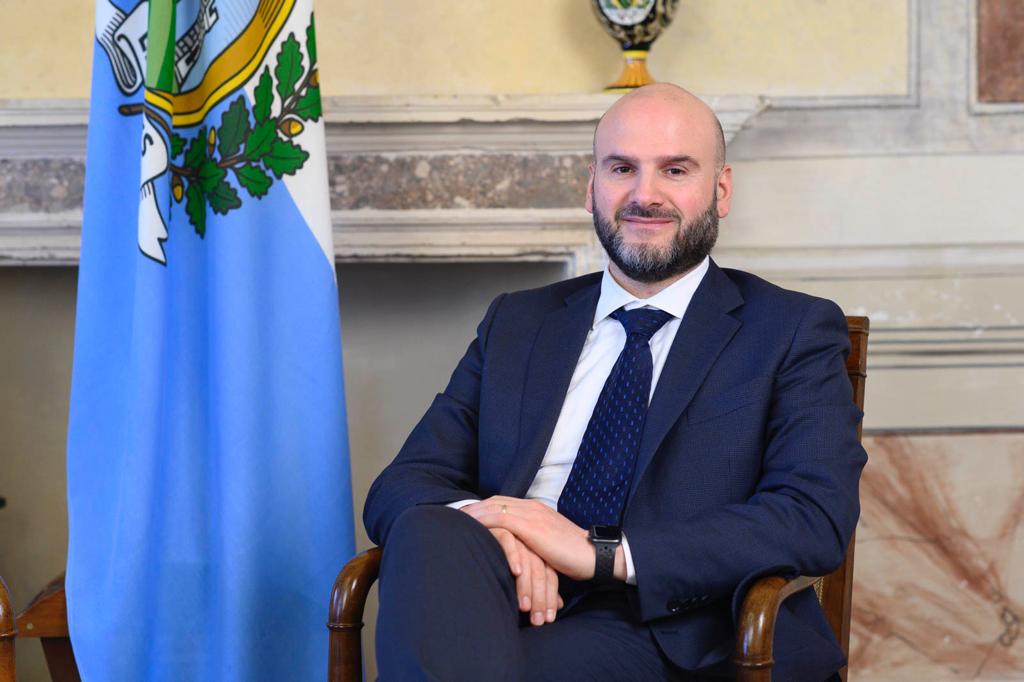
Secretary of State Stefano Canti thanked the offices involved in implementing the new legislation: “A heartfelt thank you to the Administrative Director, to ISS technical staff, and to everyone who is working promptly on issuing the implementing and explanatory circulars for Law no. 141/2026, known as the ‘Family Law’.”
Canti also announced that the final steps are being completed to open a new service dedicated to families: “I would like to take this opportunity to recall that the final steps are underway for the opening of the ‘Family Information Point’, a place where eligible individuals will be helped to access services and social resources dedicated to families, through information, listening, welcoming and assistance activities for submitting their respective applications.”