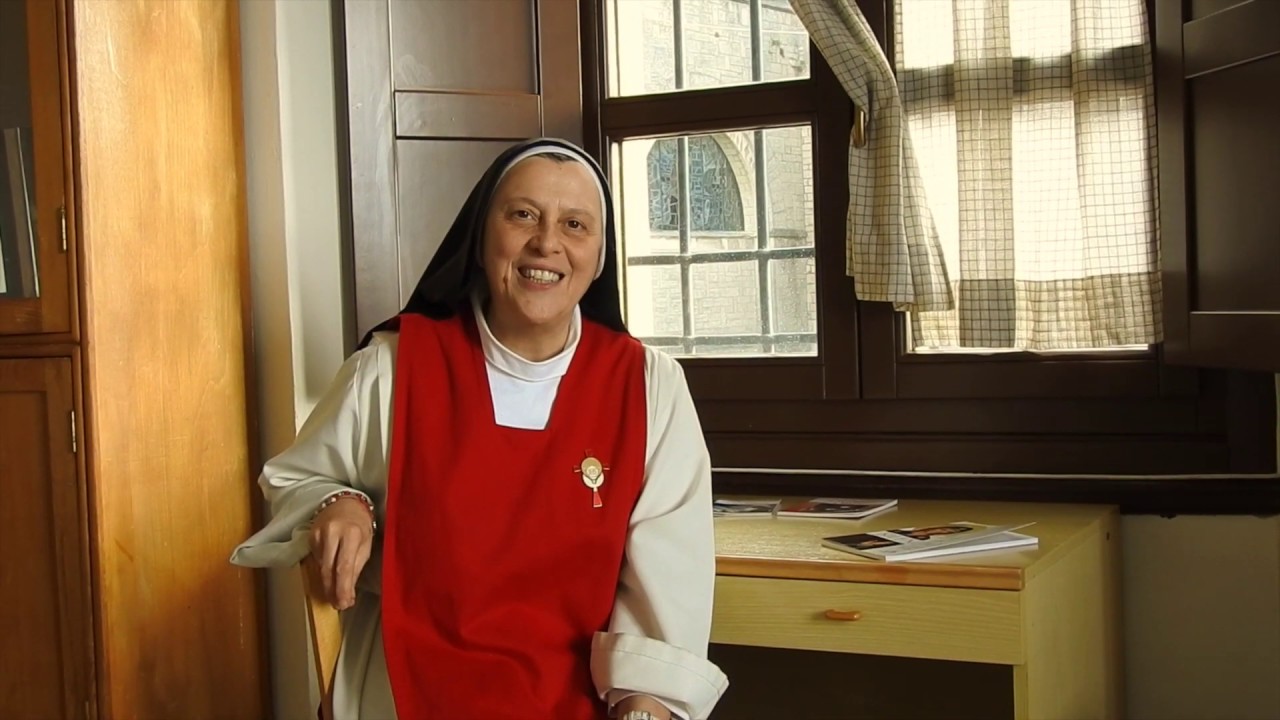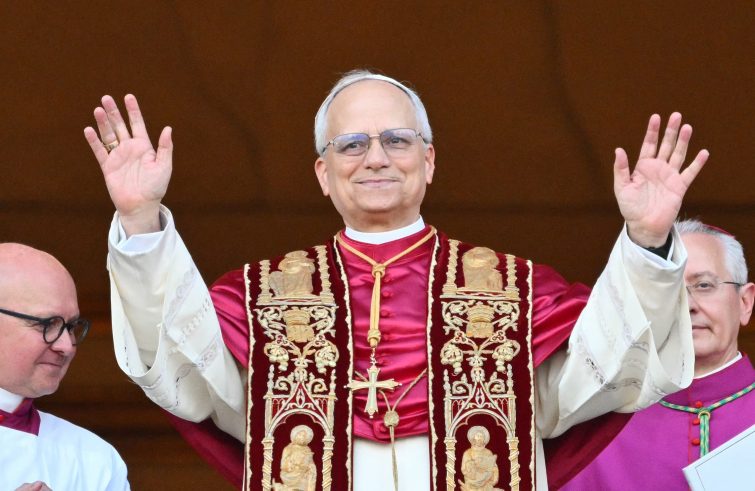
As anticipation builds for Pope Leo XIV’s visit to San Marino and Montefeltro, scheduled for Saturday 22 August, expectation is also growing within the territory’s religious communities. Among the voices that can help shed light on the spiritual and cultural significance of the event is that of sister Maria Gloria Riva, a nun, writer and scholar of art and Sacred Scripture.
Born in Monza in 1959, sister Maria Gloria Riva joined the Perpetual Adorers of the Blessed Sacrament in 1984. Alongside her passion for art, she has devoted years to studying the Bible — with particular attention to biblical Hebrew and rabbinic tradition — as well as Patristics and the spirituality of Mother Maria Maddalena dell’Incarnazione, founder of the order. Since 1996 she has given lectures and talks on the relationship between Scripture, art and spirituality, and is the author of numerous publications. Since 2007 she has lived in the Diocese of San Marino-Montefeltro, where she founded a monastic community whose mission, alongside Eucharistic Adoration, includes training the eye to perceive Beauty. The Nuns of the Eucharistic Adoration received diocesan approval in 2009.
Sister Maria Gloria, how is your community preparing for Pope Leo XIV’s visit?
«We are preparing first and foremost through intense prayer, because on occasions like this a particular grace always passes through. And it is a grace that concerns everyone, not only believers but also those who simply live in this territory, because the Pope’s presence carries something that goes beyond the strictly religious dimension. We have also worked behind the scenes, collaborating with various offices to help prepare the event. The time available was rather short, since the announcement came relatively late compared to the date of 22 August, but I believe everything possible has been done to ensure the visit unfolds in the best possible way».
Fifteen years have passed since a pontiff last visited San Marino. There is a strong sense of anticipation across the territory. You have had the chance to meet Leo XIV personally: what impression did you form?
«There is certainly enormous enthusiasm, not least because Leo XIV is a Pope of great balance who already has a connection to our territory through the Augustinian world. I myself had met him within the diocese even before he became a bishop in Peru, both in Pennabilli and in Urbino, on two occasions linked to the Augustinian sisters.
I then had the opportunity to meet him again on 9 June last year, when I gave a meditation before him and the Roman Curia. It was a truly beautiful encounter. If I had to describe him through two qualities, I would choose humility and solemnity. On one hand, he is an affable, simple, very approachable person; on the other, when you meet him, you sense something that goes beyond the individual and points toward the Mystery. I believe this very ability to hold together simplicity and solemnity is one of the most striking aspects of his character».
Pope Leo XIV has shown particular attention to small realities. What meaning, then, does his choice to visit a place like San Marino carry?
«I believe it is a very significant aspect. When I had the chance to meet him, I specifically raised the value of small communities and small states, such as San Marino and the Vatican itself. These are places with the ability to keep ancient traditions alive and to safeguard roots that, in an increasingly globalised world, risk being lost.
Protecting small realities also means protecting minorities. It means recognising a space for everyone and defending the value of multilateralism, a theme particularly dear to Pope Leo. In this sense, even territorially very small places can carry a meaning that far exceeds their size and can help relaunch a message of hope».
In this scenario, what can San Marino, with its history and identity, offer to the Church and to a Europe undergoing deep transformation?
«I think it is evident even to those who simply visit San Marino. Living in a tourist destination, we often have the chance to talk with people from very different backgrounds, and many visitors are struck by the atmosphere here, by the openness and warmth with which San Marino welcomes those arriving from elsewhere.
Alongside this openness, however, there exists a strong identity rooted in history and tradition, which must not be lost. I believe this is precisely San Marino’s great contribution: preserving institutions whose roots stretch back to the Middle Ages, and in some respects even further, without giving up the capacity to engage with the present. Keeping one’s roots does not mean closing oneself off, but rather having a solid foundation from which to face the changes of a Europe currently undergoing a profound transformation».
With just a few days left before the visit, what attitude would you suggest to the people of San Marino — believers and non-believers alike — to fully experience this day?
«I would say, first of all, to open your heart and to welcome this visit as a grace for one’s own life, regardless of one’s beliefs or the depth of one’s faith. It is an event that can speak to everyone and deserves to be experienced with openness and availability.
At the same time, it will be important to respect the arrangements put in place by the institutions. San Marino is a territorially small country, and a visit of this scale will inevitably bring some inconvenience. That is why I believe it is important to maintain warmth, calm and serenity even in moments that may prove less straightforward. The goal should be for everyone to help create an atmosphere of welcome, making not only the Holy Father feel at ease, but also all those — both Sammarinese and Italian — who will be involved in organising and managing the visit».