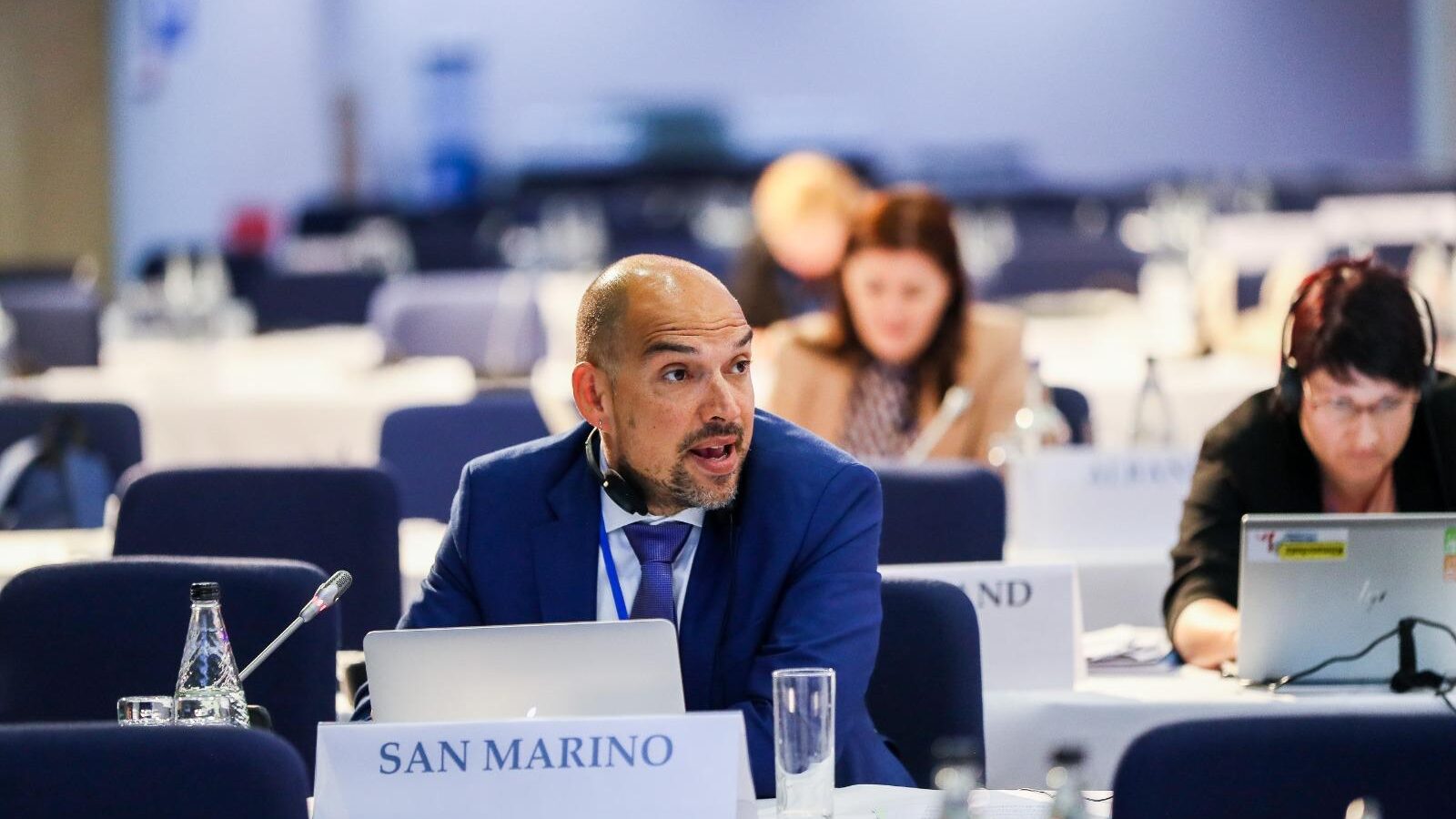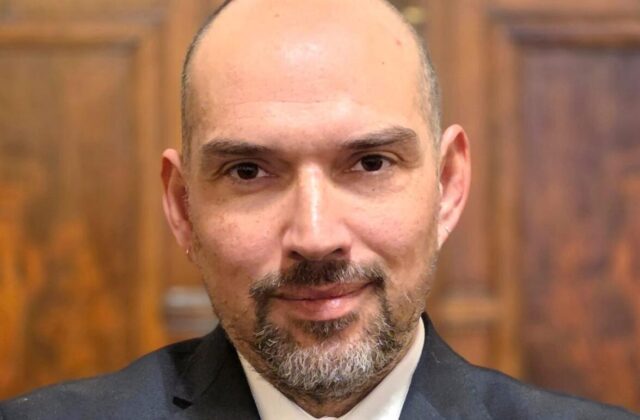
The column of in-depth analysis curated by Michele Muratori, group leader of Libera, continues, dedicated to examining current political affairs, the main institutional challenges and the topics of greatest interest to the Republic of San Marino.
There is poetry, and a profound political truth, in the words of Lucio Dalla when he sang that “the exceptional feat, believe me, is being normal”. For a long time, the Republic of San Marino built its narrative on the exceptional nature of its history and on an independence experienced almost as an aristocratic legacy. Yet in the interconnected world of the twenty-first century, the true and revolutionary exceptional feat for the Titan is not to remain a separate and vulnerable oasis, but to finally achieve the extraordinary normality of Europe. Even our Maltese friends, in signing the memorandum of understanding with our Parliament, recalled that “no man is an island” — a message that carries even greater weight coming from people who live on one. This message translates into the ambition to enter, head held high, with the strength of our own identity and on equal footing, into the largest economic space of freedom, growth and prosperity on the planet.
The autumn now unfolding before us will not be a mere political season, but the historic moment in which years of quiet diplomacy and a decade of relentless institutional work will find their crowning achievement. The recent and decisive green light from Coreper in Brussels — the most rigid and complex technical-diplomatic stage of the entire EU accession process — has definitively cleared the path pursued for at least four legislatures. Between the end of September and the first days of October, Secretary Beccari will sign the Association Agreement with the European Union. With provisional entry into force expected on 1 January 2027, San Marino will cross a historic threshold. And, as has been repeatedly argued, this will never amount to a renunciation of our sovereignty, but rather the highest and most far-sighted exercise of our centuries-old independence, capable of transforming an ancient institutional autonomy into a concrete tool for development for families, businesses and future generations.
To grasp the extraordinary economic and democratic scope of this choice, one must sweep away any residual skepticism and look to the countries that have already gone through this transition. Those who once feared that integration might stifle the specificity and sovereignty of microstates have been categorically proven wrong by recent history. Liechtenstein is the clearest demonstration of this. If thirty years ago the path toward the European Economic Area was accompanied by doubts and heated debate, decades of real-world experience have turned that choice into a model of excellence unanimously recognized today. Official demographic surveys and government studies now show extraordinary approval ratings, with as much as 80% of the population rating their membership in the European Economic Area as clearly positive, over 72% considering it an undeniable model of success, and more than 85% deeming it essential for the country’s future (official source: https://www.llv.li/serviceportal2/amtsstellen/stabstelle-ewr/pdf-llv-sewr-studie_ewr_20200301_en.pdf).
The citizens of the Principality have seen firsthand that integration has not eroded their identity, but has protected and helped it flourish. It has allowed, for instance, a construction giant like Hilti to surpass six and a half billion Swiss francs in global revenue, thanks to the elimination of every customs and bureaucratic barrier. Liechtenstein today boasts one of the highest per capita GDPs in the world, exceeding $150,000 a year, driven by a manufacturing and technology sector that alone generates over 40% of national wealth.
An entirely similar economic success has transformed Malta since its accession to the European Union in 2004. Until then, Malta was a small island economy with a strong state footprint; alignment with European standards and legal certainty acted as a powerful catalyst for foreign investment, tripling Maltese GDP over twenty years, with growth rates that at times exceeded 7% annually. Aviation giants such as Lufthansa Technik and Ryanair (through its subsidiary Malta Air), pharmaceutical companies such as Aurobindo and Pharmamed, and multinationals in digital services and finance such as Tipico, Betsson and Kindred have set up operations on the island, drawn by full integration into the single market.
For San Marino, a similarly promising and stimulating prospect opens up. From 2027, our productive fabric will be able to engage without filters, tariffs or duplicated compliance tests with a market of over 450 million European consumers. For San Marino’s financial institutions, the doors will finally open to the European passport and full operability within EU financial circuits, overcoming years of damaging isolation.
The greatest value, however, lies in our human capital and the future of new generations, because the Association Agreement will open the doors to direct integration into the European Union’s major framework programs for research and education. Until now, our research centers, the University of the Republic of San Marino and our high-tech enterprises have suffered from exclusion from direct EU funding and community partnerships. With the signing of the Agreement, our researchers and students will gain the right to access EU resources on equal footing with their European counterparts. The doors will open to a boundless labor market and knowledge economy, where we can compete without ever feeling like outsiders.
Alongside our traditional sectors, integration with Europe will ignite the spark of technological innovation and digital transition. Legal certainty, access to research programs and the removal of digital borders will allow our Republic to become a genuine international hub for technology, high-value-added start-ups and the knowledge economy. Our natural condition as a country with short supply chains, recognized and integrated into the European legal and economic architecture, will make San Marino the ideal ground to attract global investors and develop a tech sector with still-untapped opportunities, capable of generating highly skilled jobs for our citizens.
Of course, this opportunity will not simply fall into our lap. The real challenge for politics, for the government and for the majority will be to swiftly create — starting right after the summer break — the structural conditions needed to turn the agreement into a genuine economic driver. This will mean, on one hand, rigorously steering the incorporation of the EU acquis — that is, the progressive and coordinated assimilation of European directives and regulations into our legal system, much of which we had already begun adopting without receiving anything in return — and, on the other, modernizing the machinery of the state, cutting red tape and making the Titan a highly competitive and efficient environment for doing business.
At this turning point, rediscovering and fulfilling Lucio Dalla’s lesson means understanding that excellence does not lie in remaining isolated within a false sense of uniqueness, but in having the courage to achieve a normality full of dignity, security and prosperity. On the threshold of this autumn, San Marino is not simply signing an international treaty — it is choosing to be great in its vision. It is building a country that is solid, modern, attractive and truly master of its own future, proving that, after all, the exceptional feat is precisely this: to be, finally and fully, normal.