What happens when a hospital needs a treatment that simply can’t be found. We spoke with Silvia Giglio, Tender Specialist at Pharma Titano.
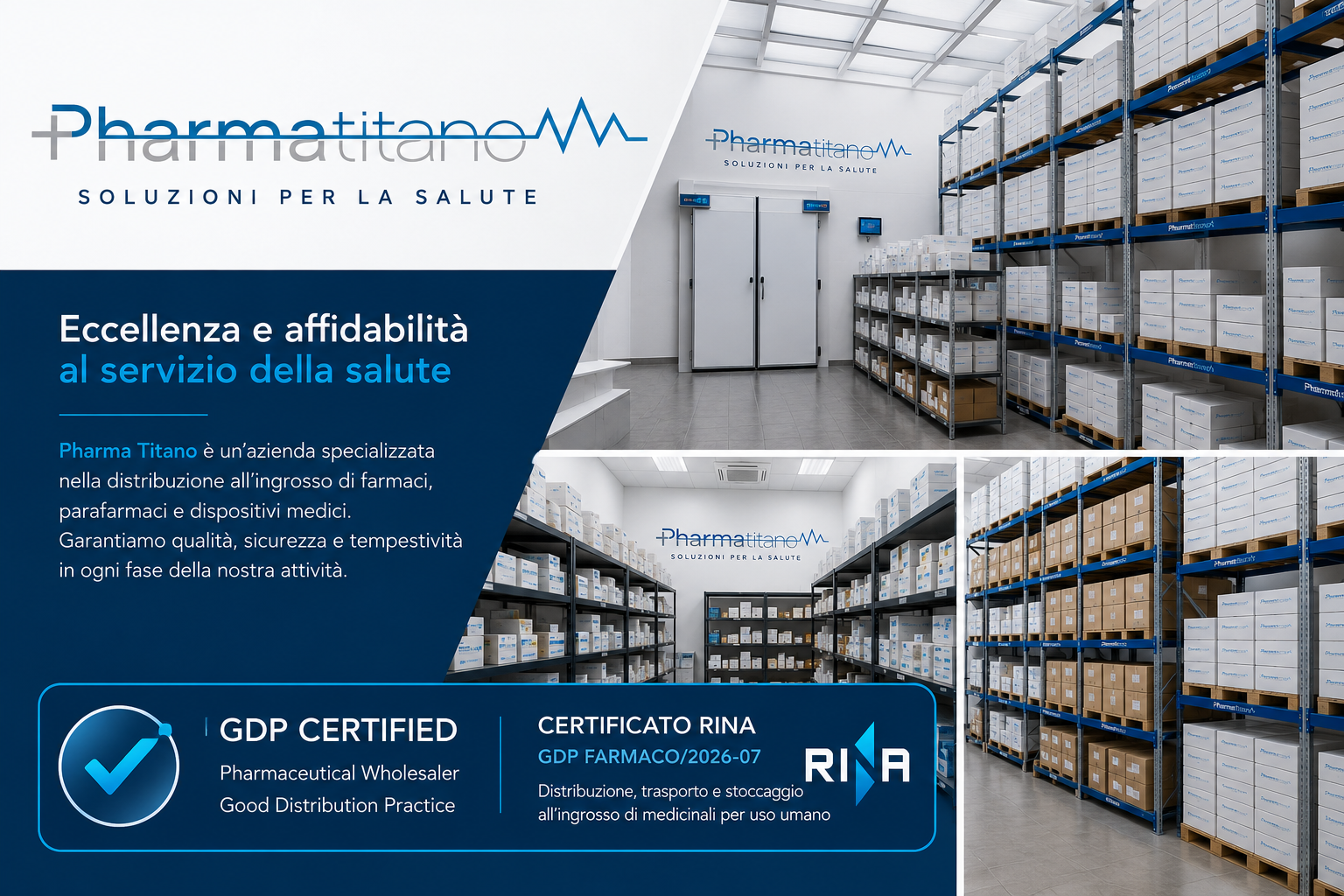
Behind every medicine that reaches a hospital ward, there is often invisible work involving tenders, authorizations, international research and a network of contacts spanning the globe. This is the case with Pharma Titano, the first company in the Republic of San Marino to receive GDP certification for the wholesale distribution of medicines, specializing in sourcing innovative, orphan and hard-to-find drugs. Silvia Giglio, the company’s Tender Specialist, explains what happens when a therapy seems impossible to find. Every day, she handles hospital tenders and searches for medicines across more than 27 countries.
“I handle everything related to tenders — the public calls for the supply of medicines. My day starts with searching for tenders on various institutional websites. I analyze the open calls, check what’s being requested, review the documentation, deadlines and all the administrative aspects needed to take part. Depending on the tender, the documentation can be more or less complex, but the work always starts there.”
What happens when a hospital needs a medicine it cannot source?
“First, the hospital checks whether the medicine is available in Italy. If it is, importing it isn’t allowed, because Italian-sourced medicine is always given priority. If the product isn’t available domestically and AIFA (the Italian Medicines Agency) authorizes the import, the hospital then searches for authorized suppliers.
At that point, it can publish an open tender, which anyone meeting the requirements can join, or it can proceed with a direct invitation or an email request to the importer. It depends on the urgency, the value of the supply and the specific nature of the request.”
How international is this line of work?
“Very much so. If a medicine is unavailable in Italy, it’s often unavailable across Europe too. In these cases, we first look for a European product, but if none is available or the costs are too high, we immediately widen our search. We work with suppliers in more than 27 countries: India, Turkey, the United States, Canada, Australia, Japan, China, Russia and many others. There are essentially no geographical limits for us.”
Is there a case that stands out in your memory?
“The most difficult medicine we were ever asked to source was a highly specific oncology product, available exclusively in the United States under FDA approval. It’s a drug used for immunosuppression following organ transplants. It was one of the most demanding requests we’ve handled, both because of how hard it was to find the product and because of the complexity of managing the entire supply chain. Over the years there have been many other cases involving rare and hard-to-find medicines, but that one is definitely the one I remember most vividly.”
How much does the human side of the job matter to you?
“It matters enormously. We never know the patient and we have no personal data whatsoever, but when we speak with hospitals, we can clearly sense the urgency. They call us because there are patients at risk of having their treatment interrupted, or because a promised medicine hasn’t been delivered. We feel that responsibility very deeply, and we’re very aware of the value of what we do.
Unfortunately, we can’t always find everything. There are truly rare cases where a medicine simply isn’t available anywhere.”
The State Hospital of San Marino is among your clients. What is Pharma Titano’s role there?
“We supply the San Marino State Hospital, as well as private hospitals and clinics, mainly for oncology and innovative medicines. Many of these drugs are only available outside Europe, and our work allows patients to receive treatment right here in San Marino, without having to travel to the United States or elsewhere for the same therapy.
We believe this carries significant ethical and social value, beyond its purely pharmaceutical importance.”
What message would you like to leave with our readers?
“We’d like more people to become aware of this world. Besides hospitals, we’re beginning to collaborate with associations dedicated to rare diseases, precisely to reach patients and their doctors more easily.
Our goal is to make innovative medicines accessible — for rare diseases and cancer treatment — which are often difficult to find. That’s the heart of what we do.”
Looking ahead, Pharma Titano is also launching new partnerships with associations dedicated to rare diseases and is carrying out research projects with the University of Bologna in the fields of regenerative medicine and regulatory innovation, with the goal of further expanding access to the most advanced therapies.