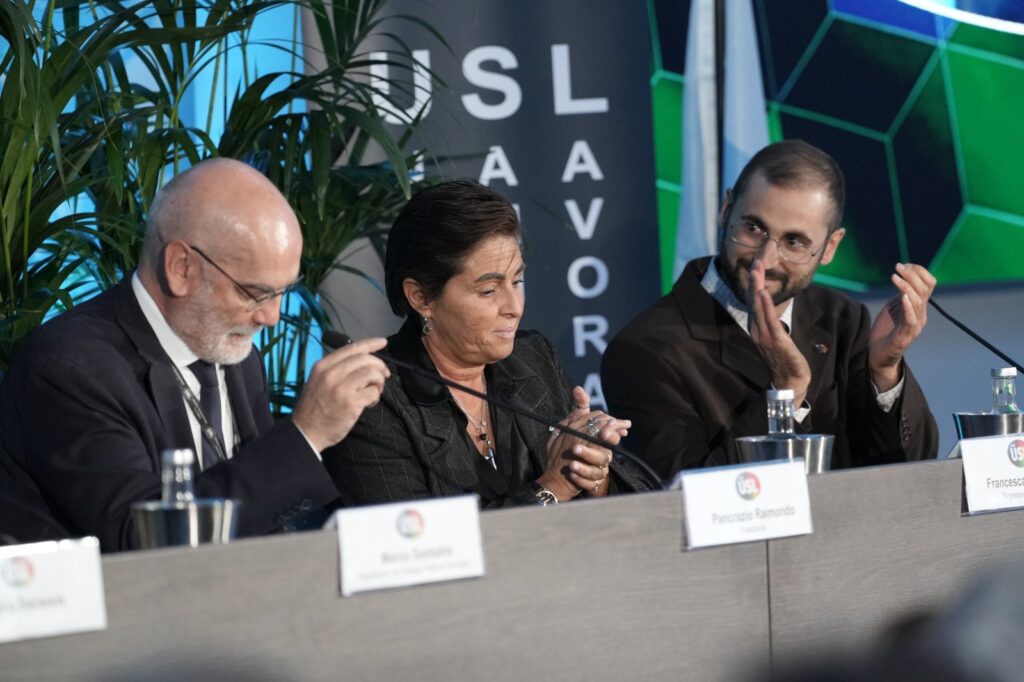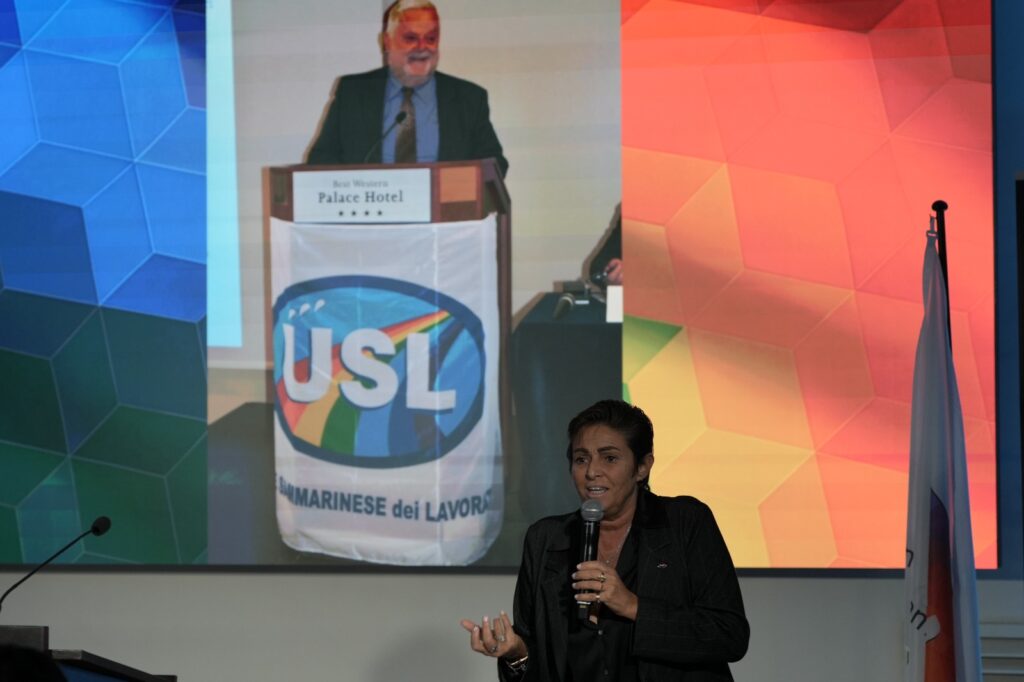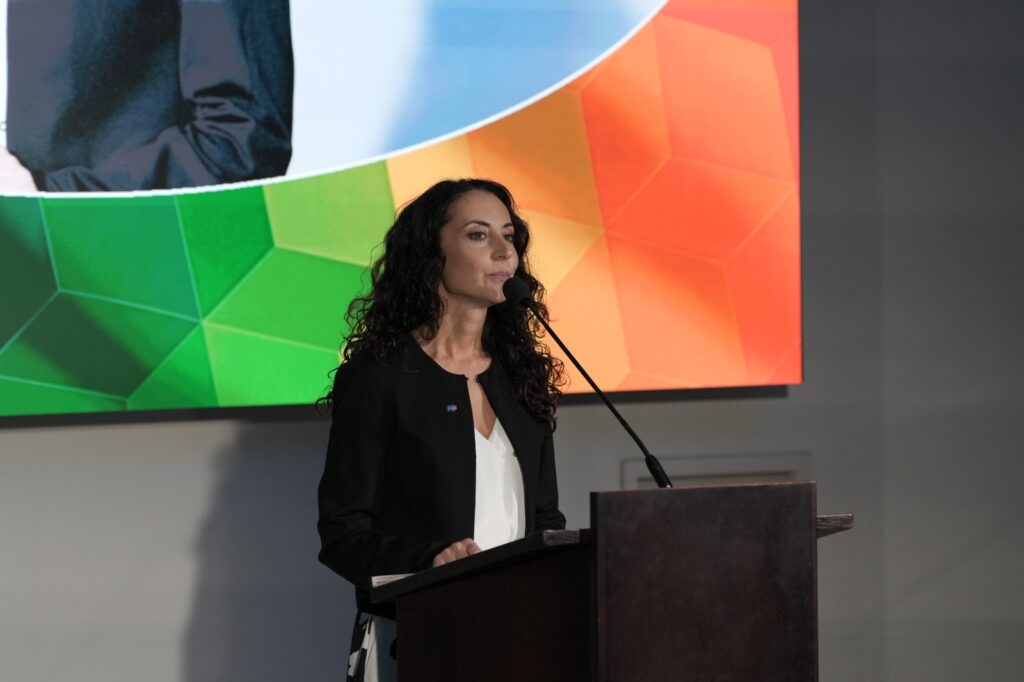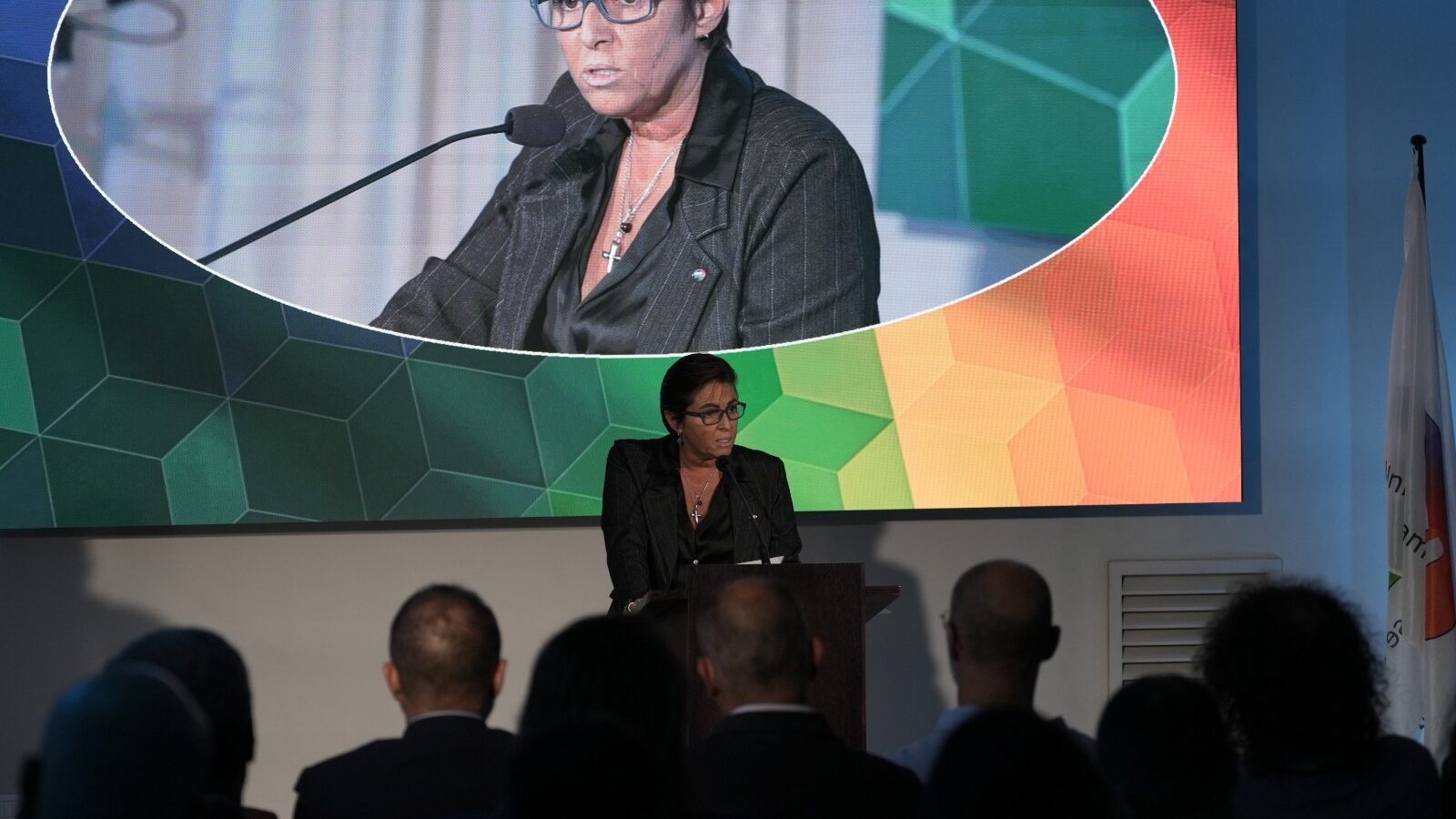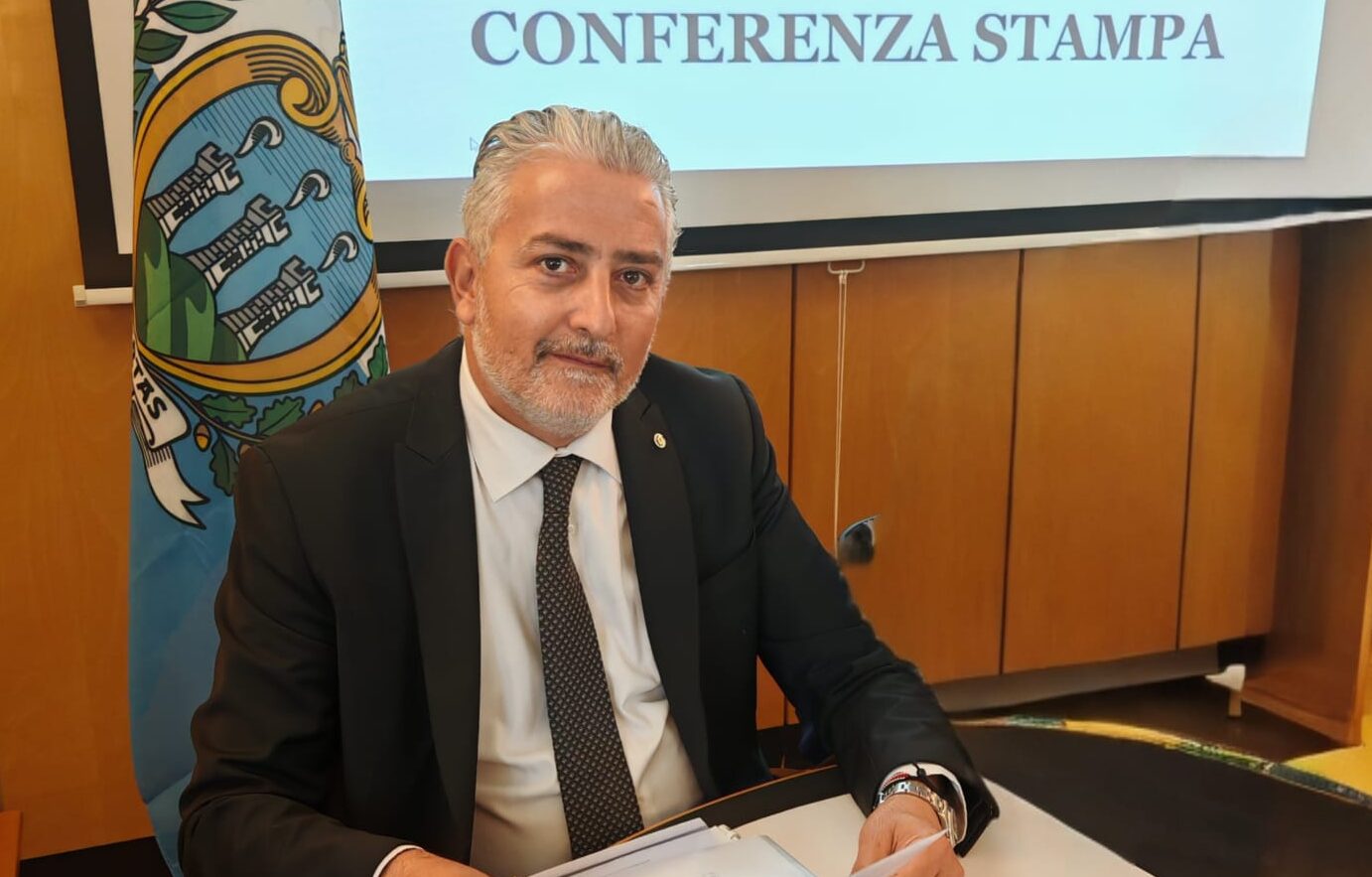
The Unione Sammarinese Lavoratori (USL) opened its 5th Confederal Congress on Wednesday evening at the same hotel that hosted its first, the Welcome Hotel at the Dogana World Trade Center, and Secretary General Francesca Busignani claimed eighteen years of growth, summing up the union’s outlook in a single sentence: «We dialogue but we don’t bend, we build but we don’t fall into line».
Before the keynote address came the evening’s most moving moments: the children’s choir anthem, the young people of «Colore del Grano», and a training room named in honour of Sisto Spadoni.
The children’s choir opened proceedings.
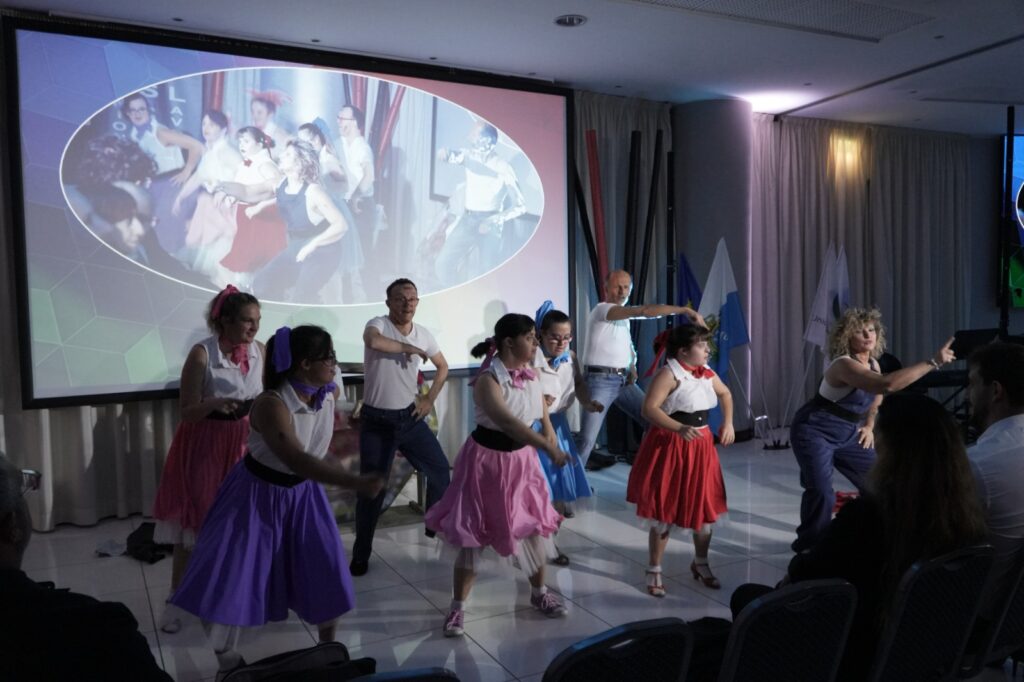
The choir of the Istituto Musicale Sammarinese performed the anthem, with Nicola Giaquinto on piano and Fausto Giacomini conducting. The stage then passed to the young people of the Atelier Workshop at «Colore del Grano», the ISS centre for people with disabilities: a 1950s-style dance number, all circle skirts and neck scarves, alongside pieces created in the workshop. The segment closed with a giant cheque for one thousand euros, signed by USL, to fund IT equipment for the young participants.
Then came the most intimate moment of the evening.
Before stepping up to the lectern, Busignani apologised to the room: «I need, and I feel I must, tell you what I am about to say». She spoke of Sisto Spadoni, the first secretary of USL’s Pensioners’ Federation, who passed away in August.
«To me he was like a father», she said, hoping his wife and daughter, both present in the hall, would forgive her for saying so. More than eighteen years ago, she recalled, the union’s leadership consisted of four young people and him: they reasoned «far more with the gut», while he alone was capable, «as good family fathers do», of alternating a scolding with a kind word. The same man who dressed up as Santa Claus at the Christmas dinner to hand out small gifts to members’ children, «who at the time were not very many».
USL named the training room after him, «in memory of his commitment, his example and his values». A minute of silence followed.
The keynote address began with the congress title itself.
«On one side only, on the side of the people. Not a slogan, but what we are».
On the side of those who work and those seeking work, of pensioners, of young people, of the most vulnerable, and also of the «thousands of cross-border workers who every day contribute to our country’s growth». Growing, she warned, does not simply mean gaining more members, and «defending what we have won remains essential, of course, but defending is not enough»: transformations must be steered «before they are simply imposed on us».
For politics, the no’s came first. «I want to be clear and unequivocal here: we do not and will never like a politics built on restrictions, cuts and happy degrowth».
Nor a politics «that presents every right as a cost and every safeguard as an obstacle», nor one in which «information handed out once decisions have already been made is sold as consultation and shared dialogue».
Yet «with the same clarity» Busignani acknowledged the positive signals that have emerged, calling on both majority and opposition for politics «with a capital P». There is only one yardstick: «A country is not truly growing if overall wealth increases while, at the same time, the number of people who cannot make ends meet also grows».
The central passage came down to three words.
«To build all this we need far-sighted politics and a strong union. USL is strong». Strong, she explained, not because it shouts louder than others, but «because it has clear ideas», because «it doesn’t just talk about people, it talks with people», because «it knows how to engage in dialogue but also knows how to say no when necessary».
A strength that means «being open to dialogue without being open to everything».
And a declared ambition: «We are not here simply to exist, we are here to make a difference».
Wages and contracts.
A contract «is not a good contract simply because it gets signed»: it must update pay, strengthen protections, and «must be evaluated and approved by the workers».
Defending wages also means preventing pay rises from being swallowed up by housing, energy and taxation, and demanding transparency on hours and clock-ins, because «what a worker has earned is not a favour to be awaited, but a right to be recognised in full and without delay».
And if dialogue is refused, strike action remains an option: «It is never a decision taken lightly», but faced with stalled negotiations and unilateral worsening of conditions, USL does not rule it out.
Productivity and artificial intelligence.
«Productivity cannot become the pretext for constantly asking more of workers»: a share of the growth generated must return to those who produced it, and «if technology frees up time, that time must not automatically be filled with more work». On artificial intelligence there is no fear, but nor is there a blank cheque: no innovation «without clear and precise rules», and technology must make work «safer and lighter, not replace people, control them or exclude them».
One room then, three today.
To tell the story of USL’s origins, Busignani borrowed the image of the four friends at the bar from Gino Paoli’s song: a group of young people wanting to change things, who along the way met Pancrazio Raimondo, a veteran trade unionist who helped them «understand, and take their first steps».
The first congress, she recalled, was held in just one of the three rooms that today host the fifth. «These are not 18 years spent simply occupying a space»: it is an achievement «won by the country’s youngest trade union organisation, but not its smallest», and «no one gave it to us».
Within those eighteen years lie a new headquarters, conceived as «a place where a person can feel at home, safe, listened to», the first Observatory on Violence and Harassment in the Workplace, «not a symbolic initiative, but a permanent point of listening, assistance and monitoring», and the relationship with the Unione Consumatori Sammarinesi (Sammarinese Consumers’ Union), because anyone who clocks off becomes a user, a consumer, a saver — and still needs protection.
And there are the members, to whom she offered a lengthy thank-you: «Thank you, because you have made USL grow and continue to make it grow».
An outstretched hand to CSdL and CDLS.
In the hall, along with their respective delegations, sat the two secretaries general, Enzo Merlini (CSdL) and Milena Frulli (CDLS), and Busignani addressed them directly: «We have signed contracts together, we have called strikes together». The congress opened exactly one year after the first of two joint general strikes against the IGR tax reform. By joining forces, she said, «we did not simply add them up, we multiplied them».
For the future, she called for dialogue that is «frank, open, constructive, transparent», capable of «giving history its due value», with one caveat: «representativeness has its own measure, which cannot and must not be ignored». And a commitment: «For us trade union unity has value, and we will be there whenever the conditions allow».
To employers: partisan, not adversarial.
Busignani acknowledged that the presence of employers’ associations «is not merely a courtesy», but a sign of a system of relations that exists in San Marino and delivers results. «USL is and must remain partisan», on the side of workers, but permanent confrontation — a logic «understandable, and probably necessary, in the era of the great gains of the 1970s» — is «now outdated»: «Unions and employers’ associations are two sides of the same coin», with distinct interests but a shared goal, «making the whole of Sammarinese society move forward».
Then, to explain what she called USL’s mindset, came the sharpest line of the evening: «We dialogue but we don’t bend, we build but we don’t fall into line, we cooperate but we don’t blur the lines, we listen but we decide together with the people we represent».
And an admission not often heard in a congress address.
«In 18 years of this journey we have also made mistakes, but we have never stopped questioning ourselves». The closing words looked entirely to the future: «Today we are not simply celebrating what we have been, today we are choosing what we want to become». More present, better prepared, more capable of turning an individual problem into collective protection and, she promised to applause, «never bowing our heads to anyone».
Institutional guests followed the keynote address.
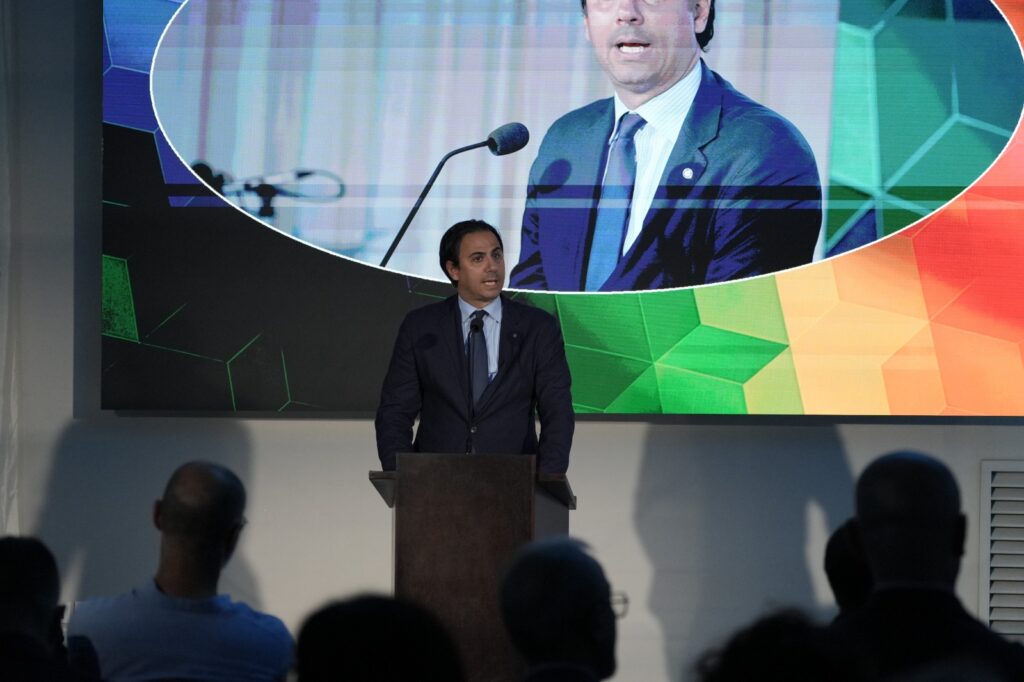
Secretary of State for Labour Alessandro Bevitori explained that his Secretariat operates along the path of social dialogue and listed the dossiers currently open: regulations on working in high temperatures, workplace inclusion, the law against violence in the workplace — the very same ground covered by USL’s Observatory. Also on the table were wages, purchasing power, welfare and productivity with broadly shared benefits, with particular attention to young people: the challenge, he said, is not only to create jobs but to offer a future.
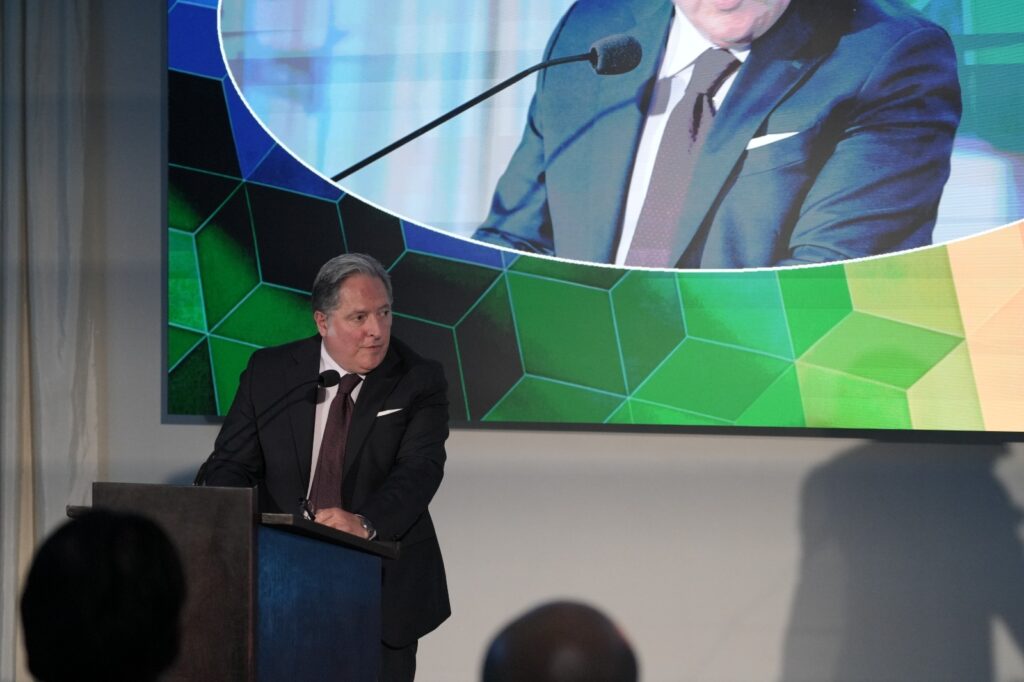
Italy’s Ambassador to San Marino, Fabrizio Colaceci, who visited USL’s headquarters in January, noted that alongside dialogue between governments, dialogue between the trade unions of the two countries also matters, starting with cross-border employment. In a world where the temptation to go it alone is growing, he concluded, the challenge is to hold firm to one principle: when it comes to work, nothing gets resolved in isolation.
Thursday brings the response.
From 9:15 am, the floor passes to those directly addressed on Wednesday evening: the other trade unions, international guests and employers’ associations. From 2:45 pm it is the delegates’ turn, while Friday will see the vote on the union’s leadership.
Gallery from the opening evening