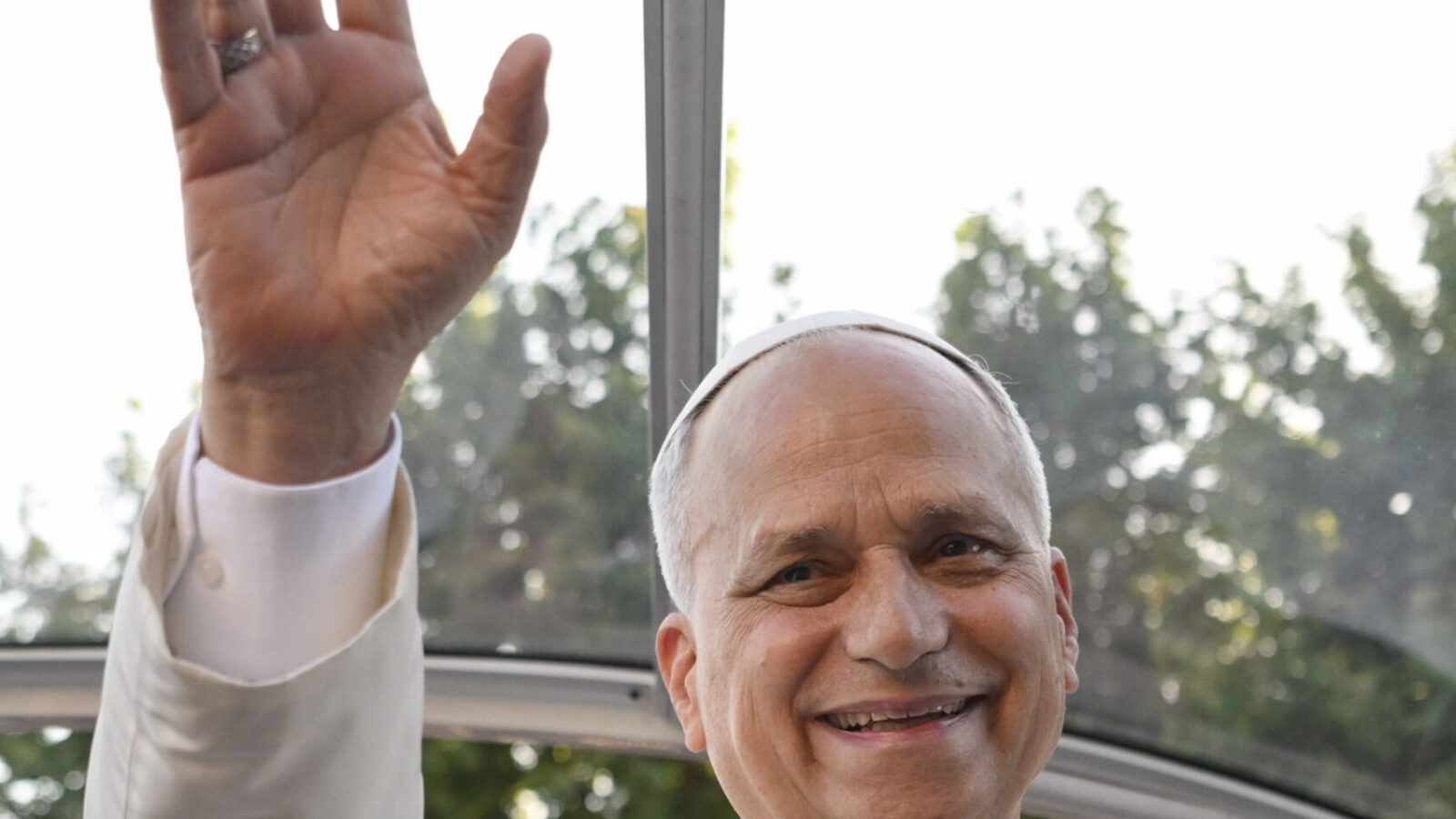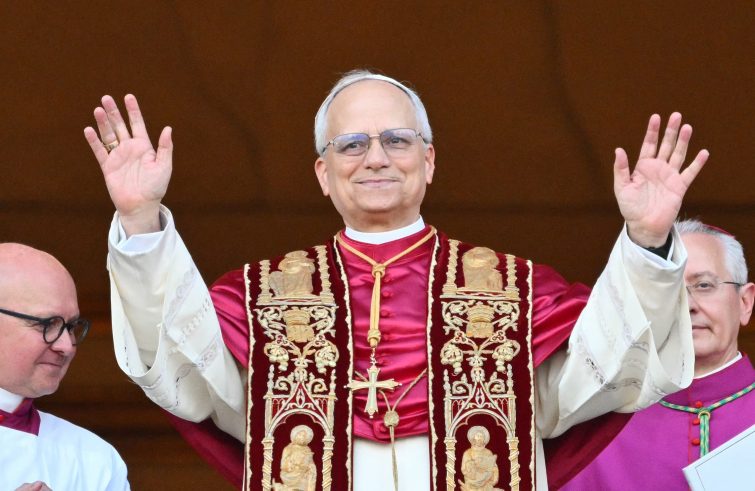
A lace canopy above via IV Novembre, eight tractors lined up near the Arch of Augustus, and more than ten thousand handmade cards. With just two days to go before Pope Leo XIV’s visit to Rimini, scheduled for Saturday 22 August, the city is putting the finishing touches on preparations for the Pontiff’s arrival. The mobilisation involves hundreds of volunteers and brings to the city centre traditions and testimonies from the more remote corners of the Diocese.
Meanwhile, requests for passes continue to pour in from the faithful across the diocesan territory and from tourists holidaying in Rimini who wish to take part in the day’s events. Alongside the organisational work of the Diocese and the cooperation of the Municipality, hundreds of people are involved in the various services.
“This visit was not simply organised for the community, but by the community. It’s like a new Sagrada Família: many people, many hands, many small pieces that, together, build something belonging to everyone. And it is precisely these small, often invisible gestures that make the welcome for the Pope so beautiful,” says the Bishop of Rimini, Nicolò Anselmi.
Among the initiatives prepared for Saturday, one stands out for transforming, if only for a day, the face of via IV Novembre, from Piazza Tre Martiri to the Cathedral Basilica. The street will be decorated with hundreds of handmade lace doilies crafted by the women of Casinina, bringing a tradition from the hinterland right into the heart of Rimini.
The pieces were made over the winter by around twenty women of different ages. The crocheted works were assembled onto seven large metal hoops, specially built by a blacksmith and suspended by steel cables. The result is a sort of giant flower — a true “ceiling” of lace beneath which Leo XIV will pass on his way to the Cathedral.
The initiative draws on the tradition of the Madonna del Giro, a devotion of Urbino origin dating back to the fifteenth century. Casinina, the outermost parish of the Diocese of Rimini and a hamlet straddling the border between Emilia-Romagna and Le Marche, still keeps this custom alive today. Every May, the image of the Madonna is carried in procession on foot, while every ten years — in years ending in 6 — the community holds a special celebration. It was precisely for the 2026 event that the women of the village had created the large installation now being brought to Rimini.
“We thought it would be beautiful to bring to Rimini something that told the story of our community, our history and the work of our hands. Those women worked for months without knowing where their doilies would end up. Now that lace will be above the Pope’s head. It’s a way of saying that even the outlying parts of the Diocese have something to offer and can feel like protagonists of such an important moment,” says Francesca Bellucci.
But lace is not the only thing coming from the hinterland. Eight modern farm tractors will be on display near the Arch of Augustus, thanks to collaboration with several local businesses — a choice designed to showcase the province’s agricultural side as well.
“Bringing tractors before the Pope means showing a side of Rimini that risks being less well known,” explains Marco Tamagnini, president of the provincial Acli. “Rimini is without doubt a city of art and tourism, but it also has a cultivated, elegant hinterland with a strong agricultural and agri-food vocation. We want this reality to gain visibility alongside the sea and the artistic heritage. Agriculture and tourism provide work for a great many people and also represent a model of a culture of integration and peace.”
Rounding out the preparations are more than ten thousand cards bearing the words “Thank you. God bless us”, made and handwritten by the sick, prisoners, members of religious orders, young people from parish youth groups, Caritas volunteers, parishioners and other members of the community. Before they were distributed throughout the Diocese, Bishop Anselmi personally signed each and every one of them.
“The Pope will find a city that is well prepared, but above all he will find a community that has put forward the best of itself: work, prayer, creativity, generosity. This is our way of welcoming him,” the bishop concludes.