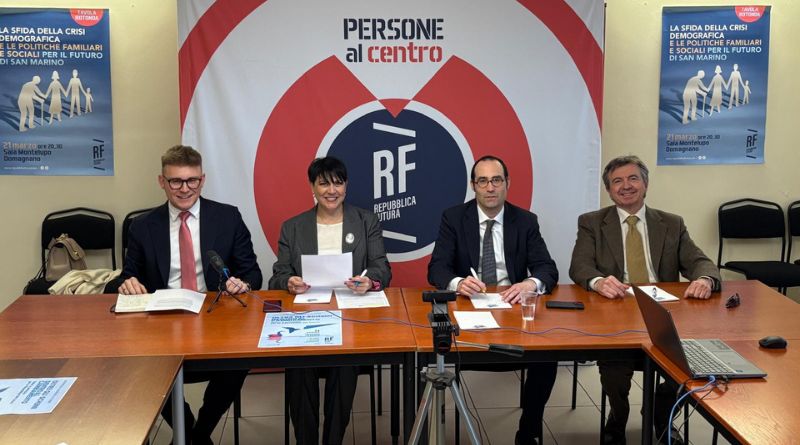
Repubblica Futura is calling for the withdrawal of Delegated Decree no. 134 of 7 September 2026, which sets out implementing provisions on official secrecy concerning information and data held by the Central Bank of the Republic of San Marino. According to the party, the measure would restrict the prerogatives of members of the Grand and General Council (Consiglio Grande e Generale) and was adopted without adequate political discussion.
RF first draws attention to the timing chosen for issuing the decree. “The delegated decree was curiously issued just as a commission of inquiry into the attempted acquisition of a bank began its work, only weeks before the start of criminal proceedings centred on the same issue, and as international arbitration on the very same matter gets underway,” the statement reads.
The party further argues that the content of the measure is far removed from the requests made in an earlier parliamentary question submitted by PSD councillors Matteo Bacciocchi, Mara Merlini and Nicola Rossini. “What lies behind this sudden demand for secrecy over the Central Bank’s activities? Why are the government and the majority, after their blow to the Council’s rules of procedure, now dealing the Grand and General Council another heavy setback?” Repubblica Futura asks.
The decree justifies the new provisions by citing the need to bring the regulatory framework further into line with international standards, the European Union’s legal framework and the guidance of European supervisory authorities. RF, however, raises doubts about the overall coherence of the system, pointing to the role of the Secretary of State for Finance within the Credit and Savings Committee (Comitato per il Credito e il Risparmio) and to the state’s public shareholdings in the banking sector.
“The State owns 100% of one bank in San Marino, 100% of a bank in Croatia, and 88% of the Central Bank, and now, with this decree, secrecy is being imposed on information relating to all these entities,” the party states.
The statement cites Article 3 of the decree, according to which “the information and documents provided remain subject to the secrecy regime, including for the purposes of Article 377 of the Criminal Code, for as long as the confidentiality requirements set out under current legislation persist.” For Repubblica Futura, this provision “shuts the door on the ability of councillors elected by citizens to carry out their mandate in full within the Permanent Council Committee for Finance and Budget.”
“It must be made clear that, as of 7 September, everything concerning banks becomes secret, and if something then goes wrong at state-owned companies, or the State ends up having to pay out over guarantees or financing provided to a bank, State Secrecy applies, punishable as a violation of the Criminal Code,” RF states, adding: “Is this normal? Cui prodest? The European Union? The Central Bank? The government? The banks?”
“Repubblica Futura believes this is a dangerous choice, especially considering that the measure was issued quietly, with no apparent justification. What’s more, it is clear that the secrecy applies only to members of the Grand and General Council, and not to the government, which retains a free hand over the banks and will continue stirring murky waters,” the statement continues.
The party considers the content of the decree “seriously detrimental to the rights of members of the Grand and General Council” and objects to the use of a delegated decree to amend both the Central Bank’s statute and the Council’s rules of procedure. “If there are state interests or concerns to protect — including in light of what may happen in the coming months — the government must have the honesty to speak clearly and openly, to councillors and to all citizens of the Republic.”
“If, on the other hand, as it appears, this is a clumsy attempt to conceal the disasters that the occupant of the ground floor of Palazzo Begni has been overseeing throughout these years in government, then we are ready to fight, because transparency always matters — especially when it comes to governing,” Repubblica Futura concludes.