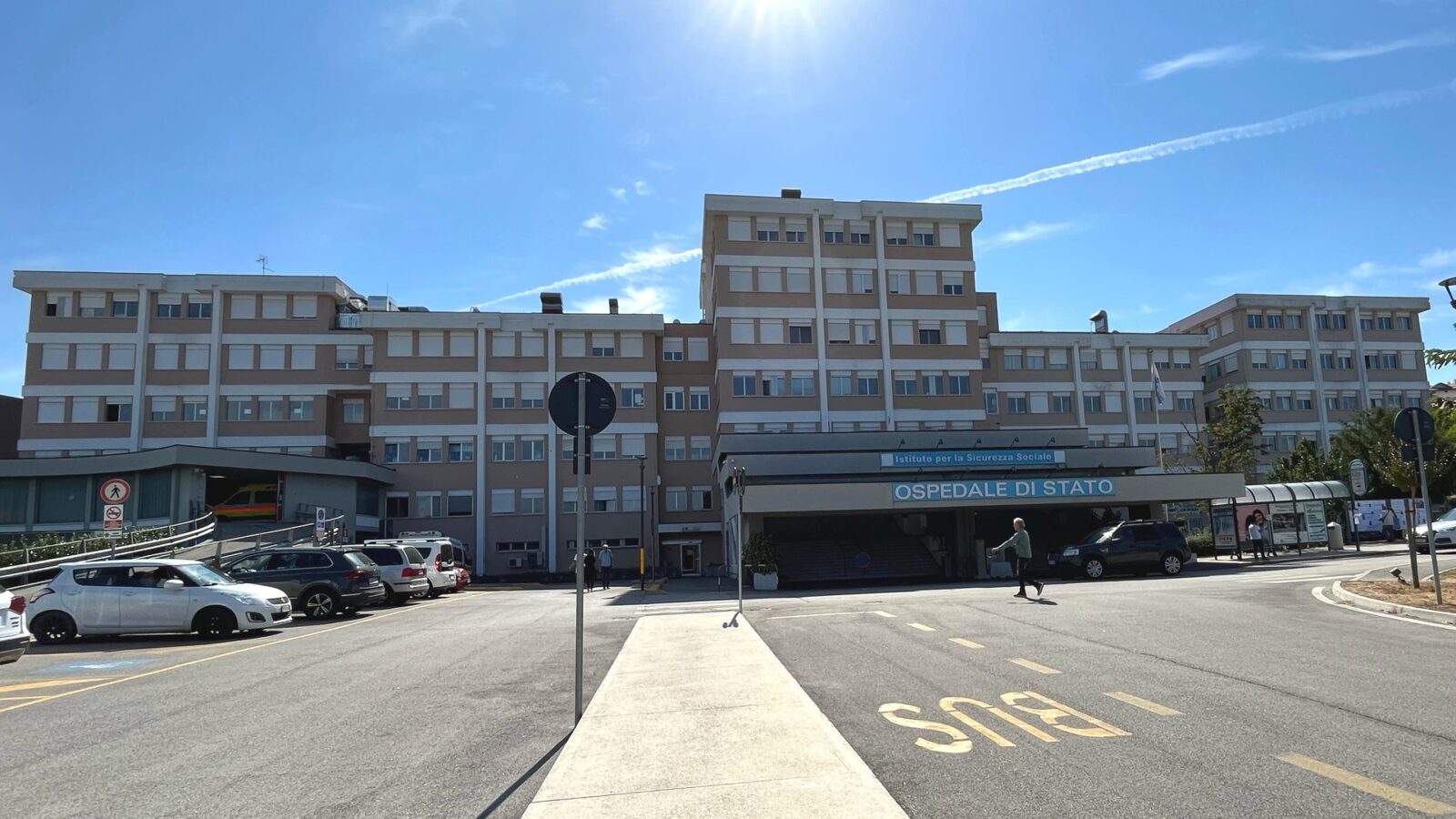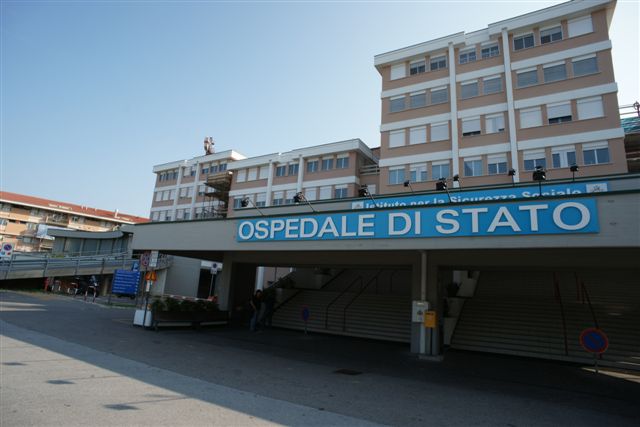
The question resurfaced in Commission IV from both sides of the chamber, framed in almost identical terms. «New hospital, yes or no?» asked Luca Lazzari of the PSD, speaking from the majority benches. «Do you want to build the new hospital or not?» pressed Emanuele Santi of Rete, from the opposition. The clearest answer came from Massimo Andrea Ugolini, Secretary of State for Health and Social Security, Social Affairs and Equal Opportunities: «Continuing to pretend that the new hospital issue doesn’t exist would not be responsible towards future generations».
Clear on principle, far less so on timing. Claudio Vagnini, Director General of the ISS (Istituto per la Sicurezza Sociale, San Marino’s social security institute), confirmed that the prevailing view favours a new facility, pointing to the limitations of a building now over fifty years old that must nonetheless remain fully functional until its successor opens. The new hospital, he explained, should be organised by intensity of care and built around more modern care pathways. Then came the weighty admission: «At this moment I am not in a position to give you a precise timeline».
Administrative Director Manuel Canti explained why that uncertainty is far from a minor detail: without knowing whether the horizon is four, five or six years away, it becomes difficult to decide which interventions on the current building should be structural and which merely temporary. On financing, Canti clarified that project financing can take many different forms and does not necessarily involve outsourcing healthcare services to private operators, though he described San Marino’s legislation on the matter — dating back to 2011 — as overly rigid.
It was precisely this fear of outsourcing that Ugolini sought to dispel during the evening session: «The public services we provide today must continue to be provided tomorrow as well». What remains to be worked out is the financial solution, weighing options such as project financing and collaborations between public bodies, or between public and private partners.
The sharpest criticism came from Matteo Casali of Repubblica Futura, who described a deadlock that is procedural before it is substantive: «The technical staff are waiting for political guidance on the healthcare model, while politicians seem to be waiting for the technical staff to define that very model». Casali also objected to the lack of a firm deadline for the report on the new hospital. Guerrino Zanotti of Libera offered a warning of the opposite kind, aimed at those placing too many expectations on the new facility: it should not be seen as «a cure-all for every problem in healthcare».
The day closed with the majority’s motion, read out by Marinella Lorena Chiaruzzi of the PDCS, which calls for consideration of a facility that is «modular and adaptable to the future evolution of healthcare», for the various financing options to be explored further, and for the State Congress to provide a report on the process. For Andrea Ugolini, also of the PDCS, the document serves to «crystallise what emerged during the day’s discussion». Proceedings adjourned around 11.30pm and resume this morning at 9am with the voting declarations.