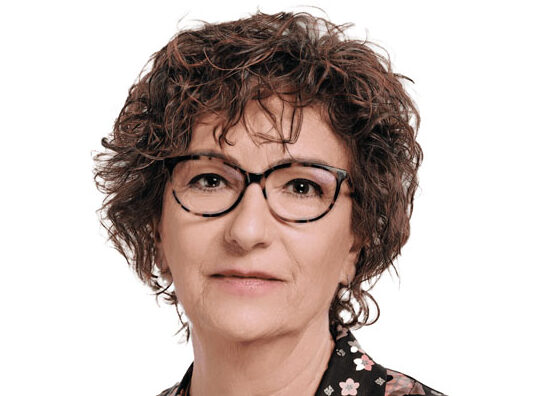
Yes to new measures for families and the birth rate, but with one firm condition: supporting motherhood must not mean weakening women’s autonomy. Speaking in the Grand and General Council (Consiglio Grande e Generale) on the bill, Maria Donatella Merlini (Psd) warned of the risk that some measures could produce the opposite effect to the one intended. Hence her call to monitor the reform closely and to keep investing in services, the sharing of care responsibilities, and work-family balance. Her full remarks follow.
«We come today to the second reading of this important bill, which intervenes decisively on protections and support measures for the family, for motherhood, fatherhood and the birth rate. Already in the reports presented at the first reading, we rightly pointed to a fundamental fact: that the Republic of San Marino, too, is going through a genuinely significant phase of demographic decline. We must be aware that fewer births inevitably mean an increasingly older population, with a consequent reduction in the active workforce and a growing burden on our welfare systems. The report accompanying this bill recalled very clear and alarming statistics for recent years: from 296 births in 2004 to just 144 registered in 2024. It is true that in 2025 the birth figure rose again, showing a positive trend, but unfortunately, already in the first six months of this year, 2026, we are once again seeing a negative figure. For this reason too, in my view, this law takes on extraordinary significance – not because it can, on its own, definitively solve the complex problem of the birth rate, since no law has such power, but because it represents a concrete signal. The decision to have a child never depends solely and exclusively on economic factors; it is an extremely complex personal choice tied to many elements, such as employment, access to housing, the efficiency of services, the time realistically available, stability, and general confidence in the future. Yet I believe politics can do a great deal in this regard, by creating better conditions in our territory, reducing everyday obstacles, and clearly telling families that they are not being left alone. In this context, I believe the economic measures set out in the text are extremely significant: I am thinking, for example, of the increased percentages of salary guaranteed to parents during periods of leave from work, the genuine strengthening of family allowances, the financial bonus for the birth or adoption of a child, and the leave provisions designed for both mothers and fathers. I am also thinking of all the specific measures aimed at single mothers and single-parent households, as well as the concessions provided for nursery school fees and school meals, calibrated according to income and number of children. Another passage of great importance is the formal recognition of the figure of the caregiver – of those who look after the most vulnerable members of their family, often daily and in silence. In my view, these are useful, concrete measures that carry significant political weight, because supporting a family must not mean merely affirming a theoretical principle on paper; it means providing real tools, preventing the birth of a child from becoming a source of impoverishment for parents, and ensuring that the burden of care does not always and only fall on the same people – in particular, on women. Paternity leave, the overall strengthening of parental leave, and the improvement of the related allowances must be read precisely in this cultural light: they are not merely financial aid, but genuine tools of cultural change, because they affirm forcefully that caring for children is equally the responsibility of both parents, and that fathers must finally be given the concrete conditions to be present and truly participate. Likewise, the specific support aimed at single mothers takes on profound significance, because it intervenes where economic fragility is often compounded by a heavy burden of organisational, educational and family solitude; a single mother does not need only a one-off financial contribution – she needs to be included in a network of services, and she needs institutions to make their presence felt. The legal recognition of the caregiver also represents a fundamental step, because caring for vulnerable people cannot and must not be regarded simply as a private or invisible matter: it is genuine social work and a responsibility that concerns the entire community. All of this undoubtedly moves in the right direction, but I believe we must also remain alert and aware of a creeping risk – the risk that some measures designed to support the family may end up, unintentionally, sending women back home and away from the world of work. In my view, this must absolutely not happen; supporting motherhood must in no way mean weakening women’s autonomy, just as supporting the family must not mean reducing women’s presence in the labour market and in our society. Good family policy must do exactly the opposite: it must allow women to choose in complete freedom, it must involve men more fully in caregiving responsibilities, and it must make parenthood a genuinely shared responsibility between partners. For this reason, it will be absolutely necessary to closely monitor how this law is applied over time; we will need to check whether the measures introduced actually work, whether they are genuinely used, whether they truly help families, and whether they produce a more balanced distribution of responsibilities. Alongside purely economic measures, we must also strive to work even harder on strengthening childcare services, educational services, support for parenting, and the creation of schedules genuinely compatible with people’s real lives, ensuring accessibility and flexibility; a family needs not only financial contributions, but also, crucially, time, physical space, organisation, and a community that functions efficiently. Investing in family policy means investing in the future of our country, but it also means, above all, making our society more modern, fairer, and much closer to the concrete needs of people’s lives. In this respect, I believe the ICEE law will ensure a decidedly fairer and more targeted distribution of State resources. This bill therefore represents a very positive step forward and a fundamental stage in a process that must necessarily continue with attention, monitoring, and the ability to correct anything that does not work as intended. With this in mind, I welcome the sociological survey launched in our territory, which is precisely intended to help us better understand which factors most influence young people’s decisions to build stable relationships. Finally, I wish to express my appreciation for the work carried out by Secretary Stefano Canti, particularly for the approach to dialogue that allowed him, right up to the last moment, to engage with political forces, trade unions and employers’ associations in bringing this important project to completion; I believe this is the right method – one, unfortunately, too rarely practised in politics – for gathering proposals and ideas capable of making a real difference in the face of complex problems.»