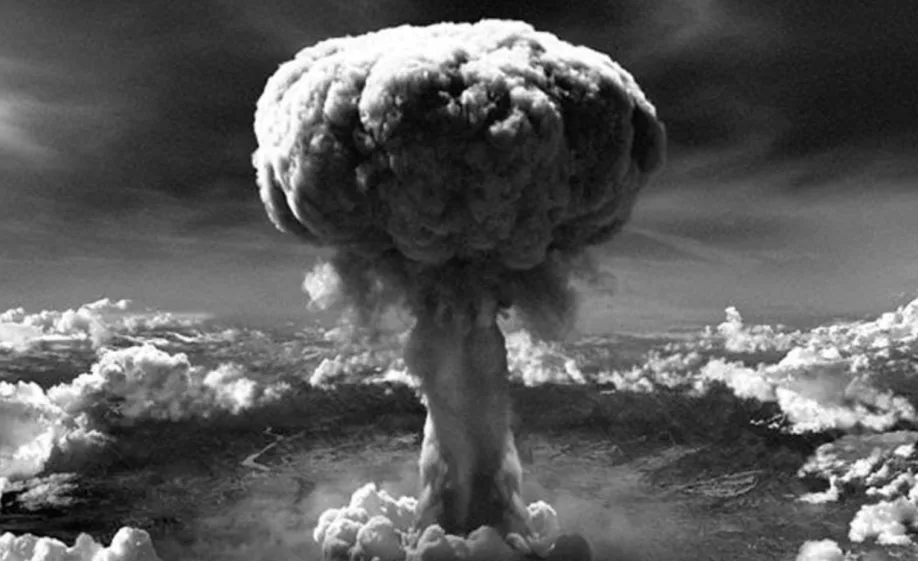
On August 6, 1945, at 8:15 in the morning, the first atomic bomb in history wiped out a city and tens of thousands of lives in a matter of seconds. Today, as Hiroshima falls silent at the sound of the peace bell, nuclear arsenals are growing once again, disarmament treaties are unraveling, and the threat of atomic warfare has crept back into everyday political discourse. Remembering has rarely felt less like empty ritual.
At 8:15 a.m. on August 6, 1945, the American bomber Enola Gay dropped “Little Boy” on Hiroshima — the first atomic bomb ever used against human beings. In a single flash, the city ceased to exist: tens of thousands of people died instantly, vaporized, crushed, or burned alive, and by the end of that year the death toll had climbed to roughly 140,000, as radiation continued to kill silently for decades afterward. Three days later, Nagasaki suffered the same fate. To this day, these remain the only two instances in which nuclear weapons have been used in war.
Eighty-one years on, this morning Hiroshima came to a standstill, as it does every August 6th: the peace bell tolled, a minute of silence fell at 8:15, wreaths were laid at the cenotaph that holds the names of the victims — a list that keeps growing year after year, since people are still dying today from the bomb’s lingering effects. Around the memorial stood the survivors, the hibakusha: fewer each year, their average age now past 85, taking with them the last generation able to say “I was there.” It is no coincidence that the 2024 Nobel Peace Prize went to Nihon Hidankyo, their survivors’ organization — a recognition that felt as much like a handover as it did a warning.
Because the real question on this anniversary isn’t about the past — it’s about us. And the answer is an uncomfortable one. Roughly 12,000 nuclear warheads remain in the world today, and for the first time since the end of the Cold War, operational arsenals have begun to grow rather than shrink: every nuclear power is modernizing its systems, while the architecture of disarmament treaties — built over half a century of painstaking diplomacy — crumbles piece by piece. The nuclear threat, for decades confined to the realm of nightmares, has returned to the everyday vocabulary of politics: invoked repeatedly during the war in Ukraine, looming over the standoff between the United States and Iran born precisely out of an atomic program, wielded as a bargaining chip in confrontations between powers. The same world that lays wreaths at Hiroshima today is pouring record sums into warheads, even as it tells its own citizens there’s no money left for anything else.
The hibakusha have been saying it for eighty-one years, with a consistency that ought to embarrass anyone who only listens to them once a year: the only way to ensure nuclear weapons are never used again is to ensure they no longer exist. This isn’t naivety — it is the only logical conclusion drawn by those who witnessed firsthand what happens when such weapons exist and are used. Everything else — deterrence, the balance of terror, the bomb that supposedly “guarantees peace” — is a bet humanity renews every single day, wagering itself as the stake.
Eighty-one years ago, on a summer morning, a city discovered what it means when that bet goes wrong. Remembering it today, as the world rearms and its witnesses fall silent one by one, is not a ritual. It is the last form of self-defense we have left. Because Hiroshima is not a page in a history book. It is a precedent.