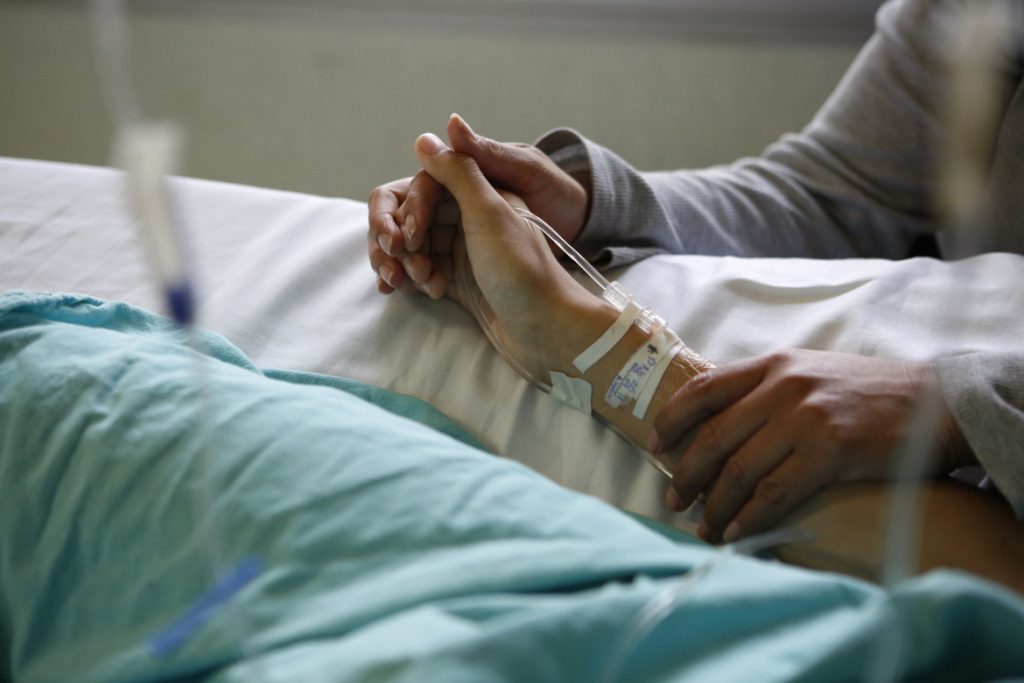
Today marks the opening of the Grand and General Council (Consiglio Grande e Generale). Among the dossiers awaiting the chamber is one that, perhaps more than any other, will be difficult to confine within the usual dynamics of majority versus opposition. It is the bill on end-of-life care, now reaching its second reading, set to bring councillors face to face with questions that carry a political dimension, certainly, but first and foremost a human, personal and even family one.
Because when it comes to end-of-life issues, it is easy to get lost in definitions. Informed consent, advance treatment directives, palliative care, withdrawal of treatment. These are the formulas needed to draft a law. But behind those words lie situations that so many families know all too well: an illness that leaves no hope, a person no longer able to express themselves, a doctor called upon to make agonising decisions, relatives wondering what their loved one would truly have wanted.
This is probably where the debate should begin. How much say should a person have over their own body and the treatment they receive? How far does the right to self-determination extend? And when a patient is no longer able to speak for themselves, how much weight should be given to what they had decided while fully conscious? These are enormous questions, on which different sensibilities and deep convictions exist – all of which deserve to be heard.
The bill promoted by the Emma Rossi Association attempts to provide an answer by introducing, among other things, Advance Directives for Healthcare Treatment and affirming the principle that no treatment can be started or continued without the free and informed consent of the individual. At the same time, it places palliative care and patient support at the centre – an area where divisions are unlikely: ensuring dignity also means never leaving anyone alone in the face of suffering.
But it is precisely here that another question arises. Is a law alone enough to truly guarantee this dignity? Does San Marino currently have all the tools, facilities and staff needed to make palliative care genuinely accessible to anyone who needs it? And how much investment will be required to turn a right written on paper into something concrete in people’s lives?
There is also a boundary that, in public debate, risks easily becoming a source of misunderstanding. The Christian Democratic Party (PDCS) has reiterated that the measure must exclude any prospect of euthanasia, while the text addresses the possibility of refusing or discontinuing medical treatment. Where exactly is that line drawn? Is it clear enough for citizens? Will it be clear enough for the doctors and healthcare workers who will one day have to apply the rule? These are questions the parliamentary debate should answer without resorting to slogans.
This matters all the more because, beyond San Marino’s borders, the debate is moving fast. In Italy, the issue of medically assisted suicide continues to produce regional interventions, judicial rulings and political clashes. Titano can chart its own course, without necessarily importing models or conflicts born elsewhere. But to do so requires clarity about what this law wants to be and, just as importantly, what it does not want to be.
From today, the floor belongs to the Council. It would be reductive to turn this discussion into a mere headcount of those in favour and those against, progressives versus conservatives. The real question is what balance San Marino wants to strike between protecting life, personal freedom, medical responsibility, and safeguarding those going through the most fragile moment of their existence.
There are no easy answers. And perhaps that is precisely the point. On such a delicate matter, the quality of politics will also be measured by the ability to ask the right questions, before claiming to have all the answers.