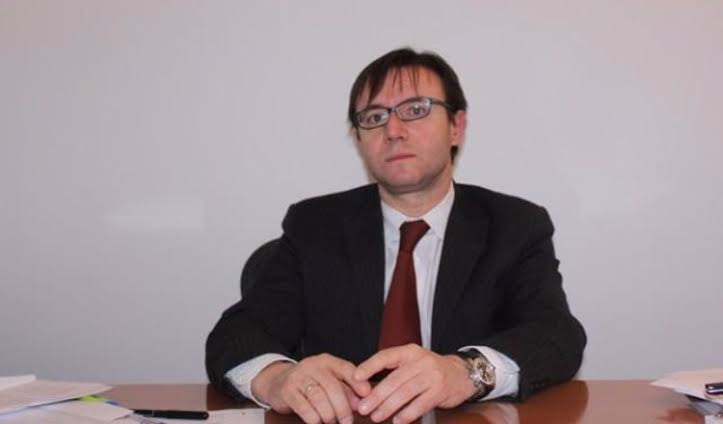
During the Communications item of the Grand and General Council, Iro Belluzzi (Libera) spoke up in the justice debate, echoing Secretary of State Luca Beccari’s call to focus on the rules governing the legal system.
The councillor also revisited the origins of the CIS collapse, addressed the issue of soaring rents, and pointed to the work awaiting the Council ahead of the ratification of the Association Agreement with the European Union. His full remarks follow.
«I asked to speak on the spur of the moment because I don’t share the approach taken by the colleague who spoke before me, or by colleagues from the minority, who have opened a debate within the Grand and General Council on individual rulings and proceedings. I believe we should have followed Secretary Beccari’s lead and assessed whether there are flaws, elements that haven’t worked, and issues that need to be revisited so as not to risk sanctions.
That is the role of politics and of the Grand and General Council, which shapes the legal system. I reject staging yet another clash over the Court’s rulings, over what is right or wrong, and over what should or shouldn’t have been done.
That is not how we safeguard the rule of law and the good name of the Republic of San Marino beyond our borders. What matters to us is that the path toward association helps all branches of the State mature and become capable of engaging with the outside world. We are the Republic — we are the ones who represent it within our institutions.
As for the collapse and mismanagement at CIS, raised by the Secretary of the Interior, we need to look at how the problem originated. The Banca Partner disasters date back to 2011, when that bank had already eaten through its own capital over the span of two years. The Central Bank flagged irregularities and forwarded the matter to the Court. Nothing came of it, and the case eventually fell under the statute of limitations.
That is the lens through which this story must be read. We need to tell the whole truth. I understand that younger members may pick up and recount only part of it, but those who have spent many years in the Grand and General Council should have a broader view. Let’s try to provide that, rather than pointing fingers over details that, while significant, are marginal compared to what ultimately developed.
The housing emergency is also an important issue. But we need a sense of proportion, both about our own situation and about life beyond our borders.
There’s frequent talk of outrageous rents. That’s true — rents need to be reined in, and we must stand by the most vulnerable and by those trying to build a life for themselves. People sound the alarm over a student room in San Marino, yet the average rent is perhaps around 300 euros. Students in Bologna or Urbino pay anywhere from 300 or 400 up to 600 euros, and in Milan a room can cost as much as 800 euros.
These are matters that deserve attention. I stand with those young people — some of them certainly Sammarinese — and with families having to pay significant sums. I understand the frustration of those calling on institutions to pay attention.
But the choices made to boost the real estate sector stem from the same underlying issues. At the time, the reasoning was that if the property market didn’t recover its value, the banks would collapse. So policies were introduced to encourage that value to return. That benefited the banks, but it also benefited citizens who own one or two apartments and saw their assets appreciate enormously.
That matters when you need to sell, too. I remember a time when it was impossible to sell a property without practically giving it away. That amounted to a loss of wealth for the entire citizenry.
Today we’ve reached levels where it’s possible to work toward moderating property values. That must be done intelligently and carefully. Here, the opposition is always quick to claim something is wrong. If it doesn’t rain, it’s the government’s fault.
There used to be a saying: “It’s raining, the government’s to blame.” Here it’s become: “It’s not raining, the government’s to blame — the government is incompetent.”
Let’s keep a sense of proportion. Let’s make statements and fight battles that actually make sense, otherwise we all lose credibility. On one side, some voices in the opposition keep crying wolf.
On the other, the majority wants to prove everything was done in the best possible way. In my view, the truth lies on neither side — and certainly not entirely on mine either. We need to put ourselves in a position to steer future choices and reforms with an eye to the historic transition ahead of us: the ratification of the Association Agreement. We’ll have a great deal of work ahead, and a great deal of growing to do, to make our country credible».