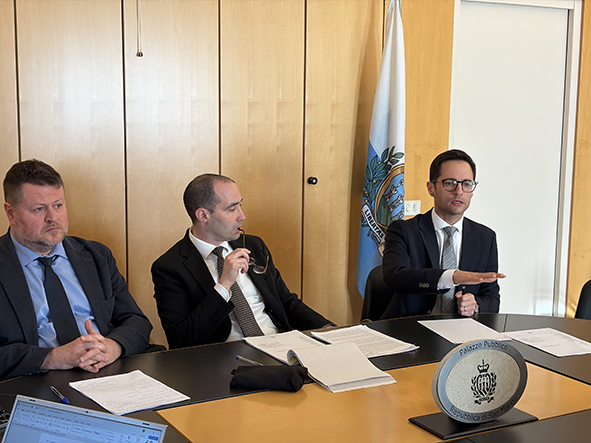
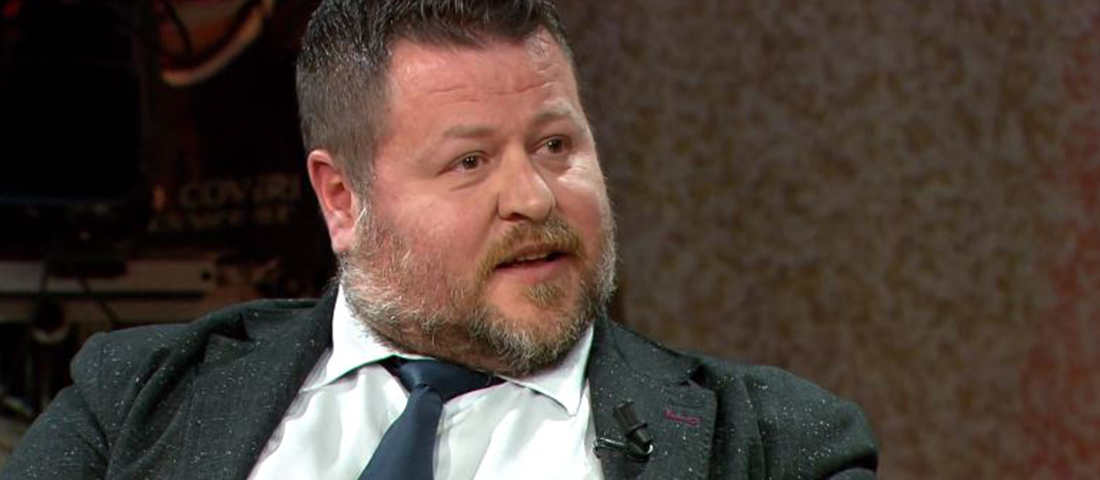
Emanuele Santi used the floor of the Grand and General Council (Consiglio Grande e Generale) to reclaim credit for Rete‘s long-standing battles over the Banca CIS case.
In the sitting of Monday, 23 November, the councillor addressed the first-instance ruling handed down on 5 November, which he said «sheds new light on a political season in which Rete denounced and opposed a system of power that today finds important confirmation in the judiciary’s decisions».
The court recognised, at first instance, the existence of a criminal conspiracy and handed down eight convictions, which Santi listed in the chamber: five years and six months for Banca CIS’s former CEO Daniele Guidi, five years and two months for Francesco Confuorti, four years for the bank’s former controlling shareholder Marino Grandoni, four years and four months each for former Central Bank directors Lorenzo Savorelli and Roberto Moretti and for supervisory officials Filippo Siotto and Ugo Granata, and four years and two months for Commissioner of Law Alberto Buriani.
«We fought those battles when it was far easier to look the other way, when we were mocked, isolated, attacked and branded as visionaries, conspiracy theorists and irresponsible», Santi recalled.
«Rete paid an enormous price. It faced attacks and legal proceedings, withstood attempts at isolation and delegitimisation, and never backed down».
Yet there is no sense of vindication, he stressed: «We are not claiming a personal or party victory, and we are not seeking revenge. We have a political and moral duty to remember which side we stood on when choosing was hardest. We stood then, as we do now, on the side of the country».
For the councillor, the question of the political responsibility of the government and majority that, in those years, «endorsed, supported and defended the conduct of the power group now at the centre of these convictions» remains unresolved.
The antibodies politics still lacks
Santi then asked the chamber whether politics today has the antibodies needed to prevent such dynamics from recurring. «Dear colleagues, for me the answer is no».
Among his examples, he cited the paedophilia case, pointing to «what I consider clear political cover» that allegedly allowed the person involved to keep working in schools; the NPL (non-performing loans) issue, handled only behind the closed doors of the Finance Commission without addressing conflicts of interest; the allegations against the leadership of Giochi del Titano; the Bulgari case; and the problems highlighted by the anti-mafia report — matters on which, he argued, certain political forces prefer to downplay rather than confront.
This led to his closing appeal. For Santi, too many decisions are made outside the Council, which he described as having been reduced to «a mere rubber stamp, with people pressing the button without ever asking themselves why». «Politics must reclaim its power to make laws and to cast an informed, independent vote, free from those powers and those interests».