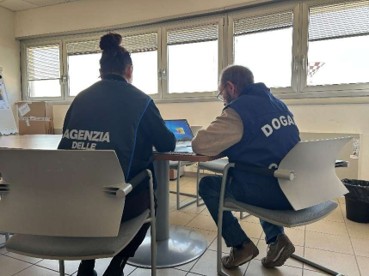
Two companies based in the Republic are among the subjects caught up in an investigation by Italy’s Customs and Monopolies Agency (Agenzia delle Dogane e dei Monopoli) in Rimini into alleged tax fraud involving the trade in spirits and beer.
The investigation, carried out with the support of the Guardia di Finanza, led to a preventive seizure exceeding 7 million euros, affecting tax credits, bank accounts, and movable and immovable assets linked to those under investigation.
At the heart of the inquiry is a company based in Rimini which, according to investigators, is suspected of running a structured scheme to evade VAT and obtain undue excise duty refunds.
The network is said to include a holding company, twelve Italian firms, nine companies based in Bulgaria, Croatia, the Czech Republic and Romania, and the two San Marino-based entities.
The alleged mechanism relied on invoices for non-existent transactions and falsified transport documents, used to simulate sales abroad and generate improper VAT credits.
According to the allegations, the goods were purchased below market prices through shell companies before passing through a series of intermediaries.
The link to Titano concerns certain sales that the Rimini-based company allegedly declared as made to San Marino businesses and European shell companies.
A further strand of the investigation concerns excise duty refunds, which are said to have been claimed on the basis of documentation deemed fraudulent. Investigators also flagged the lead company’s consistent losses and narrow profit margins as anomalous.
It should be stressed that these remain allegations still to be verified through judicial proceedings.
Still, the case raises an issue that San Marino cannot dismiss as someone else’s affair.
At a time when the Republic is asking Europe to be regarded as a reliable partner within the single market, every time the country’s name surfaces in cross-border fraud schemes, the reputational cost falls on everyone, starting with the many businesses that operate in full compliance with the law.
The only answer is ever-closer administrative and fiscal cooperation with Italian and European authorities, along with controls capable of identifying shell companies before it is too late.