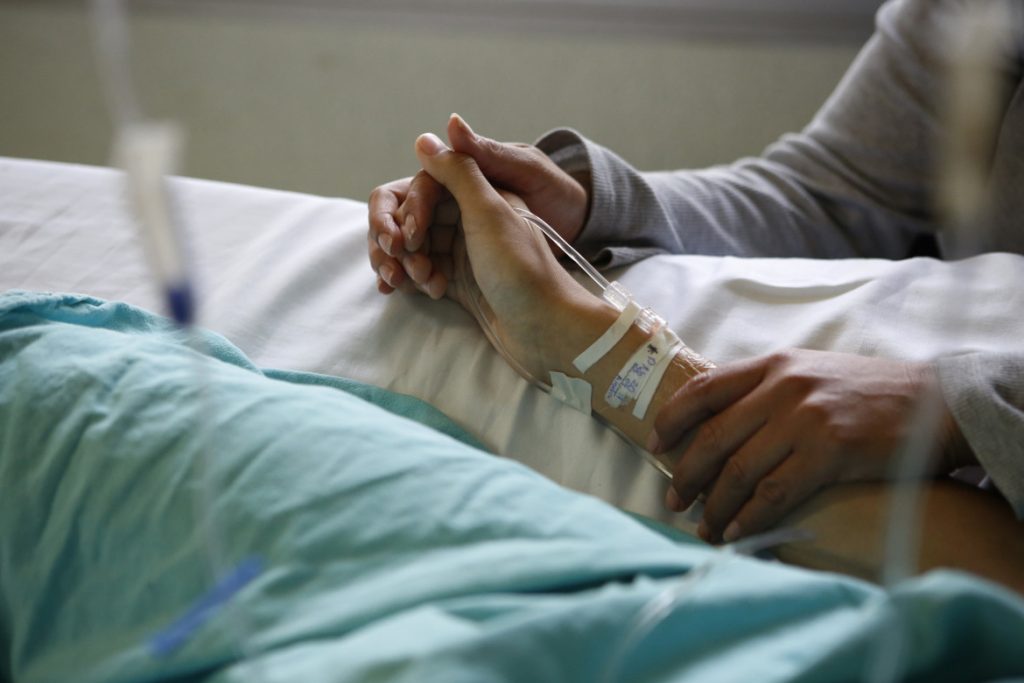
San Marino now has a law on end-of-life care. The Grand and General Council (Consiglio Grande e Generale) approved on Friday morning, in second reading, the citizens’ bill on advance healthcare directives and decisions concerning the care of people with disabling illnesses or in the final stage of life.
The vote was 39 in favour and none against, out of 46 councillors present. The approval came after lengthy discussions between the majority and the opposition, with some amendments agreed only in the final hours before the vote.
The main innovation concerns the possibility, for every individual, to establish in advance which medical treatments to accept and which to refuse, should they one day be unable to express their wishes. This is the principle underpinning advance healthcare directives, known by the Italian acronym DATS.
The law also regulates informed consent, the doctor-patient relationship, shared care planning and access to palliative care. Euthanasia and medically assisted suicide, however, remain explicitly excluded.
The text originated from an initiative by the Emma Rossi Association and reached a vote after a mediation process involving the various political forces. The Rete Movement withdrew its own proposal in order to support the passage of the citizens’ bill, while within the majority, discussions helped bridge differing positions, particularly on ethical issues.
“No one can decide for others,” said Paolo Crescentini (PSD), describing the law as “a step forward both civically and legally.” For the councillor, however, the work does not end with the vote: “rights do not live only in laws that are passed, but above all in their practical application.” Tomaso Rossini (PSD) echoed this view, recalling that the compromise reached with the Christian Democratic Party led to the explicit exclusion of euthanasia and assisted suicide.
“Mediating does not necessarily mean giving up one’s convictions,” he observed.
Giovanna Cecchetti (Mixed Group) stressed the need to accompany individual choices with adequate care and support. “Self-determination without a framework of care and assistance risks becoming isolation, while protection without listening risks becoming imposition,” she said.
Michela Pelliccioni (Mixed Group) instead highlighted the role of citizens’ initiatives in securing new rights, comparing this process to the one that led to the law on voluntary termination of pregnancy. “This is the second time I have felt honoured to be, in some way, part of our country’s history,” she said.
Satisfaction was also expressed by members of Rete. Giovanni Maria Zonzini spoke of “this step forward in civility for our country,” hoping that San Marino might also address the issue of euthanasia in the future.
Gian Matteo Zeppa described the measure as a useful tool also for the families of sick people, who are often called upon to make difficult decisions.
For Luca Lazzari (PSD), the outcome shows that political dialogue can lead to a shared solution: “this time it seems we managed to achieve that.”
There were also some reservations. Fabio Righi (Domani Motus Liberi) acknowledged the improvements made during the examination of the bill, but called for stronger safeguards for the most vulnerable patients.
“True self-determination does not consist only in recognising the right to refuse treatment, but also in ensuring that such a choice is not driven by fear, avoidable suffering, or a lack of alternatives,” he explained.
Among the contested points were the assessment of patients’ decision-making capacity, possible external pressures, psychological support, and provisions concerning minors and pregnant women.
One of the most debated issues of the morning concerned the costs associated with advance treatment declarations. Gaetano Troina (D-ML) raised concerns that requiring a notary and registration formalities could result in a minimum cost of 70 euros. “Would it really be so difficult to remove the notary requirement from this article and, consequently, eliminate the registration obligation?” he asked.
Emanuele Santi (Rete) also spoke on the matter, while Maria Luisa Berti (AR) clarified that consulting a notary would remain an option rather than an obligation.
The discussion led to a suspension of proceedings while a shared solution was sought. Upon resuming, all groups reached an agreement: the advance directives (DATS) will be exempt from registration requirements, stamp duty, and any other tax, levy or fee. The option of consulting a notary remains available, a solution that Alessandro Scarano (PDCS) defended, particularly for people unable to reach public offices.
“A notary can also visit a person’s home,” he noted.
The agreement was also welcomed by the opposition. “We thank the majority for accepting the observation we raised,” said Righi.
Nicola Renzi (Repubblica Futura) commented: “I believe this is exactly the right way to approach legislative work.” According to Domani Motus Liberi, however, the question of a single register for advance directives — which would make it possible to clearly identify a person’s most recently expressed wishes — remains open.
The next step will be the preparation of the form through which citizens will be able to indicate their wishes. The Secretary of State for Health, Massimo Andrea Ugolini, confirmed that the General Directorate of the Social Security Institute (ISS) will begin this work once the law is approved and published.
The implementing decree must be adopted within 60 days of publication in the Official Bulletin. Ugolini assured that there will be consultation with the bill’s proponents and that the proposal will be shared with the political forces.
During the examination, the explicit reference to prior consultation with the Emma Rossi Association was removed, though the political commitment to involve the association remains.
The debate also touched on the role of minors in healthcare decisions. Sara Conti (Repubblica Futura) called for greater opportunities for 16- and 17-year-olds who are mature enough to understand their health conditions to be heard. “These are young people who have every right to be involved and listened to,” she said.
The councillor also urged action to make organ donation practically feasible.
Ugolini explained that work is already under way on the accreditation of the Transfusion Centre, after which this issue could also be addressed.
Considerable attention was devoted to palliative care and the development of San Marino’s hospice facility. Vladimiro Selva (Libera) recalled that in the first six months of 2026, the ISS’s Pain Medicine, Palliative Care and Hospice service took on 41 new patients. Between January 2025 and June 2026, a total of 144 patients and families received assistance.
The hospice project envisages an initial setup at the State Hospital, followed later by a dedicated facility at La Fiorina.
“A life is not worth less because it is fragile,” Selva stressed.
In their explanations of vote, Repubblica Futura announced it would abstain. Renzi acknowledged that the law represents “a starting point,” while reiterating the group’s concerns about safeguards for certain categories of patients and the need to quickly make available the tools needed to implement it.
The final vote, with 39 in favour and none against, marked the definitive approval of the law and the conclusion of the Council’s October-November session.