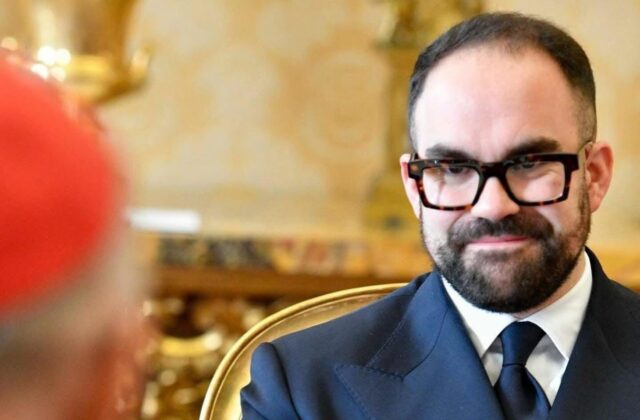
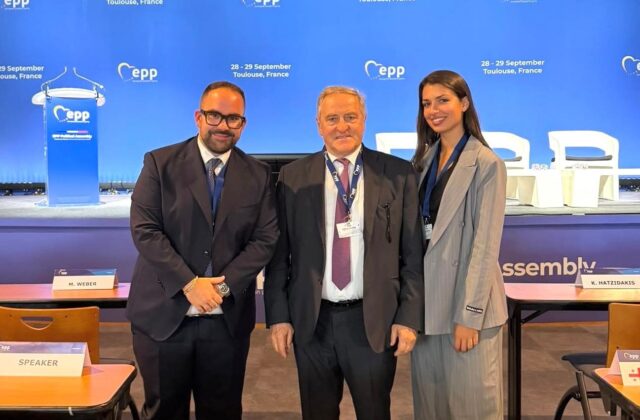
A law that brings order to the implementation of European rules and allows citizens and businesses to understand them. This is the position expressed by Commissioner Francesco Mussoni (PDCS) at the joint committee session of 12 October, dedicated to the implementation of the Association Agreement with the European Union. Below is his speech in full.
“I thank the Secretaries, who have outlined a very clear line of work, both on the Internal Affairs and Foreign Affairs fronts. The documentation provided shows the work ahead and a clear schedule: the annexes and deadlines are set out, with some already due in March, shortly after the signing, along with the draft law. Considering the signing takes place on the 19th, we are here also to mark this historic moment, and in some way we are already prepared to move forward with the next steps. Regarding the draft law, Secretary Beccari presented the matter as an option. I, however, believe that a law creating order is absolutely necessary, as several colleagues have said, allowing the European body of law to settle gradually within our legal system. It seems to me that the draft respects our legislative function, because, as Morganti pointed out, it does not provide for automatic implementation of acts, regardless of the role of the Grand and General Council (Consiglio Grande e Generale). There is, as the Secretaries have stressed, no alteration of the hierarchy of sources: the sources remain those we already know. Even Article 5, which I believe deserves further examination, still provides in paragraph 1 for ratification by the Grand and General Council. Perhaps this is something we need to reflect on further. I understood from Secretary Beccari’s introduction that Article 5 concerns technical transpositions, which will likely be numerous – the proverbial screws, the calibration of scales. Does it make sense to hold a parliamentary debate on such matters? Let’s work to clarify and better understand the scope of this article, which seems to align with the approach also mentioned by Councillor Mularoni: a necessary procedure for certain technical steps, without bypassing the Council’s authority. So let’s examine Article 5 more closely, but the rest of the draft already seems well structured, with clear priorities and deadlines. I believe it is absolutely necessary. We need direction and an orderly approach, but there is also the issue of legal certainty and its accessibility to citizens. Let’s not forget that. We must create order above all for our citizens – and by that I mean businesses, individuals and legal entities, citizens and residents alike, everyone. There needs to be a gradual process for the settling of these rules that allows them to be known and, naturally, makes them binding for citizens. So I would say this is a good piece of legislation. We need to work with the groups to clarify any doubts and make legitimate corrections where needed, but I believe it is necessary. We understand the scope of the broad European acquis, but from my point of view too, we should not be overwhelmed by it. Ours is a country that has been immersed in European law for several decades already, not least because in our legislative activity we often tend to draw on legal concepts from neighbouring countries. I am convinced that, with order and careful study, we will find the right safeguards and the peace of mind needed for implementation. One point I feel strongly about is the need for a mechanism of ongoing dialogue between the administration, which carries out this work daily, and Parliament, so that it can incorporate these rules into our legal system with maturity, depth and awareness. I believe this is already a good start. I wanted to offer this contribution and reaffirm the necessity of the draft law, which I believe has also emerged from the debate held so far. Let’s look more closely at Article 5: perhaps we simply need to clarify its scope and its compatibility with the regulation. I think this has been good work for today. We need to proceed with greater awareness of the timeline, the issues at stake and the draft laws, but I believe the administration is already working in this direction. Clearly, we too need to be ready.”