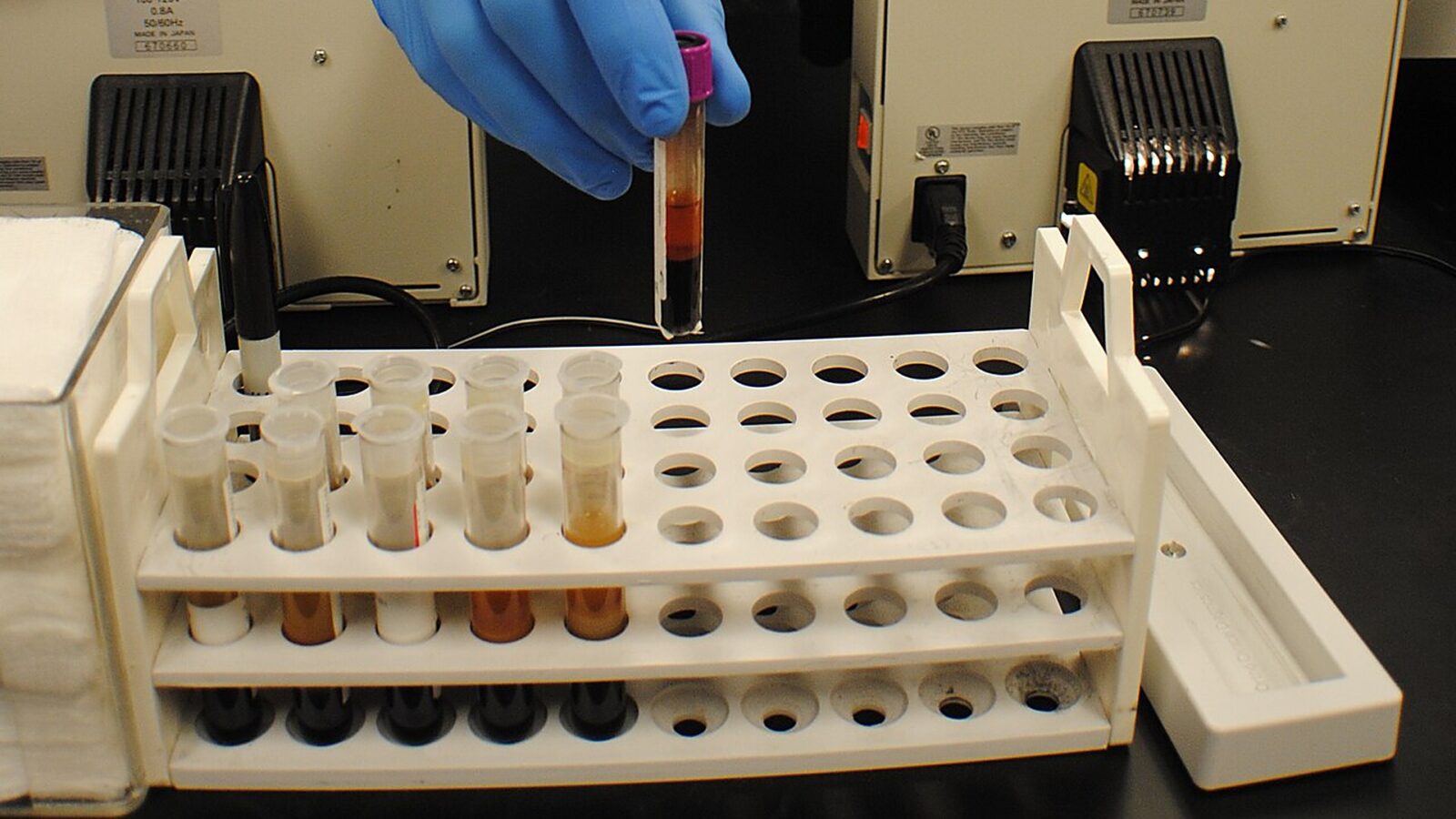
Anyone wishing to repeat blood tests more often than clinical guidelines recommend could soon be able to do so at the State Hospital laboratory, paying out of their own pocket. This is the substance of the most debated item in the healthcare motion approved on Wednesday morning by Permanent Parliamentary Commission IV, with 10 votes in favour, 3 against and one abstention: a mandate for the Executive Committee of the ISS (Social Security Institute) to «assess and prepare the organizational and regulatory conditions» to allow, on a voluntary basis, paid access to certain laboratory services.
The document concludes the hearing of the ISS Executive Committee held the day before. It also includes a commitment to prepare, by 31 March 2027, the guidelines for the new Health and Social-Health Plan, along with a mandate for the Secretary of State for Health and Social Security, Massimo Andrea Ugolini, to return before the Commission with a complete overview of the new hospital project. But it was the principle of paid services that divided the session.
The point was presented by Andrea Ugolini of the PDCS, who described it as perhaps the most innovative tool in the entire document. «If, according to appropriateness criteria, certain tests are meant to be carried out once every six months or once a year, but a person — perhaps because they are followed by their own trusted external doctor — wishes to have checks more frequently, we could consider allowing them to still use our laboratory by paying for the service,» he explained. The laboratory, he added, is already a well-established facility with no significant waiting lists: «It could therefore be the first area in which to test a system of this kind.» According to Ugolini, there would also be a double benefit: tests carried out outside the territory are not automatically entered into the Electronic Health Record and must be uploaded manually as PDFs, while every laboratory uses different equipment and calibrations, making it harder to track how values change over time.
The sharpest response came from Matteo Casali of Repubblica Futura, who had already asked the day before to let at least one night pass before introducing the principle. «Introducing, for the first time, a principle whereby the patient, under certain conditions, pays for a service represents a major shift from the traditional model,» he said, calling for the matter to be brought before the Grand and General Council (Consiglio Grande e Generale). «Today we say that the “extra” is what gets paid for, but tomorrow the appropriateness thresholds could change, and we might find that we have opened the door to a principle that then gradually expands.» The risk, he warned, is «touching, almost in passing over coffee, the fundamental principle established in 1955 on the universality of our system.»
Emanuele Santi of Rete took a similar stance, calling for the point to be scrapped altogether. «Today clinical appropriateness is defined according to certain criteria, but all it takes is changing those criteria and lowering the threshold of what is considered appropriate for everything else to automatically become fee-based. This could become the lever used to progressively introduce other paid services,» he said. Santi also challenged the part of the motion concerning spending rationalization, recalling that the Administrative Director has announced increased spending for 2026: «Instead, today we have spending that has grown by around twenty million, and we still see the same problems.»
Defending the point, albeit with an explicit warning, was Guerrino Zanotti of Libera. The text, he explained, had been narrowed down from its original draft, which extended the reasoning to all healthcare services, and now applies only to the laboratory, where last year «over one million tests» were carried out. «I understand the concern that this could represent a crack in our universal, free and equal healthcare system,» he admitted, before urging the Secretary of State to exercise «maximum caution»: «This must not be a simple step introduced almost automatically through a Commission motion, and it must absolutely not become the opening toward paid healthcare.»
The most political argument came from Luca Lazzari of the PSD, who was directly challenged by Casali over the party’s August statement calling for a working group on healthcare. Lazzari denied any change of position and reversed the argument: «We keep telling ourselves that San Marino has an entirely public healthcare model, but we all know that, in reality, this hasn’t fully been the case for years.» When a patient gets in their car, travels abroad and pays for treatment, he said, the fully public system has already ended — and the same goes for services purchased externally, agreements and consultants. «The public system isn’t defended by pretending the private sector doesn’t exist; it’s defended by governing it.»
Regarding the new hospital, Lazzari clarified that the motion does not authorize its launch: a resolution by the Congress of State had already existed since September 2025, identifying project financing as the priority approach, and the novelty is that the political mandate now also comes from the Commission. Santi, on the other hand, urged an end to further delays: «If we want to build the new hospital, let’s find the resources and get started. If, after four years, we are still stuck wondering what we want to put inside it, that simply means you don’t want to build it.»
Denise Bronzetti of Alleanza Riformista asked for recognition of the work carried out without denying existing shortcomings, distinguishing between political direction and administrative management. Gaetano Troina of Domani-Motus Liberi announced his group’s abstention, explaining it as follows: «It is an abstention that expresses our wish to see whether, in the short term, some decisions we consider no longer postponable will finally be made. It is, in a sense, the last vote of confidence we are willing to grant to this management of healthcare.»
In the end, Repubblica Futura and Rete voted against, Domani-Motus Liberi abstained, and the majority voted in favour. The next step now falls to the ISS Executive Committee, which will have to determine whether and how those organizational and regulatory conditions can be put in place.