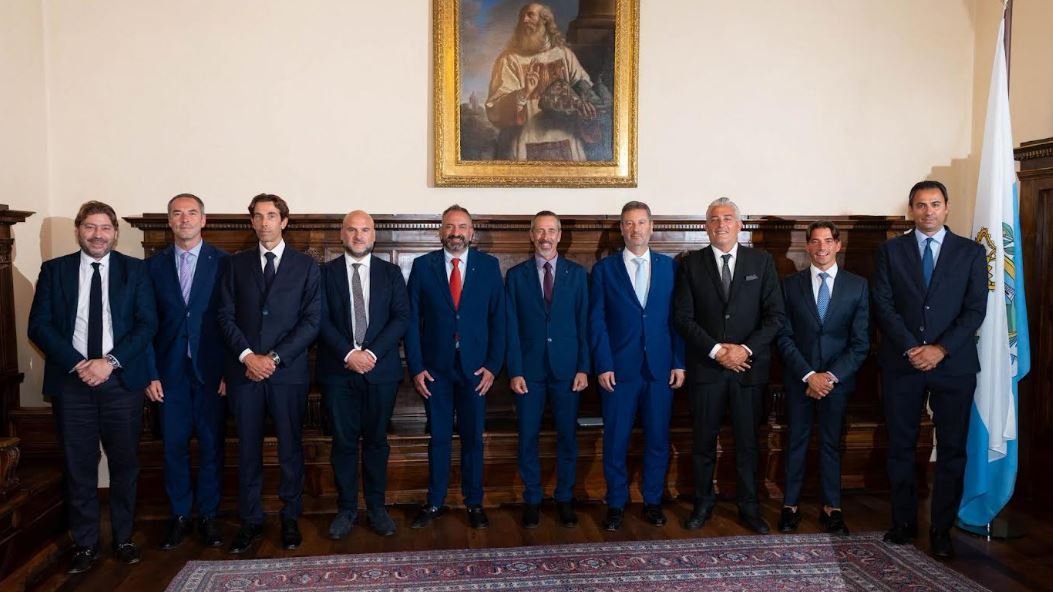
The Congress of State responds to the Middle School Teachers’ Board (Collegio dei Docenti): teaching autonomy cannot be invoked to set aside a Framework Agreement, and the proper forum for discussion is the National Sports Table.
The dispute over the non-participation of second- and third-year Middle School classes in SportInFiera has now reached the highest level. After the 22 sports federations took a stand and the Teachers’ Board defended its own autonomy, it is now the Congress of State that has stepped in.
The central message is unambiguous: “Agreements that have been signed are binding on all parties.”
The reason, the government explains, is that a formal Framework Agreement exists, drawn up jointly with school leadership and teachers’ representatives. Invoking teaching autonomy to justify unilateral decisions in that context, it states, “appears improper.”
“School autonomy exists to enrich educational offerings, diversify teaching methods and expand opportunities for young people,” the statement reads. “That principle cannot become grounds for setting aside a valid, structured and mutually agreed institutional understanding.”
There is also the question of process. The proper venue for addressing disagreements and organisational issues, the Congress of State points out, is already identified in the Framework Agreement itself: the National Sports Table. That is where any adjustments to activities should be discussed, “not through individual walkouts or unilateral resolutions.” Bypassing that forum, the government warns, weakens cooperation between schools and sport.
The most concrete issue, however, concerns the age of the excluded students.
Thirteen- and fourteen-year-olds, corresponding precisely to second- and third-year students, represent the age group in which statistics most frequently show a risk of dropping out of sport. Excluding exactly these students from an event that introduces them to dozens of disciplines means, according to the Congress of State, removing a valuable space for guidance, inclusion and socialisation. Physical activity, it adds, is a fundamental element of psychological and physical wellbeing, “not an optional filler in the school calendar.”
The door, however, remains open. Through the relevant Secretariats of State — chiefly Education, supported by Sport for extracurricular and physical-activity matters — the Congress of State reiterates its willingness to continue an open dialogue with teachers and school leaders.
“Honouring the commitments that have been made means safeguarding the credibility of our institutions,” the statement concludes, “and offering the community an educational model built on cooperation and respect for shared rules.”