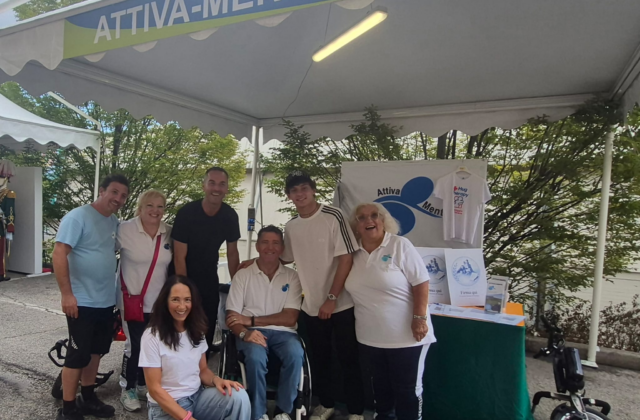
Recognition of the family caregiver is a positive step, but whether the new measures actually work will only become clear by looking at the daily lives of those who provide care and those who receive it. That is the position taken by Attiva-Mente on the provisions contained in the family and birth-rate support law approved by the Grand and General Council (Consiglio Grande e Generale). “As Attiva-Mente, we prefer to be cautious, not because we oppose recognition of caregivers. On the contrary, we have always believed it necessary to acknowledge the value, the burden and often the sacrifice of those who provide daily care and assistance to a family member,” the statement reads. The association nonetheless insists that “support for family care cannot become a substitute for the rights of people with disabilities, nor for the services and responsibilities that fall to the State.”
One of the first concerns relates to the weekly care thresholds, set at 18, 24, 30 and 36 hours for the four caregiver profiles. “How is caring time actually measured? How are supervision, constant availability, interrupted nights, accompaniments, emergencies, medical appointments, administrative tasks or simply the need to always be present accounted for — things that can hardly be captured on an attendance sheet?” Attiva-Mente asks. For profiles exceeding thirty hours, the association notes, the law provides for incompatibility with any employment, alongside a subsidy and notional pension contributions. This safeguard, the statement argues, leaves another question open: whether it is possible to support someone caring for a relative without forcing them to give up their job.
Attiva-Mente also highlights the cap of fifty qualifying caregivers per year, or in any case a spending limit of one million euros. “What happens to the fifty-first caregiver? If they meet the same requirements as the fiftieth and bear the same caregiving burden, will their recognition depend on whatever quota or funds happen to remain? In short, can a right function only until places run out?” The statement also points out that subsidies and benefits may be adjusted according to income brackets determined through the ICEE (the equivalent economic means-testing indicator), whose practical application, according to the association, has yet to be fully tested.
Further concerns relate to the rule allowing only one recognised caregiver per assisted person at any given time, even when several family members share the caregiving burden, as well as the exclusion of minors who are already providing care. Attiva-Mente urges consideration of the phenomenon of young caregivers, calling for specific safeguards without normalising the burden of care falling on children. It also calls for attention to the relationship with professional care services: “The two roles are not necessarily alternatives: a person with very high care needs may require the support of a family member and professional assistance at the same time.”
For the association, the central issue remains the right of people with disabilities to receive support even when they have no family member available to care for them. The statement notes that the possibility of obtaining a caregiver or family assistant funded by the ISS (the Social Security Institute) in such cases has been postponed, pending a possible addition via delegated decree. “A person with a disability should not have greater or lesser opportunities to live in their own home and community depending on whether or not they have a family member willing — or perhaps forced by circumstances — to take care of them,” Attiva-Mente writes.
The association does not reject the measure outright and acknowledges its positive elements, from legal recognition to financial support, from notional pension contributions to training and respite measures. However, it calls for the effects to be monitored and for services, personal assistance and opportunities for Independent Living to be strengthened in parallel. The statement’s conclusion sums up its position: “The caregiver must be supported by the welfare system. It cannot become the welfare system.”