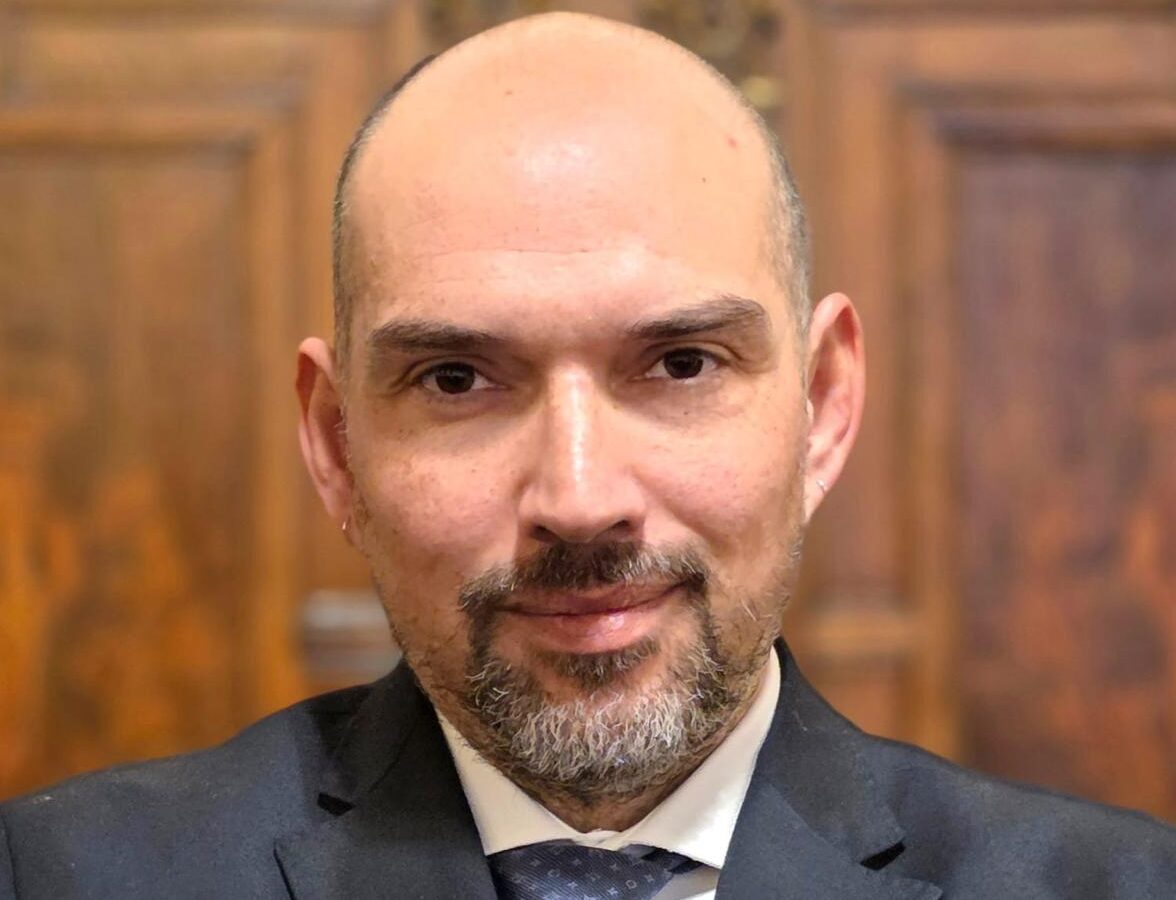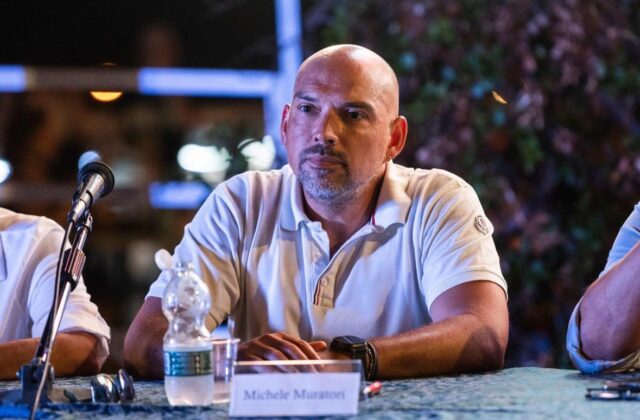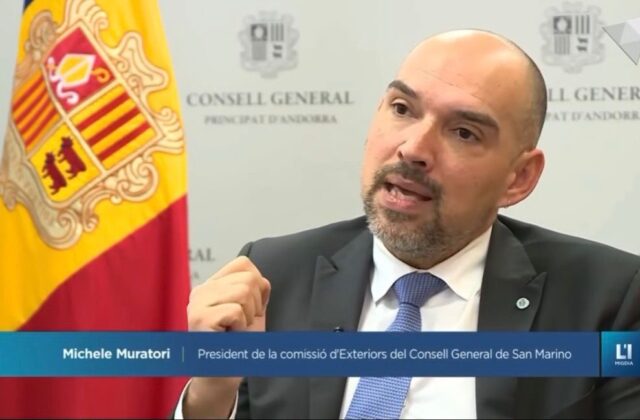
Our in-depth column continues, curated by Michele Muratori, leader of the Libera group, dedicated to analysing current political affairs, the main institutional challenges and the topics of greatest interest to the Republic of San Marino.
The nineteenth Conference of Speakers of Parliament of the Small States of Europe, which I had the privilege of attending in person together with my colleague Andrea Menicucci in the Principality of Andorra, offered the ideal opportunity to reflect on the extraordinary diversity that characterises these small territories in their relationship with the European Union.
With a combined population that in many cases does not exceed the size of a district in a major metropolis — one need only think of the roughly 34,000 inhabitants of San Marino, the 80,000 of Andorra or the nearly 39,000 residents of Liechtenstein and of the Principality of Monaco itself — these states demonstrate that institutional greatness is not measured in square kilometres or millions of inhabitants, but in the density of democracy and the vitality of one’s economic fabric. As the Síndic General, Carles Ensenyat, President of the Andorran Parliament, rightly noted in his opening remarks, reminding everyone that there is something to learn from each of these experiences, the statements and exchanges that emerged during the proceedings show that every state interprets its own sovereignty and its European future according to unique and unrepeatable coordinates, given that republics, principalities and grand duchies face substantially different needs and institutional realities.
Broadening the view to the summit’s participants, a mosaic of positions emerges in which each country describes its own specific path, shaped by historical reasons and by particular demographic and economic factors. On each nation’s relations with the European Union and the prospects for accession or association, the President of the Icelandic Parliament, Þórunn Sveinbjarnardóttir, highlighted how the nearly 35 years spent within the European Economic Area — an integrated market embracing more than 450 million consumers — have brought growth and prosperity to an island nation of around 400,000 people. This is a path on which the referendum of 29 August 2026 expressed a clear view, showing a preference not to reopen full membership negotiations for the time being. This outcome reflects a carefully weighed assessment within the country, suggesting that, for an island nation of this size, the current arrangement may prove particularly suitable and sufficient. Membership of the European Economic Area guarantees all the commercial advantages of the single market, while at the same time preserving full autonomy over strategic and deeply identity-defining sectors, such as the management of fishing resources — an economic pillar that could otherwise have been affected by the rigid constraints of the common fisheries policy.
Liechtenstein follows a similar economic line, having also been part of the European Economic Area since 1995 alongside Norway and Iceland. Its Parliament Speaker, Manfred Kaufmann, described this arrangement — which does not involve direct participation in the Union’s general policies — as a successful model capable of guaranteeing excellent standards and one of the highest per capita GDP figures in the world, despite a population of just 39,000.
On the other hand, there are the small states that are already full members of the European Union, whose representatives describe a well-established reality that makes a decisive contribution to regional stability and integration. The Vice President of the Parliament of Luxembourg, Mars Di Bartolomeo, said he found himself in an excellent position with no interest whatsoever in leaving, pointing to one of the bloc’s highest per capita GDP figures and a population that has surpassed 660,000. This is an understandable stance, given that Luxembourg is a founding member of the European Union and that it was on board the riverboat Marie Astrid, on the Moselle River, that the foundations for the Schengen Treaty were laid.
A similar point was echoed by the Vice President of the Parliament of Malta, Bernard Grech, who represents an island nation of more than 570,000 people. He recalled how even the local opposition has shifted its stance over the years, becoming pro-European — an evolution well documented by the press coverage of the time. It is curious to note that, back then, the Nationalist Party was among the supporters of accession while the Labour Party campaigned for a “no” vote; today, it is precisely the latter that is firmly convinced of this approach, as also recalled by former Foreign Affairs Committee Chair Edward Zammit Lewis during the recent joint session with our own Foreign Affairs Committee in San Marino, and by former Speaker of the Maltese Parliament Angelo Farrugia — both Labour figures — as also confirmed by official institutional accounts.
Rounding out this picture within the Union, the President of the Cypriot Parliament, Annita Demetriou, offered a reflection of considerable geopolitical depth, recalling how the European Union represents an indispensable bulwark of stability and security. Cyprus’s path is rooted in the difficult history that followed the 1974 conflict and division of the island, tied inextricably to the crucial 2004 referendum on the Annan Plan for reunification.
In that vote, the agreement was rejected by the Greek-Cypriot community and approved by the Turkish-Cypriot community, falling short of the goal of state reunification before the subsequent accession to the Union. Nevertheless, the choice to fully integrate into the European bloc has given Cyprus, which today counts 1.2 million citizens, a vital institutional and international anchor, showing that EU membership has not only failed to dissolve territorial specificities but has proven to be the fundamental instrument for defending sovereignty, democracy and a peaceful presence in the eastern Mediterranean. President Demetriou concluded by stating that Europe certainly has its problems, but the benefits far outweigh the difficulties.
There is a different path, that of Monaco, whose Parliament Speaker, Thomas Brezzo, explained with balance how the morphological and administrative peculiarities of a densely populated city-state — around 39,000 residents concentrated in just over two square kilometres — make association or membership particularly complex given its economic and fiscal structure. This is a position also shaped by French institutional studies and analyses, which traditionally suggest a cautious calibration with respect to EU parameters in order to preserve the delicate bilateral, monetary and customs balance with Paris, leaning towards a pragmatism aimed at protecting its own distinctive model.
This stands in contrast to the account given by the Vice President of the Parliament of Montenegro, Nikolla Camaj, who described the historic and courageous determination of a country of just over 600,000 people to become part of the European family — demonstrated, for example, by the amendment of more than 200 laws and of the constitution itself. This is a long-running journey that Montenegrins themselves hope to complete as soon as possible, with 2028 mentioned as a possible target, not least in order to move beyond regional dynamics and Serbian influence.
But perhaps the most extraordinary aspect emerging from this web of relationships is that the strength of San Marino and Andorra’s association model has now crossed European borders, turning into a global point of reference. It is no coincidence that international geopolitical thinking is now looking at innovative formulas, such as “associate member” status modelled precisely on countries like San Marino and Andorra, even for major transatlantic powers outside Europe such as Canada, which is interested in building a stable, in-depth relationship with the European single market without the rigidities of full membership. This is a clear sign that the institutional architecture pioneered by San Marino and Andorra through the Association Agreement — and, before them, by Liechtenstein and Iceland through the European Economic Area — is not a fallback solution for geographical niches, but the most modern vanguard of international economic diplomacy.
Bringing the focus back home, it is inevitable to connect these reflections to the debate running through our own community and institutions. The question of sovereignty — a theme that has also strongly animated political debate within Andorra’s borders — is often invoked by those who see European integration as a threat to San Marino’s identity. But comparison with other small states, and the very global echo that these models generate, demonstrates precisely the opposite: that sovereignty is not a dogmatic fortress to be defended at all costs by isolating oneself from the world, nor a relic to be preserved under glass, but a dynamic tool to be wielded with pragmatism and vision.
To argue that an Association Agreement with the European Union would cause San Marino to lose its sovereignty is to misunderstand the very nature of sovereignty in the 21st century. For a small state, true autonomy is not measured by a formal will to remain on the margins of major global dynamics, but by the strength to consciously choose one’s own destiny, taking a seat at the tables that matter and protecting one’s citizens and businesses. Entering the single market and building a stable relationship with the European Union means exactly this: being able to rely on legal and institutional safeguards set down in black and white within the text of the Agreement. Consider Article 78, which formally establishes the Parliamentary Association Committee between the Grand and General Council (Consiglio Grande e Generale) and the European Parliament, turning it into a genuine political and democratic bridge for constant dialogue and exchange. And consider Article 80, which precisely governs the procedures for incorporating EU legal acts, guaranteeing San Marino legal certainty, equal treatment and safeguard mechanisms capable of preventing any form of isolation. Thanks to this framework, the Republic transcends any logic of subordination and sits with equal dignity at the tables where the competitiveness of our businesses and the standing of our statehood are defended.
The truth is that the greatness of a thousand-year-old republic like ours is never measured by the borders that separate it from the rest of the world, but by the forward-looking drive to open up while remaining firmly true to itself. Choosing Europe does not mean letting others dictate our future, but finally having the stature and courage to write it ourselves, as protagonists — turning our history into the greatest and proudest guarantee of freedom of our time.