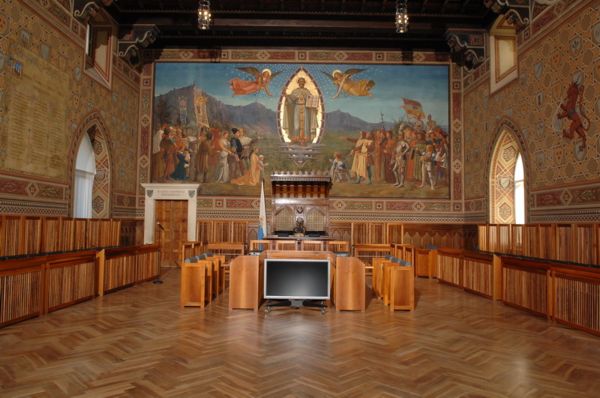
The majority and opposition are trying to reach an agreement on the new rules governing the Grand and General Council (Consiglio Grande e Generale). The debate is underway at this very hour, and after a suspension of proceedings and talks between the political forces, several points of convergence have emerged. The final texts still need to be drafted and filed, but the gap between the parties appears to have narrowed.
On the table is the reform of the Council’s Rules of Procedure, with two central issues: the introduction of committees acting in drafting capacity (sede redigente) and the so-called amendment “guillotine”, designed to prevent the examination of a bill from dragging on too long.
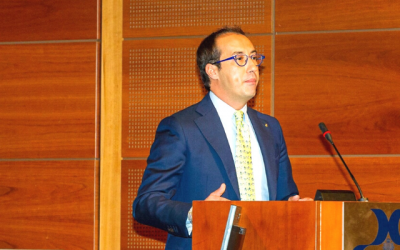
Opening the session, Manuel Ciavatta of the PDCS explained that the majority wants to seek the broadest possible consensus. The drafting-committee procedure would allow the Council, during a bill’s second reading, to revisit only those articles still carrying amendments. Articles already settled in committee would no longer be voted on one by one.
To illustrate the mechanism, reference was made to the recent family law, made up of around forty articles. Under the new system, the full Council would have re-examined only the roughly ten articles still subject to changes, before moving to the final vote. The goal is therefore to cut down on time without stripping the Council of the final say.
The thorniest issue remains the “guillotine.” The proposal would allow at least 30 councillors, after a set number of hours devoted to examining the articles, to jointly vote on a series of amendments and thus close down a debate that has become too protracted.
The majority had initially proposed a limit of 20 hours, while the opposition called for more time. Following face-to-face talks between the groups, a possible middle ground has emerged: the majority is now proposing to raise the threshold to 25 hours, while the option of 30 hours remains on the table. No final agreement has been reached on this point, and discussions continue.
A general understanding has instead been reached on the order in which amendments left after the “guillotine” should be addressed. There should be a guarantee of alternation between majority and opposition proposals, so that neither side can unilaterally decide which amendments continue to be debated.
Progress has also been made on the public nature of committee sessions. Radio broadcasts could be requested by at least three councillors, rather than by a third of the members. The adjustment is meant to protect minorities who, in some committees, do not on their own reach the one-third threshold. Live streaming of public sessions of the Council and its committees will also continue to be guaranteed.
Other proposals include the introduction of alternate members on committees, called upon to temporarily replace absent members with the right to speak and vote, as well as clearer rules on the admissibility of amendments. Changes will need to be consistent with the subject matter under discussion and, where necessary, indicate the source of financial coverage.
The majority has also decided to drop the changes originally planned regarding speaking time limits. Current time limits will therefore remain unchanged, removing one of the points of friction with the opposition.
The debate is still ongoing. As speeches continue in the chamber, the majority and opposition are working on drafting the amendments. The goal is to submit a text that is technically sound and, as far as possible, shared by all sides.