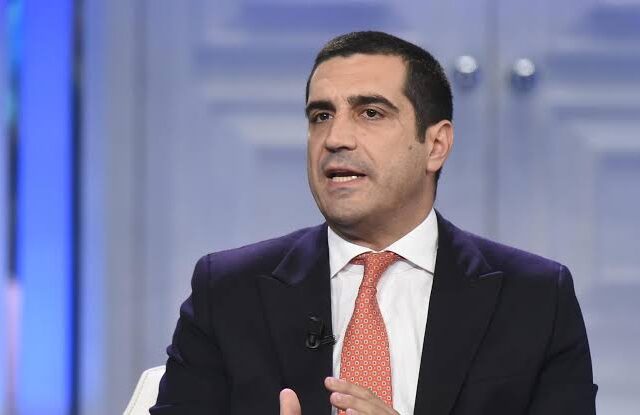
At the Festa dell’Amicizia, the State Secretary for Health, Massimo Andrea Ugolini, responded point by point to criticisms raised by political parties and trade unions: hospital activities extended into the afternoon and shift schedules revised to shorten waiting times, community medicine and the COT (Territorial Coordination Centre) set for reorganisation, an expansion of the La Fiorina care home, and new revenue streams for the ISS (San Marino’s social security and health institute) through the Farmacia Internazionale pharmacy chain and the accreditation of services to Italian regions.
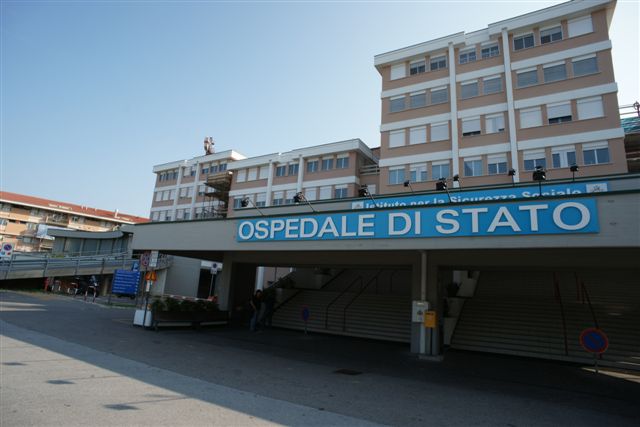
But the most significant announcement was another one: a resolution will soon be issued to revise the project-financing framework and seek out parties capable of putting together a proposal for the new hospital, since the current building dates back to the 1970s, suffers from structural and seismic weaknesses, and – as Ugolini put it – the issue “can no longer be put off.” In the background lies the roughly €90 million that the state budget will transfer to healthcare this year.
Put that way, it might sound like a mere list. But the real point is different: for once, healthcare was discussed with dates and formal acts, not with vague formulas. And the bar was not particularly high, given that for months the sector has been described in the Chamber, across party lines, as a patient badly in need of urgent care. Ugolini raised it in the simplest way possible: by taking the problems everyone already knows about and explaining what is being done, when, and through which act.
On waiting times, corrective measures are already underway. The idea is simple, which is precisely why it works: if the ISS’s operating theatres and equipment sit idle from early afternoon onward, the problem is not just staffing – it’s the clock. Spreading activity between morning and afternoon, adjusting shift patterns, and recovering capacity that taxpayers have already paid for. The stated goal is to stop citizens who find no answer in the public system from paying twice: once through taxes, and again at a private clinic outside the country. It is the same logic behind the Secretary’s openness to the issue of private practice within the public system: “we need to assess solutions that keep in San Marino services and resources that are currently being channelled toward private providers abroad.”
On the finances, the toughest exchange came from Fabio Righi of Domani-Motus Liberi, who pointed to the deficit, rising costs and overall sustainability. Ugolini’s answer amounted to a clear stance: healthcare cannot be judged simply by lining up income against expenditure. “It is a cost, but it is also an investment.” He was careful, however, to avoid sounding starry-eyed: sustainability remains a real problem, and to tackle it the Secretariat is not focusing on cuts but on revenue. Two concrete avenues are being pursued. The Farmacia Internazionale, for which a new website and a CRM system are in preparation. And the accreditation of San Marino’s healthcare services, aimed at reversing a relationship that today runs in only one direction – no longer just buying services from Italian regions, but selling the ones in which San Marino is competitive. PDCS group leader Manuel Ciavatta struck a similar note, pointing to more intensive use of operating theatres and the potential to attract patients from outside the country.
Moving in the same direction is the operational protocol with the Emilia-Romagna Region and its Intercent-ER agency, finalised in early August: the ISS can now join, on a case-by-case basis, the joint procurement tenders run by the regional purchasing body for medicines and medical devices, while retaining full management autonomy. Larger volumes, better prices. It is not a revolution, but it is a step that has been awaited for years and that someone has finally taken.
The issue of doctors remains unresolved. The ISS’s ability to attract and retain medical professionals was a recurring theme throughout the evening, and it is precisely here that the hospital question stops being merely about bricks and mortar. A professional chooses where to work based on technology, patient volumes and career prospects – not the scenery. Hence the two parallel tracks: making today’s facility more efficient while designing tomorrow’s, without using the latter as an excuse to delay the former.
The most serious counterpoint came from Matteo Zeppa of RETE: the new facility, he argued, must be the outcome of a broader healthcare vision, not its starting point. It is a fair objection – and, curiously, not far removed from what Ugolini himself said. The difference will lie in the timing. The resolution on project financing is the first verifiable deadline: when it arrives, and what it actually contains, will show whether this is the beginning of a genuine process or just another timetable destined to be framed and forgotten.
For now, something is moving. That is no small thing.