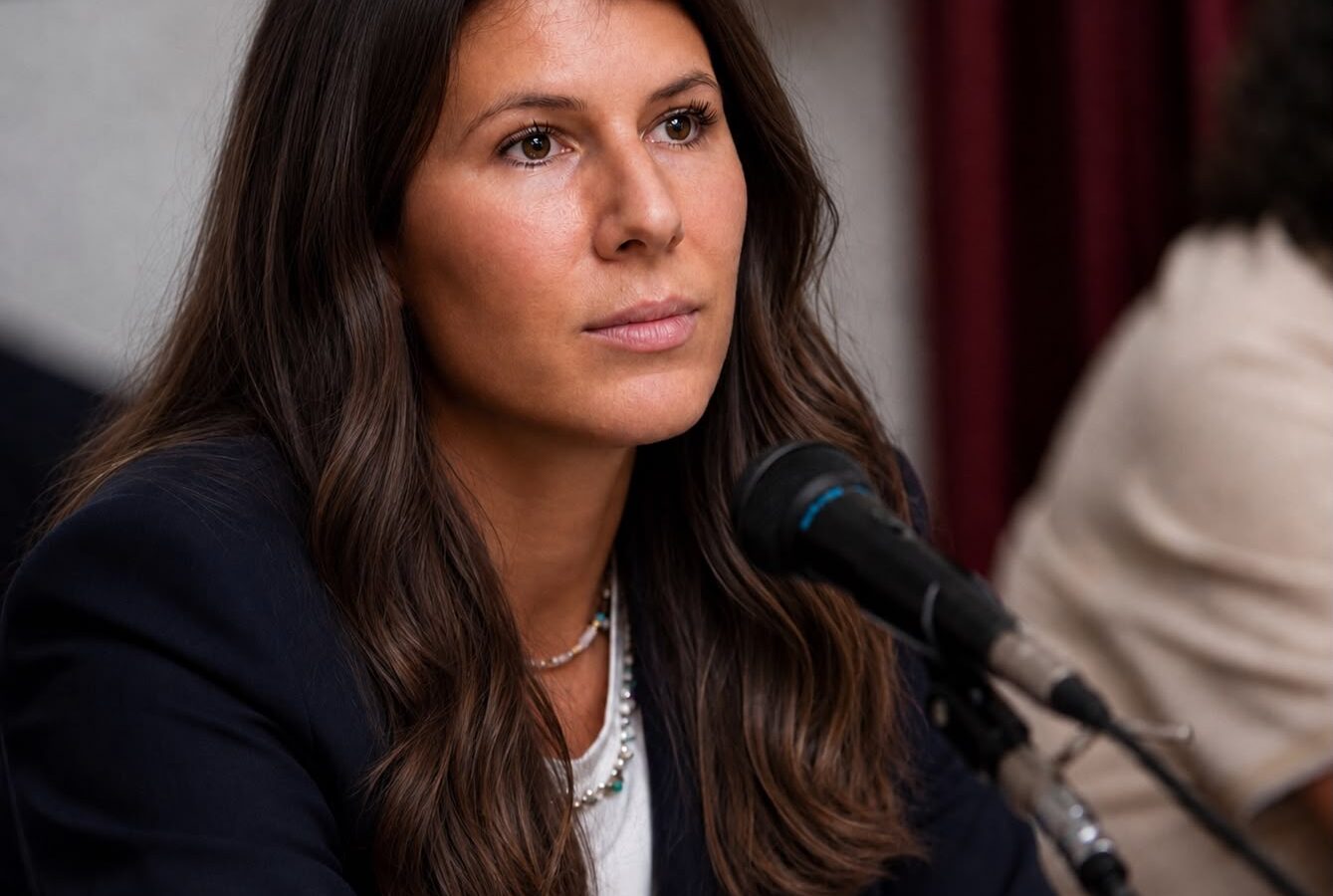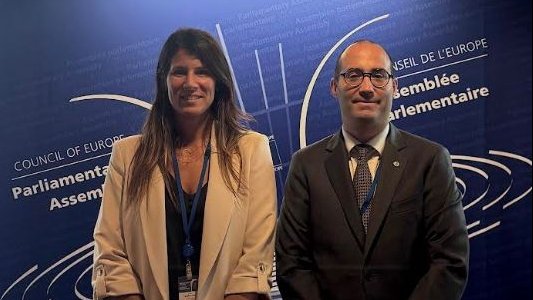
Giulia Muratori, Secretary of Libera, on the priorities for Government and majority this autumn
Secretary Muratori, after the summer break an important phase will begin for Government and majority. What should the priorities be?
We have an important autumn ahead of us, in which I believe we need to focus on some concrete objectives, bringing to completion the work already underway.
Let’s start with the Association Agreement with the European Union. We are close to a historic step—the signing—which we must welcome with great satisfaction. But at the same time, a new phase begins, with both an internal and an external challenge.
We must prepare the country, and especially the Public Administration, for the significant workload that will accompany the implementation of the Agreement, investing in organization, training and skills. This should also be an opportunity to enhance the professionalism of San Marino citizens and those we already have within the Public Administration. We have skilled people who deeply understand the Administration and our country, and who should be able to grow, take on greater responsibilities and also compete for top positions.
This is why we believe it is important, starting with management positions, to strengthen the use of competitive public examinations as the standard selection method, through transparent procedures, clear criteria and equal access opportunities. We need to be more aware of the value and skills that San Marino is capable of offering.
On the external front, we must continue with determination the diplomatic work with Member States. The Agreement is of a mixed nature, and the process does not end with the signing—we will need to follow through with the subsequent European procedure and national ratifications.
On the economic front, what are the priorities?
We must continue to support economic development capable of attracting quality investment, innovation and skilled employment. Within this framework, the energy issue is becoming increasingly important: security and diversification of supplies, energy efficiency and renewable sources all mean greater autonomy and competitiveness.
At the same time, we must continue to address purchasing power, especially for low- and middle-income households. Social tariffs for energy, gas and water are important tools, and we must constantly assess their effectiveness.
But the cost of living cannot be tackled with bonuses alone. Accessible childcare, efficient public services, housing policies and the ability to balance family and work all have a real impact on people’s budgets.
Regarding healthcare, there’s a lot of talk about the new hospital. Is that the priority?
It is a strategic choice for the future, but before the building, we need to clearly define the healthcare model we want, which services to strengthen, and where to build more structured collaborations with the healthcare systems around us.
Strengthening agreements with Emilia-Romagna and neighboring territories, developing collaboration and reciprocity in services, represents an important opportunity.
In the meantime, however, the immediate priorities lie elsewhere: concretely reducing waiting lists and strengthening local, community-based medicine. Local health services are an asset to be preserved and must be put in a position to function properly. Citizens judge the healthcare system by its ability to provide a response when they need it.
The family support law is also expected in September. Some mothers have collected signatures calling for its approval. What do you think?
This is a request that deserves to be heard with respect, and it shows just how eagerly this measure is awaited. The law will go before the Council in September, and I believe the majority must see this work through to completion.
It is a measure built through the contribution of Government, majority and social partners.
As Libera, we are satisfied with the contribution we have made, but above all with the method through which we arrived at our proposals: we started by listening.
We constantly talk about young people, about declining birth rates, about why fewer children are being born. Perhaps we should talk a little less about young people and much more with young people, trying to understand what their real needs and expectations are, and the difficulties they face when they consider starting a family.
Many of the proposals we brought into this law stem directly from conversations with young mothers and young families—women with small children who want to care for them but who, rightly, also value their jobs, their independence and the professional path they have built. And fathers who ask to be able to be more present in caring for their children.
Politics should not ask young people to adapt their lives to a model decided by others. It should listen to them and try to build, around their lives, the conditions, services and protections that make the choice to have a child a freer one.
And what emerged from this listening process?
A very strong issue concerns the relationship between motherhood and work. Financial support is important, but for many young women there is also the fear that having a child means slowing down or jeopardizing their professional path.
This is why we supported two very concrete measures. The first concerns career progression: periods of maternity leave and leave of absence will be recognized as worked periods for the purposes of career advancement, including for pre-existing situations provided for by law.
The second concerns pensions: those who choose part-time work to care for their children will have their pension contributions recognized as if they had worked full-time. This way, reducing working hours to care for children will not mean ending up with a reduced pension down the line.
A woman should not have to pay, through her career or her pension, for the time she has dedicated to raising her children.
We cannot ask her to choose between being a mother, working and building her own independence. We must try to act on what surrounds her: employment, leave policies, childcare services and a greater sharing of caregiving responsibilities.
We have so many young, skilled and competent women. Why should we ask them to choose between their professional path and the possibility of having children? Politics should, as far as possible, create the conditions that allow them to do both.
It is within this same approach that the other measures of the law fall into place: paternity leave increasing from 10 to 20 days, the strengthening of parental leave (formerly post-partum leave), paid time off for children’s medical appointments, greater protections in the event of a child’s illness, measures on childcare and school meal fees, and formal recognition of the caregiver’s role.
We should not simply ask young people to have more children. We must first listen to them and build a country in which choosing to have children is a little less difficult.