New academic programmes, an interdisciplinary research centre on ageing, expanded teaching in English, and a broad public consultation to shape strategy for the next three years.
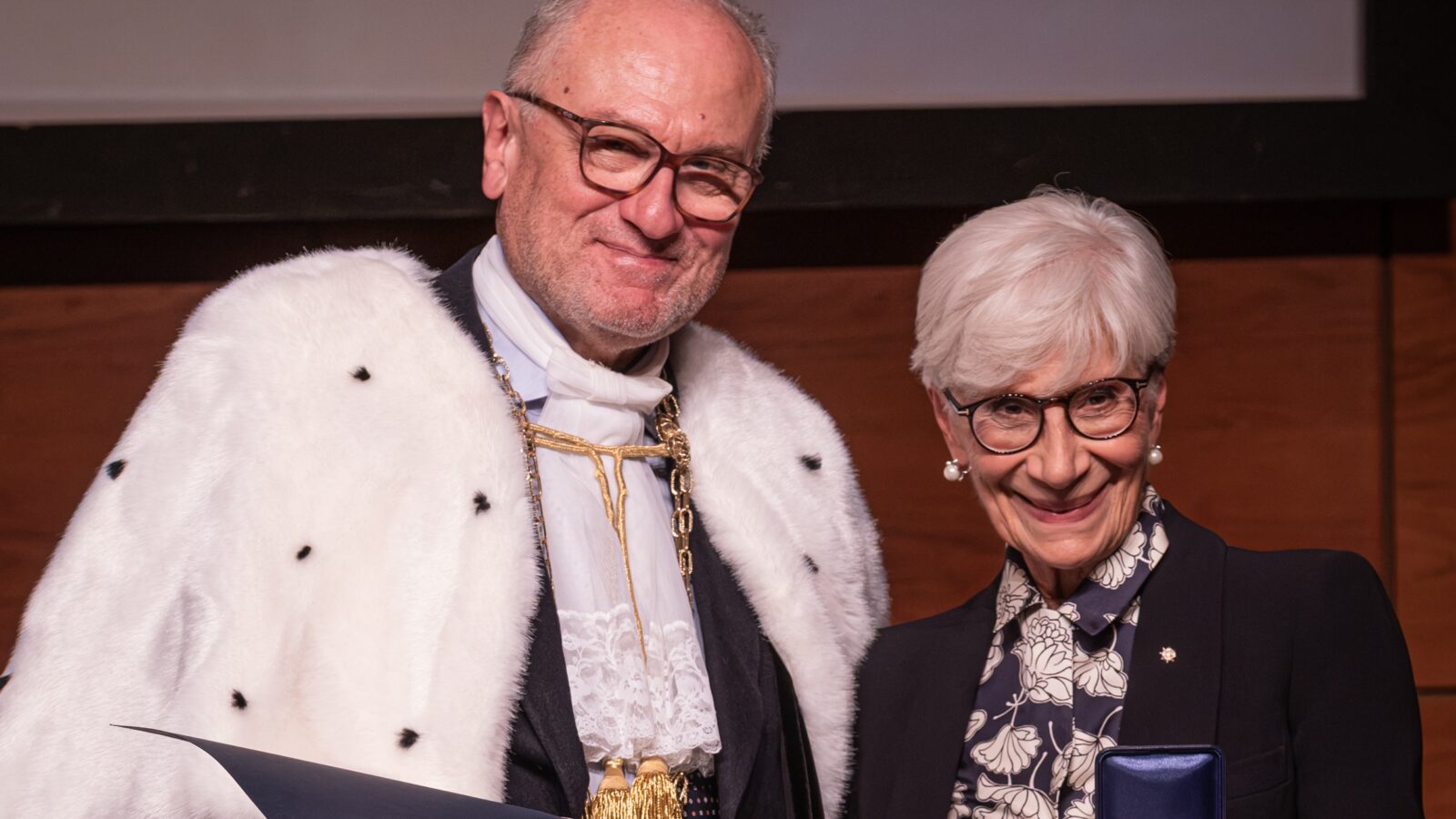
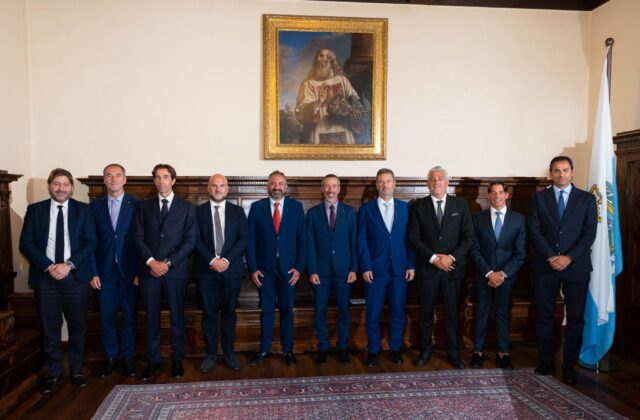
These are among the priorities outlined by the University of the Republic of San Marino, as presented by Rector Paolo Pascucci during the opening ceremony of the 2026-2027 academic year, held yesterday at the Kursaal Congress Centre in the presence of, among others, Captains Regent Gerardo Giovagnoli and William Casali.
San Marino’s university is aiming to introduce new degree programmes “on sustainability, sport and inclusion,” alongside the creation of an “interdisciplinary research centre on ageing.”
Other goals include “expanding teaching in English,” “monitoring the effectiveness of internships,” and introducing “new administrative and accounting regulations.”
Plans also include establishing a “Council of Elders”, bringing together figures who have contributed to the university’s growth.
On 11 February 2027, the university will hold its first-ever General Assembly (Stati generali d’Ateneo), an event that will help shape the next three-year strategic plan.
Pascucci described the initiative as “a distinctive public event held across several sessions,” during which the university “will not only present what it has done and plans to do, but will also ask members of the local community to assess how it operates and what more it could do.”
“The choices that will go into the next strategic plan,” he explained, “will emerge from this dialogue.” The rector identified two challenges he called “epoch-defining”: artificial intelligence and demographic decline.
The University of San Marino currently offers five bachelor’s degree programmes, three master’s degrees, two PhD programmes, eight professional master’s courses and fourteen advanced training courses. In his address, Pascucci — who took office on 1 October — also reflected on the university’s role in the Republic’s development and its path toward European integration.
“Our institution is now finally perceived and recognised as the university of this country — its university, which the country needs not only to educate many of its young people,” he said, “but also to scientifically support its own development from within.”
This contribution could directly support the implementation of the Association Agreement with the European Union. The rector highlighted the “extraordinary contribution we will be able to make to the country, given the association agreement with the European Union, to ensure San Marino updates much of its legislation — and more — through the incorporation of the EU acquis.”
Pascucci also addressed the importance of in-person teaching.
“Our university places a high value on physical presence on campus.”
Students are “here physically, sharing their educational experiences side by side,” learning not only “science and knowledge, but also how to live together as adults,” how to “be members of a society in which you engage daily with others who are both similar to and different from you,” and how to “responsibly choose their own future.”
This, he said, underpins the conviction that a university “can never be entirely replaced by an online channel.”
Student representatives also addressed the ceremony, raising several concerns with university leadership, starting with the shortage of communal spaces and student housing.
After four years, “I can say this has been a growth experience — not only academically, but also deeply on a personal level,” said Tommaso Mordenti, who nonetheless pointed to the lack “of gathering places and shared spaces.” Sofia Lepretti echoed this view: “The long-standing absence of student housing weighs on social life outside of class hours.
Still, we know that initial steps are being taken in this direction.”
On the housing issue, Secretary of State for Education and Culture Teodoro Lonfernini announced the first steps toward building a student residence.
“Initial agreements have been launched with certain facilities in the country to make housing available for students,” Lonfernini explained. He described this as a “preliminary response to growing housing needs, while we await the construction of an actual student residence,” which he pledged would “become reality within a reasonable timeframe.”
The Secretary of State also underscored the university’s role in San Marino’s path toward Europe: “It is not a mere spectator, but an essential component — a driving force for change.”
During the morning session, Romina Cecchetti, representative of the administrative and technical staff on the University Council, also spoke, highlighting the importance of the daily work carried out to keep the institution running.
The ceremony closed with a keynote lecture titled “Rule of law and democracy: the relevance of European values today”, delivered by Silvana Sciarra, former president of the Italian Constitutional Court.
“I could feel just how much this university is a living part of the Republic,” she said, “a place where the freedoms of research and teaching, the exchange of ideas, and the pluralism of viewpoints are cultivated. These are precious assets.”