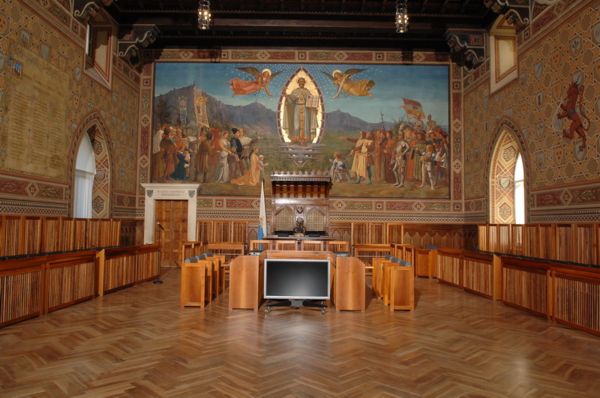
The sports reform bill has been placed on the agenda for first reading as item 22 of the Grand and General Council (Consiglio Grande e Generale). The proposal, presented on 9 October by the Secretariat of State with responsibility for Sport, had been postponed from the previous session.
Proceedings open on Monday 23 November at 1pm and continue on 24, 25, 26, 27 and 30 November. The convocation sets the order of business, so the exact day the bill is discussed will depend on when the chamber reaches item 22.
The text, made up of 68 articles and three annexes, would repeal the sports laws of 1997 and 2015. It recognises the right to sports practice and physical activity, promotes the value of volunteering, and tasks the State and the CONS (National Olympic Committee) with promoting gender equality, including in leadership positions.
Under the reform, CONS would be renamed the National Olympic and Paralympic Committee of San Marino. The Committee would be responsible for ensuring equal treatment for athletes with disabilities and their federations and associations, safeguarding their ability to organise and practise specific disciplines.
School gymnasiums could be used for sporting activities outside class hours, in accordance with the regulations attached to the bill. For state-owned facilities, the text envisages three management models: assignment to CONS, direct concession to federations and affiliated disciplines, or a contract with a private operator.
The Secretariats of State could also use these facilities for public, cultural or tourism-related initiatives, in agreement with CONS and the facility managers and taking the sports calendar into account. A delegated decree would be responsible for establishing subsidised sports credit for investment in facilities and equipment.
A medical fitness certificate would be required to register and take part in organised activities, both competitive and non-competitive. For competitive sport, check-ups would generally be required annually. Fitness examinations for competitive sport carried out by the Social Security Institute would be free of charge for minors and athletes with disabilities.
Federations, associations and affiliated clubs would be required to insure their registered members against injury. Coverage would also extend to journeys from home to meeting points, whether by private or shared transport.
For international competitions and meetings of federal or national interest, public and private sector employees could be granted up to 15 days of paid leave per year, upon request from the CONS Secretary General. The measure would apply to athletes, coaches, officials, medical staff, support personnel and match officials, with costs covered by the Committee.
Self-employed workers called up for such events would be entitled to a daily allowance. CONS could also enter into agreements with athletes of national interest for the duration of their competitive career and up to two years after retirement.
The bill establishes a National Sports Commission with an advisory role, chaired by the Secretary of State with responsibility for Sport and also including representatives from CONS, Education and Tourism.
A register of affiliated sports associations and clubs would be set up under the Committee. Registration would need to be renewed annually and would be required to access public funding and sector tax incentives. Required documents would include the organisation’s statute, financial statements, and the names of directors with decision-making powers.
Federations and affiliated disciplines would identify which activities qualify as professional sports, according to criteria set by CONS. Only sports clubs established as joint-stock companies (Spa) or limited liability companies (Srl) could sign contracts with professional athletes, subject to clearance from the relevant federation and a prior opinion from the Committee.
If the law is approved, CONS will have 180 days from its entry into force to adopt the regulations within its remit. Federations, affiliated disciplines, associations and member clubs will have 18 months to bring their statutes and regulations into compliance.