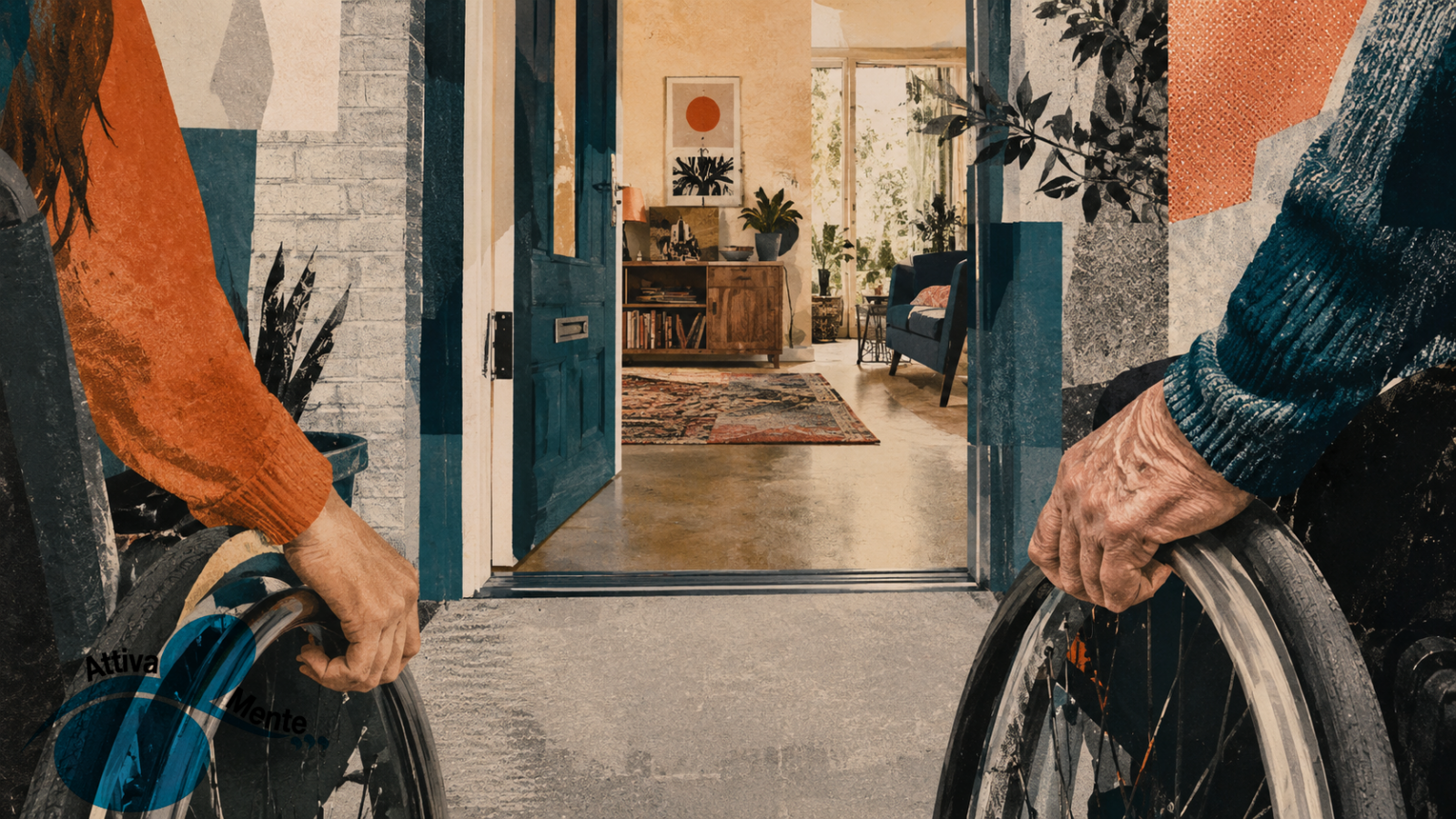
Disability, Attiva-Mente: “Independent Living cannot have an expiry date”
The association calls for personalized support and coordinated policies in San Marino, from childhood to old age
Independent Living for people with disabilities is still not guaranteed in San Marino, according to Attiva-Mente. In a statement, the association denounces the absence of an organic framework and adequate tools, and calls for measures that ensure freedom of choice, assistance and inclusion throughout every stage of life.
“This is not simply a shortfall in service provision, but the failure to implement a human right. A right that does not expire upon reaching a certain age and must also be guaranteed to elderly people — both to those who grow old with a disability and to those who acquire one as they age,” the statement reads.
The issue is linked to the broader debate on declining birth rates and an aging population. For Attiva-Mente, measures aimed at younger generations must go hand in hand with policies that also protect the elderly, jointly addressing healthcare, housing, urban planning and social issues.
The association clarifies that living independently does not necessarily mean doing everything without help: “Living longer is an achievement, not a guarantee of living well. Elderly people do not form a homogeneous group, and age does not necessarily entail a loss of autonomy. However, when the need for help increases, the right to make decisions must not decrease. This is the true meaning of Independent Living: not doing everything alone, but being able to retain control over one’s own life by having access to the necessary support.”
The statement refers to Article 19 of the UN Convention on the Rights of Persons with Disabilities, pointing to the ability to choose where and with whom to live, and to access the necessary support, as the benchmark for shaping responses.
The requests concern, first and foremost, the concrete conditions of daily life. “Difficulties, in fact, do not depend solely on health: inaccessible environments, poverty, isolation and lack of assistance can force a person to give up their home and their relationships. What is needed, therefore, are accessible and adaptable housing, personal assistants, tailored home support, aids and technologies, usable transport and local services.”
According to Attiva-Mente, these tools must be part of a system organized around the individual, overcoming the fragmentation of interventions. Co-housing and other forms of shared living can also offer opportunities, as long as they remain a choice: “They must, however, represent an additional option, not an imposed solution. Choosing to live with others is very different from being forced to leave one’s home because the necessary support to stay is lacking.”
Another key point concerns the relationship between care and decision-making autonomy. The association stresses that the need for healthcare assistance must not lead to exclusion from personal choices: “Needing care, even significant care, does not justify exclusion from decisions about one’s own health, where to live, how to use one’s own resources, or how to organize one’s day. Being protected cannot mean losing one’s voice.”
This principle, the statement specifies, must also apply to people with dementia, cognitive decline or particularly intensive support needs. In these cases, Attiva-Mente calls for tools and forms of assistance capable of respecting individual will and preferences, preserving as much as possible habits, relationships and ties to the community.
Attention is also drawn to digitalization. Online healthcare bookings, banking transactions and administrative procedures, the association notes, can create further obstacles when they are not accompanied by accessibility, assistance and non-digital alternatives.
Continuity of support is one of the central demands: “Support must follow a person’s needs throughout their entire life, without automatically being reduced or discontinued upon reaching a certain age. Nor is it acceptable that, given equal needs, access to support, aids and services should depend on the point in life at which the disability arose. Needs do not disappear at the age of 65, and rights do not diminish: Independent Living cannot have an expiry date.”
For San Marino, Attiva-Mente therefore urges the coordination of social, healthcare, housing, urban planning and transport policies, together with the collection of data on living conditions, barriers, and available or missing services. It also calls for the direct involvement of the people concerned and the organizations representing them in shaping these measures.
“Institutionalization cannot become the pre-written destiny of those who grow old or acquire a disability. It is not enough to affirm freedom of choice: conditions must be created to exercise it, before the absence of alternatives ends up deciding for people,” the statement concludes. “Rights have no age, and a society that is aging must be able to offer more support, not less freedom.”