In San Marino, opening a standard Srl (limited liability company) requires around €20,000 in the first four months alone, between share capital, notary fees and the business licence. Our colleague Nicholas Perpiglia calculated this in a recent piece: none of the European countries he compared require such a high minimum capital — not even Germany.
Then come the director’s minimum social security contributions and, from 2026, an extra percentage point of IGR (the corporate income tax). Call it the cost of doing business — and it makes you wonder: what if, for once, it were the entrepreneurs who went on strike?
Let’s call her Giulia. Twenty-six years old, a San Marino citizen, an e-commerce idea and a laptop. Giulia doesn’t exist. Her numbers do.
The one-euro company scheme isn’t for her. It’s reserved for tech startups certified as highly innovative, and only lasts three years. An e-commerce business doesn’t qualify.
That leaves the standard Srl: €25,500 in share capital, half to be paid within 120 days and the rest within three years. Or there’s the “reduced” Srl: €9,000 paid within 60 days and locked up until liquidation, or covered by a bank guarantee.
A piggy bank you can’t break.
To be fair, the law does lend a hand. Being under 40, Giulia can pay in the capital over three years and is exempt from the licence tax for the same period. But she still has to subscribe the full €25,500 from day one. And the notary, accountant and paperwork bill arrives regardless: €5,000–6,000, according to the quotes gathered by Perpiglia.
Her friend Marco is thirty, lives in Rimini and would like to set up here to sell across Europe. For him, no discounts: €1,700 for the licence tax, then €650 a year, half the capital within four months, plus the notary. That’s where the €20,000 comes from. Back home, a simplified Srl costs €600–800, all included.
Then month six arrives. If the company doesn’t have at least one full-time employee, from the 180th day after the licence is issued, the law classifies the sole director as an “operating director”, barring case-by-case exemptions.
In practice: contributions calculated at least on the minimum self-employed income, even if the company hasn’t earned a single euro yet. On top of that, there’s an additional 1% payment on the same minimum.
It’s the fixed cost nobody mentions when you ask “how much does it cost to start a business”.
And what if profits do arrive? Between 2026 and 2030, corporate IGR will rise from 17% to 18%. A discount does exist for new companies: half-rate IGR for five years and exemption from the licence tax. But on one condition: one employee within six months and a second within two years. Perfect for a warehouse. Less so for someone starting out alone with an idea.
Who benefits?
The official answer is that it’s a filter. After the era of shell companies, the 2010 licensing law wanted businesses “built on real resources and people”. Fair enough.
But minimum capital doesn’t stop fraudsters: €25,500 deposited today, as Perpiglia points out, can be spent again tomorrow morning.
Fraudsters are stopped by inspections, and from 2026 the State will even have automatic financial investigations. The entry price, on the other hand, stops those who have an idea but no money. Which is to say, almost always, young people.
Then there’s a bigger problem.
San Marino can’t survive by selling to itself. With such a small domestic market, a company that only sells to fellow San Marino residents is simply shifting money from one pocket to another.
Wealth comes in when you sell abroad, or when someone from outside comes to invest here. The Government itself says as much in the 2026 Budget Summary: the economy’s resilience is down to exporting companies. A filter that makes entry so expensive ends up blocking exactly those who would bring money in from outside.
It’s not a filter. It’s a plug.
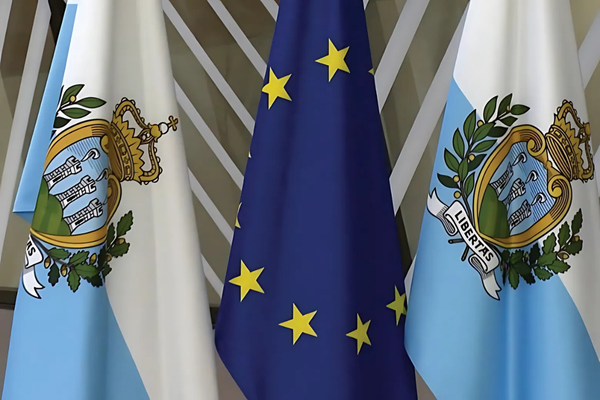
And competition is right around the corner. With the Association Agreement signed in Brussels on 19 October, San Marino is preparing to join the European single market, where companies also get to choose where to be born.
In Ireland, a Ltd can be registered online for €50. The European Commission has proposed EU Inc: companies set up within 48 hours, for under €100 and with no minimum capital required. It’s not law yet, but that’s the direction things are heading.
Then there are those who sell up. In retail trade, between 2021 and 2025, the net balance was 94 fewer businesses, according to the Statistics Office. And those who remain know it well: importing goods from Europe means paperwork, intermediaries and costs that, within a single market, look like an anachronism.
Not from the other side of the world — from Europe. We’re working on it, and in the coming days we’ll publish an in-depth report with concrete cases.
Lined up one after another, the numbers tell the rest of the story.
A study by the CSdL (San Marino’s main trade union confederation) on business trends counted just 71 more companies between 2016 and 2023: +1.4% in seven years.
Over the same period, businesses with no employees fell by 267, and sole-trader and professional licences dropped by 185. And there’s one line that should be framed in every public office: “Unfortunately, the contribution of new businesses has been negligible.” To be clear, this isn’t a wasteland: those already here are holding on, and exporters are growing. The problem lies with those who never arrive.
And here we get to the strike.
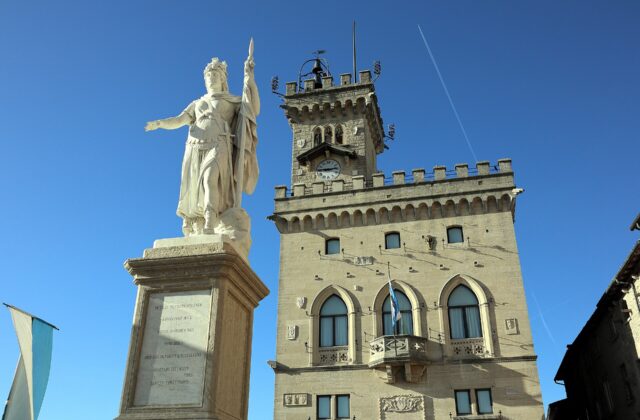
On 23 September 2025, thousands of people filled Piazza della Libertà for the general strike against the IGR reform.
It worked: the text was amended, and the ruling majority claimed credit for the agreement reached with the unions.
In that same reform, however, businesses were handed an extra percentage point of IGR until 2030. OSLA (the employers’ association) had complained that the measure was introduced without any consultation with employer representatives. According to the association, it risked undermining competitiveness and the ability to attract investment.
Workers responded with a rally in the square; businesses responded with a press release. The extra percentage point stayed.
So let’s ask the uncomfortable question: what if it were the entrepreneurs going on strike?
Not to get more, but to pay less before they’ve even started.
A day of shutters down and offices closed. When a worker stops, a shift stops. When a company stops, wages, contributions and taxes stop too. Which means the State stops.
It’s not an invitation — it’s a unit of measurement.
The cost-of-living crisis has had a name for years now, and every so often a rally in the square.
The cost of doing business had neither. It’s everything you pay before you earn a cent, regardless of how much you end up earning: capital, notary, licence, minimum contributions, the extra IGR point, the paperwork to import. As of today, at least it has a name.
Perpiglia closed his piece with the right warning: the risk isn’t that young people will stop starting businesses — it’s that they’ll do it somewhere else.
Rimini is half an hour away.
Dublin is a click away. EU Inc, if it passes, will be 48 hours away.
San Marino, for now, is €20,000 away.