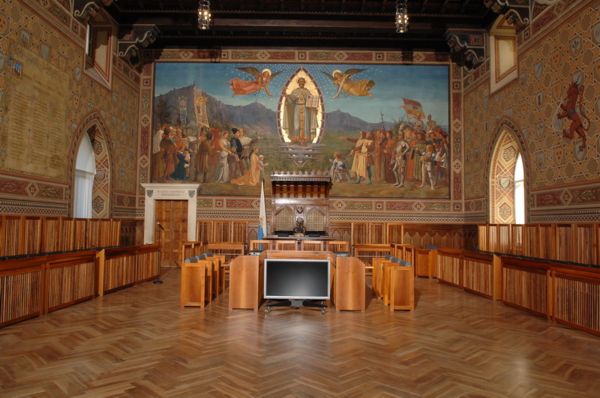
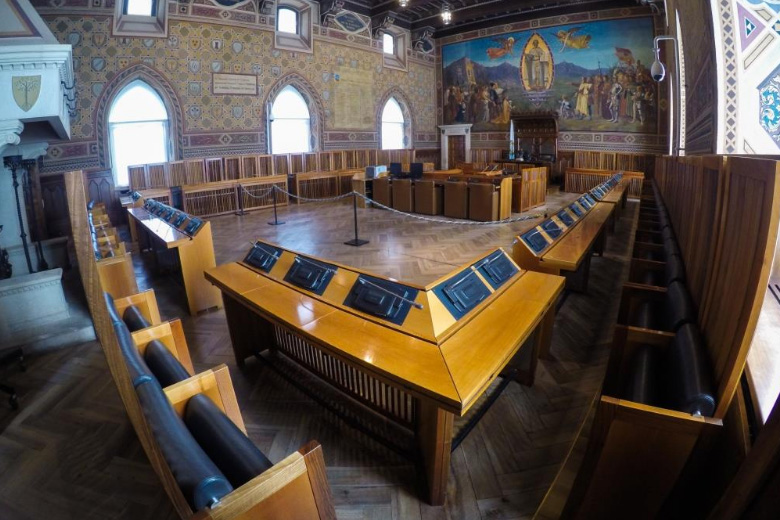
How long should a speech in Council last? Ten minutes, five, whatever time the group is allotted?
The discussion on institutional reforms risks getting stuck on the stopwatch. Yet the debate within the Institutional Reforms Committee (Commissione Riforme Istituzionali) points to a more concrete issue: how to put councillors in a position to do their job properly, without dragging out sittings and without reducing Parliament to a mere formality before a vote.
Repetition takes its toll. A debate that fills hours without adding anything new makes it hard to follow positions and understand where the political choice actually lies.
On this point, the observations raised in committee deserve attention. But shortening speeches alone does not guarantee better discussions. If problems are not addressed beforehand, if there is no dialogue between groups, and if arguments shift at the last moment, those same knots will still end up on the floor of the chamber.
Only with fewer minutes to untangle them.
Scheduling sittings in advance and setting debate time limits can help. Knowing commitments ahead of time allows councillors to prepare, divide up the workload, and arrange absences from their regular jobs.
The real issue is how that time is allocated. A group must be able to present its position, but an individual councillor must also be free to say they disagree with it.
A group leader’s voice cannot automatically stand in for everyone they represent.
This opens a broader question about the role of the councillor itself. How much time are they expected to devote to politics? What support do they get to study legislation?
What protections exist if they work in the private sector? These are practical questions that affect who can actually run for office and carry out the mandate.
If the commitment keeps growing heavier while the tools available remain inadequate, there is a risk that participation becomes a privilege reserved for those who can afford it.
Even the proposal to allow debate without a quorum should be weighed on this same ground. It could let those following a particular issue work without depending on the presence of others.
But a near-empty chamber raises a political problem, even before it raises a procedural one. A speech exists to present a position, hear objections, and try to persuade.
If there is no one left to listen, what weight does that discussion still carry? Separating debates from votes might make the calendar more orderly, but it requires clarifying exactly what participation is expected of elected officials.
The opposition statute, meanwhile, offers a chance to tackle a very specific problem: making rights effective that, without proper timing and tools, risk remaining merely on paper.
A government response that arrives after months may technically count as a reply, yet politically it may no longer serve any purpose. A proposal that finds no place on the agenda struggles to ever become a real subject of debate.
A document obtained after a long wait may arrive only once the decision has already been made.
Question time, direct access to data, and guaranteed timeframes for minority initiatives all relate to the Council’s ability to hold the government to account. And these rules must be designed with an eye to the day when the balance of power shifts. Those who govern today may need such safeguards tomorrow. Those who demand them today will have to respect them once they hold the numbers to decide.
San Marino’s European path makes all of this more urgent. The sheer volume of rules to be examined demands organization, expertise, and a clear distinction between technical adjustments and genuine political choices.
Not every step will require the same level of scrutiny. Precisely for this reason, deciding who draws that distinction, and by what criteria, will be a weighty choice in itself.
The procedure adopted will determine how much room councillors actually have to understand issues and influence outcomes.
One reasonable request emerges from the debate: knowing how much work awaits the Council and how it will be tackled. Before deciding how quickly to proceed, there is a need to understand the rules involved, the areas affected, and the consequences of each decision. Technical support for parliamentary groups thus becomes a concrete condition for exercising the mandate, especially for parties with few representatives.
The challenge of reform will be measured on exactly these points: a calendar that is respected, an answer delivered when it is actually needed, a text made available in time to be studied properly, the chance to challenge a decision before it is set in stone. This is where the Council can truly gain effectiveness. The stopwatch, on its own, only measures how much is said.