The agreement with the European Union as an opportunity to break with a culture of isolation and privilege.
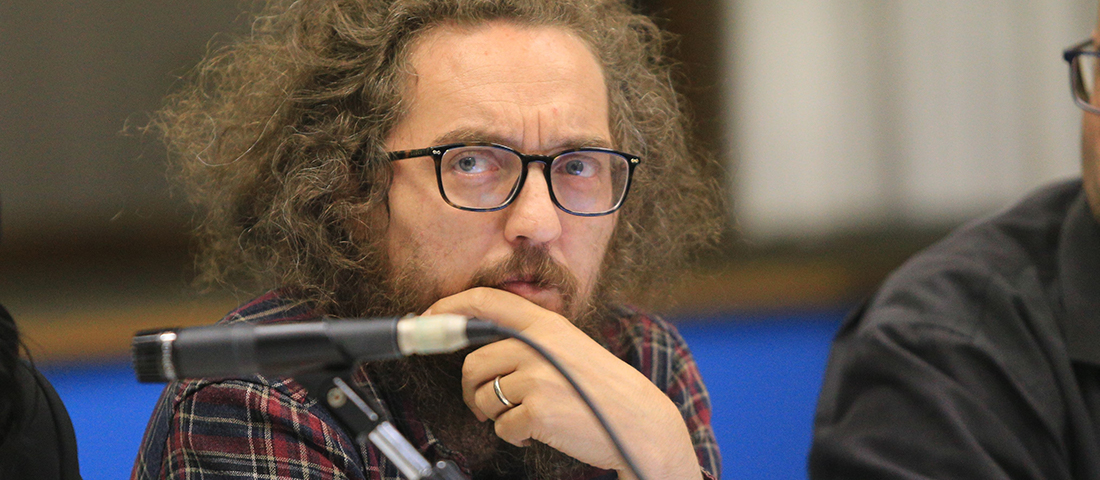
This was the theme of the speech given by Matteo Zeppa (Rete) today, Monday 9 November, in the Foreign Affairs Committee during examination of the association agreement. The councillor challenged those who invoke Sammarinese identity to defend the existing balance of power, calling instead for a change that involves the whole of society, from institutions to businesses.
“I like to think it’s no coincidence that today’s Committee session falls on the anniversary of the fall of the Berlin Wall.
A wall is falling in San Marino too — in our culture, in our obstructionism, in our habit of only ever looking at the part we wanted to see. It’s a coincidence, of course, but I prefer to think otherwise: walls that were hard to chip away at, even in the minds of our citizens, are coming down.
The Secretary is right: this difficult path began many years ago, when Sammarinese culture — also expressed through politics — was one of strong isolationism, designed to safeguard the privileges of certain individuals, certain castes, or certain sections of society. There was little appetite for comparing or measuring ourselves against anything bigger, against a different kind of development from our own.
I fully understand that this is part of that wall finally coming down for good. The Secretary of State recalled the dark periods. Dark periods that, with a different political, economic and financial culture, we probably would have calmly avoided altogether — or that simply wouldn’t have existed.
In recent days, regardless of whether one sees this agreement and the closing of negotiations as an opportunity or not, I’ve tried to think outside the framework of my temporary belonging to a political class. I’ve tried to reason as a citizen.
We have to start from one assumption: across these little more than sixty square kilometres, we have always been, if you’ll forgive the comparison, a bit like the Marchese del Grillo [a notorious Italian film character embodying arrogant, entitled privilege]. There was — and still is — a culture handed down to us by a ruling and political class of the 1990s, with which we grew up.
Some people rebelled, or tried to, bringing in innovation and new ideas, but the wall that is falling today was, until now, impossible to dent.
This is precisely a citizen’s problem: it’s such an age-old, internalised culture, so deeply assumed as personal, that in a small reality like San Marino the step from personal culture to popular culture is extremely short. We have lost opportunities because of it.
Sammarinese people have this trait — not unique to us, but typical of anyone who, with their back against the wall, has to find some alternative way to keep breathing. It has happened over the years, as numerous political, judicial and financial affairs piled up one on top of another. We have always had to find something that let us breathe.
The colleagues who spoke before me mentioned delays and difficulties. Let’s not rush straight into ranking who did more and who did less.
Many write or say that we are going to lose our Sammarinese identity. I’ve already said this publicly, even on television: if accepting this agreement means losing that caste identity, Marchese del Grillo-style, then so be it. That is not my identity.
It is the identity of those who are afraid, of those who want to preserve a social status quo that suits certain people and still allows small fiefdoms of power to form within Sammarinese society. In a much larger context, such as the European one, such things could still happen, certainly, but with far greater difficulty.
I have no trouble using strong words — I never have: that old reference to “San Marino da bere” [a play on “Milano da bere,” evoking a glitzy, self-indulgent 1980s culture] will finally fade away, because it is the message of a parasitic culture — financial, political, economic and judicial.
A culture that, instead of letting us breathe and fill our lungs with oxygen, kept dragging us further down. And while it dragged us down, we kept searching for something to grab onto so we could resurface.
If losing Sammarinese identity means losing that, then as a Sammarinese citizen I am glad to have lost it. I am very pleased that this could mean that parasitic culture no longer exists.
There have been delays, as has been said — that’s clear. I won’t sit here arguing over who did more or who did less; it doesn’t interest me. What interests me is that this culture is finally and definitively broken down by a culture of action, regardless of who is in the majority or in opposition.
This is about being Sammarinese and European citizens: what really needs to change is our mindset. These developments are welcome, if what we are talking about is social and cultural evolution.
I also hope the culture of businesses changes, because it’s not just about citizens — there’s also a business culture to consider. Do you remember the famous strikes of years ago, which succeeded because some association or other forced its own workers to take to the streets?
I was there, I remember it very well. The success of a demonstration depended on an employers’ association telling its representatives to send the workers out into the square.
I believe we can forget about that — or perhaps not — but that is the parasitic culture that has nothing to do with genuinely being citizens, entrepreneurs or members of society who want to preserve that obscene status quo. I hope, and I sincerely believe, that it will no longer exist, or will be greatly reduced.
In recent days I have mostly seen the mythological figure of Janus, the two-faced god: on one side, a smiling face, wanting to reassure, expand and modernise; on the other, a face hidden behind a balaclava, so as not to be recognised. That is the crux of what this agreement can bring to San Marino, with all the difficulties that may come with it.
When I say that every single one of us, from first to last, must step up and get involved, that is not an empty claim. Even those who do not accept this economic agreement must get involved. But if the argument is: I don’t want it because I want to preserve that parasitic culture, otherwise I’ll lose that Sammarinese identity I mentioned at the start — then no, I’m not on board with that.
To close this debate, I want to do something I have never done before, but which I now feel is appropriate. These are not perfunctory thanks: on my behalf, and I believe on behalf of the movement I represent, I want to thank everyone who made this result possible, through stops, accelerations and pauses.
I’m referring above all to the Department of Foreign Affairs and the various Secretaries of State who have held office over this time. Some more, some less — it doesn’t matter, this isn’t a question of political affiliation. I believe heartfelt thanks are absolutely owed at the conclusion of this process, which was carried forward with extreme difficulty.
Being able to truly breathe a different air, to live a different culture — multilateral and non-discriminatory — I believe this is the goal that many people not present in this chamber have held for years.
This is a path that will put all of us to the test. Let that debate happen, let us go back to thinking about what kind of culture we want to belong to, rather than staying isolated within these sixty-odd square kilometres, claiming on one hand to be autonomous and then being surprised when we’re attacked over news stories, with San Marino’s name constantly being dragged up and labelled a tax haven.
I, for one, would have grown tired of it too.
I believe this is an opportunity.
I truly thank everyone within every branch of the State who worked to bring this process to a close. I thank the political side, all the Secretaries of State who have held office over the years, and the current Secretary, Beccari, who brought to completion a process that can help us grow and develop.
Anyone who says this cannot happen is, in my view, simply wrong.”