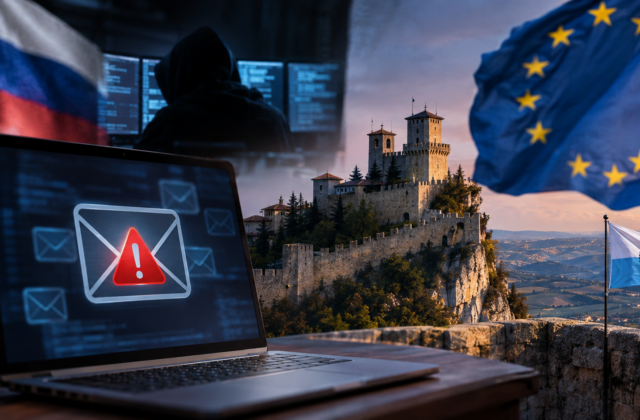
The signing of the agreement with the European Union has taken place. Now San Marino must decide which activities to develop, which investments to encourage, and what opportunities to offer young people.
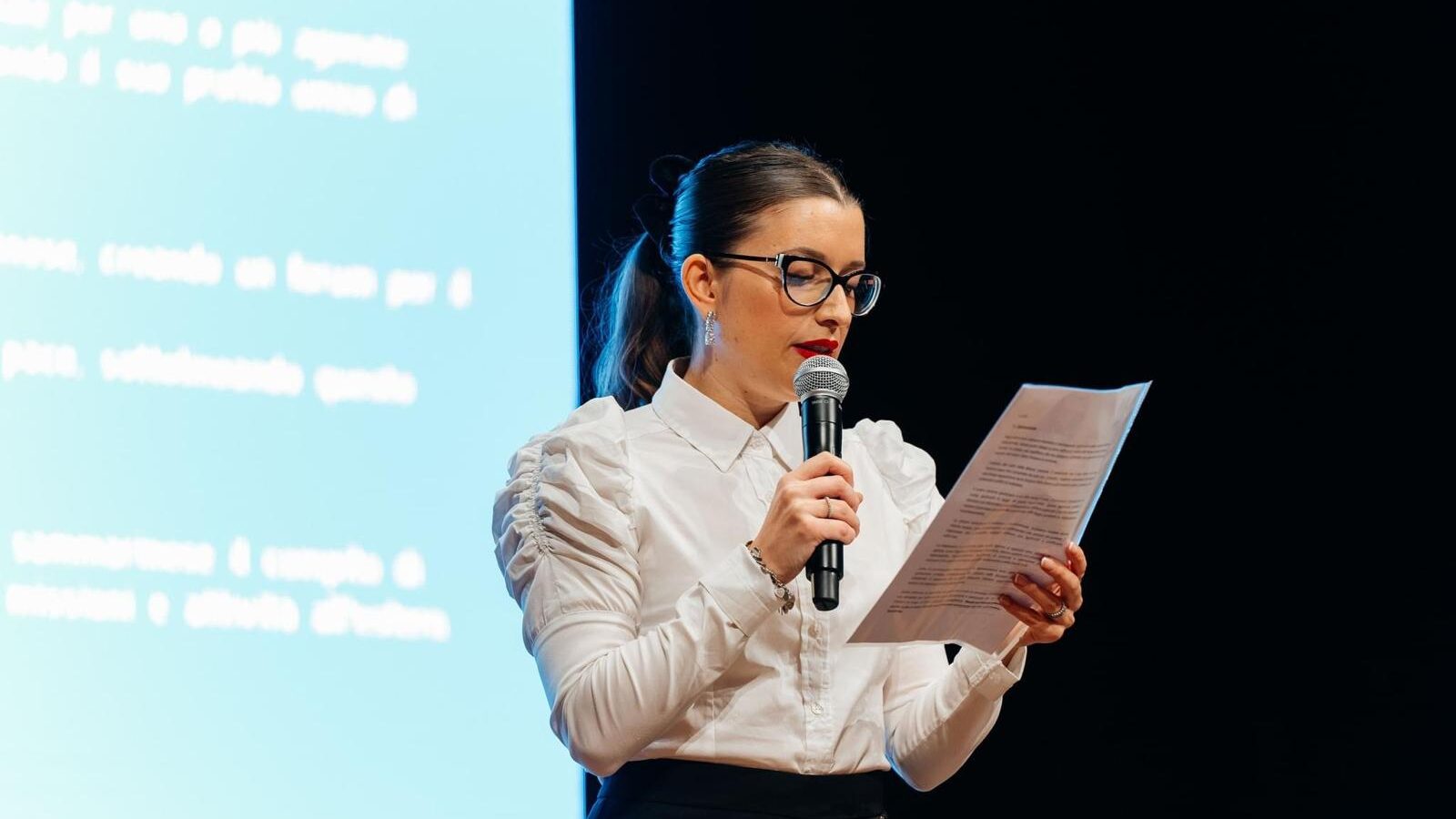
Ilaria Bacciocchi (PSD) spoke today, Monday 9 November, before the Foreign Affairs Committee, calling for a plan covering the next ten to fifteen years. Industry, banking and public administration are among the priorities, but growth, she warned, must be accompanied by adequate housing, transport, healthcare and services.
“Today I finally believe we can start talking about the Association Agreement in a different way, because the signature has arrived, in November the Grand and General Council will ratify it, and we can now think not only about how to get into Europe, but about what we want to do once we’re there.
I’d like to start with a political consideration, because this signature did not come about by chance, nor is it the result of a path on which we were always all in agreement. I recall that San Marino struggled for many years to open up, to engage with the outside world, to accept that the world was changing and that we too had to change.
Think back to 2006: we had reached the signing of an important economic cooperation agreement with Italy, one that could have changed a great many things. Instead, even then we stopped, held back by fears and resistance within our own country.
We know well what happened in the years that followed: the black list, isolation, the crisis of our economic and banking system.
Then came the 2013 referendum, undoubtedly an important political moment, because it forced the country to discuss openly its relationship with Europe. There too, all the fears we know today resurfaced: losing sovereignty, losing our identity, no longer being masters of our own choices.
I believe today we can say one thing: those who argued back then that San Marino needed to open up were right, because they understood that closing ourselves off would not protect us — it would only make us weaker.
The PSD can claim this today, and not merely as a matter of flag-waving, as some would have it, because European integration has been a founding choice of our party since its establishment in 2005, and before that it belonged to the history of the political forces from which we descend.
In 2007, with Foreign Affairs under PSD leadership, a formal initiative was launched toward the European Commission to request greater integration. We then supported the referendum process and continued to back the negotiations, even when it would have been easier to distance ourselves and when results seemed a long way off.
Today we are here, and naturally this result does not belong to us alone — it would be wrong to tell the story that way. There have been different governments, women and men from different political backgrounds, and an enormous amount of diplomatic and technical work. We want to acknowledge the role of Secretary Beccari, who brought this process to completion together with his entire team.
The political point remains: for years we were divided between those who believed San Marino needed to find the courage to open up and those who thought it safer to keep things as they were. Today that debate, at least in its general framing, appears to have been settled, and this is good news for everyone, because now we must turn to something far more interesting: understanding what San Marino can become.
Here we still see a problem, because we are not as ready as we should be. We don’t say this to stir controversy, nor to shift blame onto anyone, but we must acknowledge that we come from many years in which the country moved very little. After the crisis we went through a long period that we might call normalisation: we tried to put the accounts back in order, rebuild credibility and restore stability.
At the time these were necessary things, but at a certain point we grew accustomed to living this way, to managing what we had, to proceeding on autopilot. We lost part of our capacity to imagine new things, to invest, to take calculated risks and to build a development vision.
It is also normal that today we find ourselves somewhat behind: a country that has stood still for so long must start moving again, and in our view, the Association Agreement can give us exactly that push.
Ahead of us lie enormous opportunities, and we would like to reason through some of them very concretely. Let’s start with industry: manufacturing produces around 40% of our GDP. That is a very significant figure.
We have companies that export, that compete, that work with European and international firms — companies already inside the single market from an economic and commercial standpoint.
The problem is that for many years they have operated without the country being fully equipped to support them, with procedures that are at times complicated, bureaucratic difficulties, the T2 issue, and an indirect tax system no longer suited to the needs of such an integrated economy.
Now we must ensure that San Marino as a country catches up to where its businesses have already arrived. This is why we consider VAT reform fundamental: it is not a matter for technicians or tax specialists alone, it is a question of the competitiveness of our productive system. We must ask ourselves what we can do to attract new industrial investment, help existing businesses grow, and develop high-value-added activities.
We already have an important industrial base; we need to put it in a position to make a real leap in quality.
I come now to the banking and financial system. Here the point is even clearer: we are a country that uses the euro, applies a vast body of European rules, yet has not been able to enjoy the same conditions of access to the financial market. Everyone pays the price for this — families and businesses alike — through a higher cost of money and banking services that are more expensive, less advanced and less competitive.
We pay the price when our credit card doesn’t work on a website or when we’re abroad, when a perfectly ordinary digital financial service available to an Italian citizen is not available to a Sammarinese. I’m thinking, for example, of Revolut.
These may seem like small things, but they are not, because they speak to a condition of marginalisation that in 2026 we can no longer consider normal.
Naturally the agreement does not solve everything automatically: in the financial sector there are precise conditions, a gradual path, and fifteen years of transition.
We must use these years to arrive as quickly as possible at a more open and competitive banking system. This will require working ever more closely with the Bank of Italy and with the European authorities, also to strengthen our banks and the quality of the services they offer.
Then there is the whole world of professions, craftsmanship and services, on which we have not yet reflected enough. Think of a young Sammarinese professional: today, working outside our borders can mean encountering obstacles and restrictions.
With the agreement, once the relevant provisions are implemented and the required conditions met, far broader possibilities will open up.
There is also an issue of particular importance to the PSD: young people. We have young men and women studying at Italian and European universities, who speak languages, gain experience abroad and acquire skills that we may not yet be able to put to use here at home.
Often, once they finish their studies, they do not return to our country — not necessarily because they don’t love San Marino, but because they cannot find opportunities worthy of the path they have taken.
We must change our attitude and stop treating these experiences as something that draws young people away from the country: they are an asset.
We must make sure San Marino needs these skills, seeks them out and values them — including within the public administration, indeed especially in certain sectors.
There is an enormous amount of work to be done on digitalisation, on training public employees and on coordinating government offices. We should not see this as an obligation: it is an opportunity to finally have a more modern public administration.
We must involve the people who work there, because without the public administration’s staff, I believe the country cannot carry this change forward.
Then there is the issue of European project development — I’m thinking of the EGTC [European Grouping of Territorial Cooperation] — because European cooperation is not merely a matter of diplomatic relations: it means being able to work with neighbouring territories, universities, businesses and public bodies, and to build joint projects. It is a paradigm shift.
The agreement opens up an enormous market for us and gives us a completely different international standing, but it does not tell us what kind of economy we want to build: that choice is ours to make.
We believe the time has come to tackle this seriously, to think about which sectors we want to develop over the next ten to fifteen years. We must do this together with the business community, the trade unions, the university, the schools, professionals and above all young people, because we cannot keep talking about their future without asking how they envision it.
We need a development plan for the country that is not merely a document of good intentions, but one that states where we want to go, which activities we intend to encourage, what infrastructure we need, what skills we must train, and what public and private investments we want to put in place.
We must also consider the consequences of growth: if new businesses arrive, we need workers; if the workforce grows, we need housing, transport, services and a healthcare system capable of responding. We cannot think about economic development without thinking about land use and quality of life.
This is where our political sensibility comes in, because for the PSD, development is not measured by GDP alone, but by the jobs it creates, by wages, by the opportunities it offers to everyone and to each individual, and by the capacity to sustain healthcare, schools and our social protection system.
There is also the issue of transposing European regulations: we must build a legislative and administrative system capable of keeping pace with the evolution of single-market rules. This cannot be work done only occasionally, always chasing deadlines — it must become a routine function of our institutions.
There is a great deal of work ahead and we are behind schedule, but I believe today should excite us, because we can finally go back to discussing how to grow San Marino, what kind of businesses we want to have, what jobs we want to create, and what opportunities we can offer our young people. Now we begin to discuss what we can do, and above all, beyond discussing it, I hope we can start doing it in a more pragmatic way.”