The San Marino that existed before 2008 could not carry on with the same model.
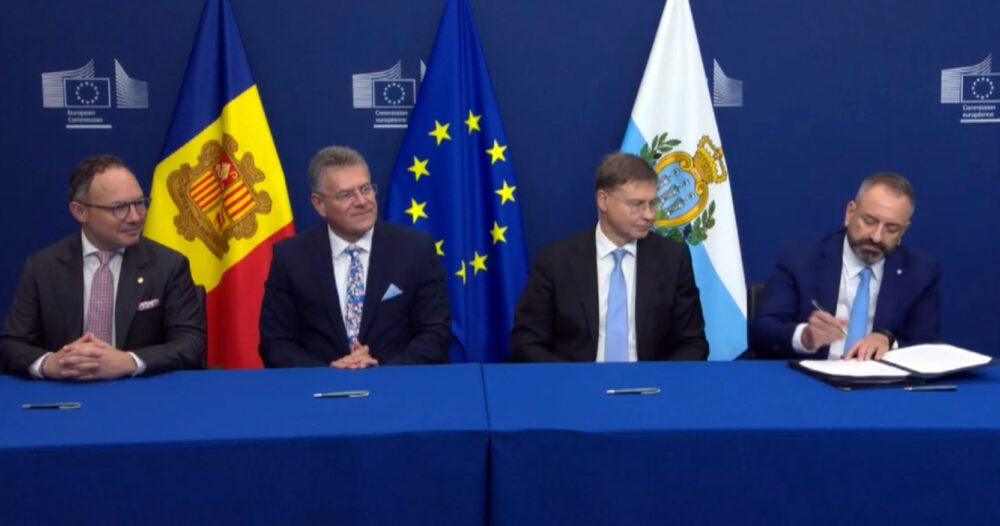
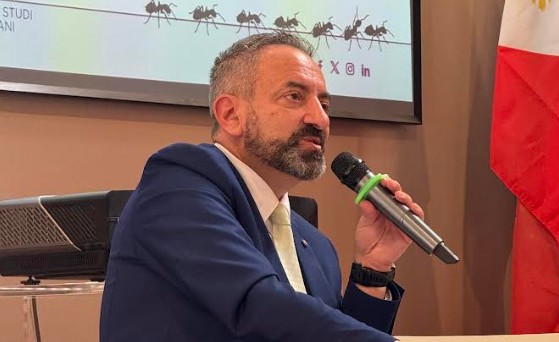
It is from this rupture that foreign secretary Luca Beccari began his account of the road leading to the association agreement with the European Union, signed in Brussels on 19 October 2026. In Monday 9 November’s session of the Foreign Affairs committee, his address placed the paradigm shift at the centre: an economy that had to look beyond its own borders and build closer ties with the European market.
“It was a transformation that led us to recognise that the San Marino which had existed until 2008 could not continue relating to the world without a complete change of paradigm.” For Beccari, meeting international standards was necessary, but not enough. The country needed to rethink how it envisioned its own development.
The secretary looked back to 2009, to the international crackdown on tax evasion, to the opening up of cooperation between states, and to the effort to get off Italy’s blacklist. These were turning points that reshaped the conditions in which San Marino’s economy operated.
Remaining closed off no longer offered the prospects it once did, making it necessary to build a different kind of relationship with Europe.
The monetary convention and the customs union allowed for some exchange, but the real goal, Beccari explained, was to go further. “What was needed instead was a partnership that would allow us to enter into a full relationship with the single market.”
From this emerged the debate over possible paths forward: keeping the status quo, applying for EU membership, joining the European Economic Area, or negotiating an association agreement. The choice fell on this last option, with the aim of gaining access to the single market while preserving San Marino’s distinctive characteristics.
Beccari traced the work of his predecessors, from the opening of dialogue with the European Commission under Antonella Mularoni, to the organisation of the negotiating team under Pasquale Valentini, through to the acceleration of talks from 2017 onward under Nicola Renzi. A journey spanning five legislatures and different governments, backed by social partners and economic organisations.
The negotiations had to reconcile the needs of San Marino, Andorra and, in the early stages, Monaco — small states, but with differing economies and requirements. Then came the slowdown caused by Covid, the resumption of talks, and the conclusion of negotiations in 2023.
For the secretary, the true significance of this choice is best measured in the everyday difficulties faced by those who work, study or run businesses across the border.
Being physically within Europe while remaining citizens and companies of a third country means facing obstacles in dealings with European institutions, structures and markets.
“This is the political meaning of the agreement: to seek a right of equivalence for San Marino’s citizens and businesses with their European counterparts.”
How much trade will grow and how many businesses will seize the new opportunities cannot yet be predicted. Beccari said so explicitly: there is no way of knowing how many San Marino companies will take part in European tenders, open branches abroad, or how many students will choose to study in another country.
“But as politicians, we have a duty to provide the tools needed to make the most of these opportunities. That is our job.” He added: “We don’t run businesses, we don’t manage companies, we don’t do families’ accounts — but we must give them the chance to have the best possible options.”
Dialogue with the business community already touches on concrete issues.
Beccari spoke of the need for ongoing meetings with industrialists and businesses, since the entry into force of the association agreement could remove obstacles and open up prospects for sectors at risk of losing market share due to European regulations.
“Above all, we need to broaden the market available to our businesses and our services.”