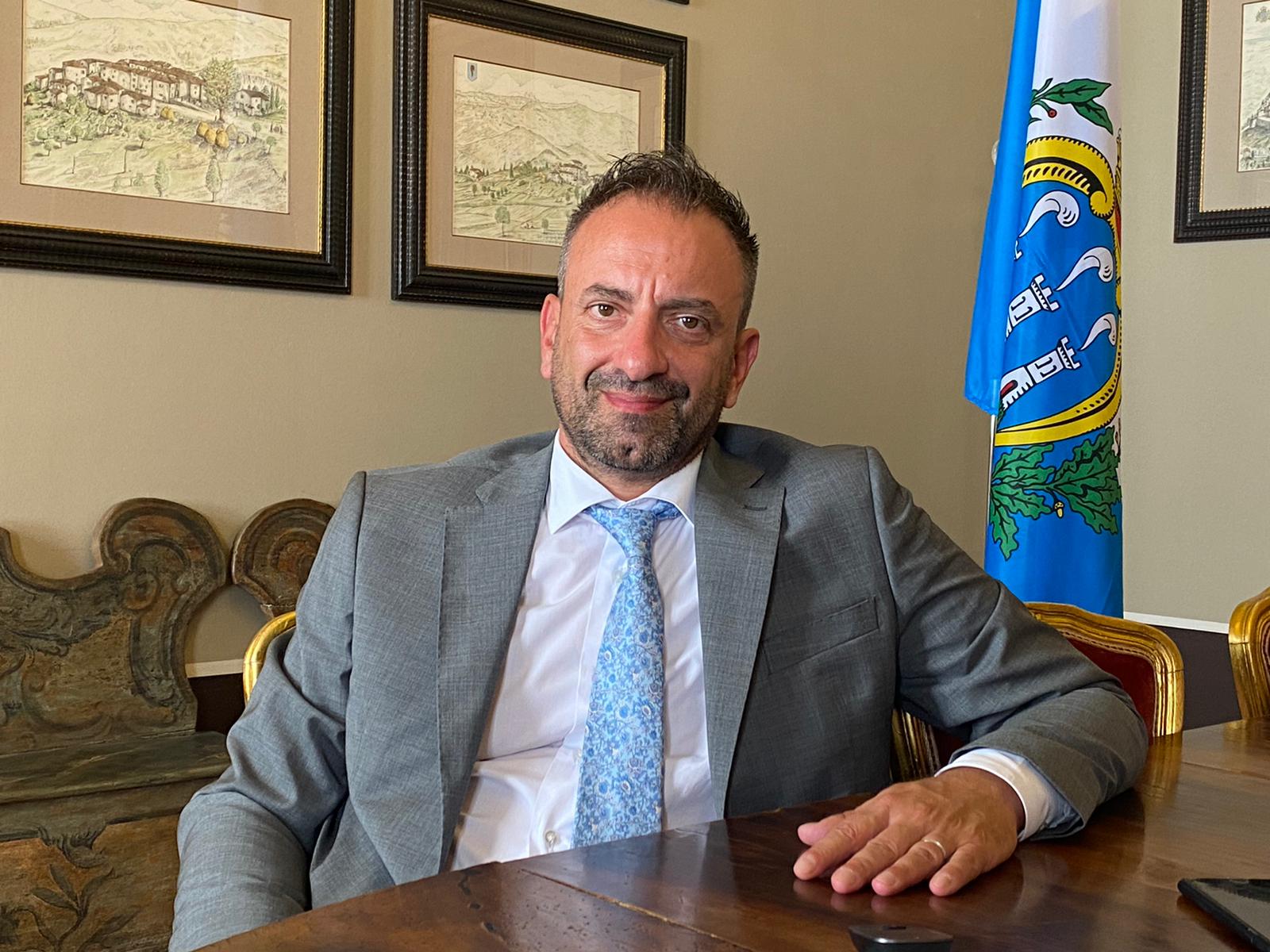
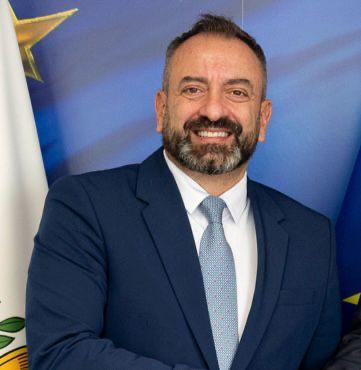
Aligning laws with European rules does not mean giving up the power to decide. That was the starting point for Foreign Affairs Secretary Luca Beccari, speaking on Friday, October 16th before the special committee on institutional reforms. With the signing of the association agreement set for October 19th just days away, discussion centred on the tools needed to transpose EU rules and on the powers that will remain with the Council.
“With the association agreement, San Marino remains a third country and retains full legislative autonomy. Our commitment is to align our legal system with the European one, which does not mean subjection.”
Beccari drew a clear line between association and membership of the European Union. He explained that the agreement is a wide-ranging international treaty, but one that does not automatically require amendments to the Declaration on the Rights of Citizens (Carta dei diritti). San Marino will need to build, through its own laws, a framework consistent with the European one, in order to allow the single market to function in the areas covered by the agreement.
The practical challenge will be organising this work without bringing the Council’s activity to a standstill. The government’s proposal is an annual law setting out in advance which procedures to use: ordinary debate for measures requiring political discussion, and delegated powers or faster tracks for more technical matters.
“Simplifying or streamlining does not mean giving up prerogatives. It is about finding a balance between not drowning in legislative work and still exercising it in full — and that is not simple.”
Under the model outlined, the choice would rest with the Council. A law on public procurement might require ordinary debate, while tyre manufacturing standards could be handled through a delegated decree, later submitted for ratification. Such planning would also help avoid last-minute requests for urgency, submitted case by case without an overview of the overall workload.
The workload is expected to peak in the first three years, particularly between the first and second. After that, according to Beccari, activity should settle into simply updating provisions already transposed. The proposal remains open to discussion with the Council’s political groups.
A separate issue is dynamic transposition — the possibility of giving effect to a European rule and automatically to its subsequent amendments as well. By contrast, transposing only the version currently in force would require a new domestic procedure for every update.
“From the point of view of regulatory simplification, this is certainly an exceptional solution, but it undeniably affects the Council’s legislative authority: in a sense, it is a limitation of its legislative capacity.”
Beccari specified that this choice is not necessary in order to launch the agreement. Among technical experts, he noted, there is no unanimous view on whether amending the Declaration on the Rights of Citizens would be required to introduce it. The issue also remains a political one: accepting a rule today does not necessarily mean endorsing every change it may undergo in future.
In his closing remarks, however, the Secretary urged lawmakers to distinguish between different areas. For technical standards, such as vehicle safety requirements, automatic updating could avoid procedural steps that add nothing to the substance of the decision. The assessment is different for sectors such as public procurement. “You always retain control over this choice — it is not the government that decides on its own what is subject to dynamic transposition.”
Another clarification concerned the sheer volume of work involved. Beccari spoke of thousands of European acts, noting that no precise count has been made, but ruled out the idea that each would need to become a separate Sammarinese law. Several provisions, he said, could be grouped into a single piece of legislation. “There isn’t necessarily a one-to-one correspondence between a European act and a Sammarinese one.”
To give councillors a concrete picture, he committed to providing a table linking European provisions to the corresponding domestic measures required. A software tool is also nearing completion to identify who is responsible for each transposition, track progress, and keep a record of the various stages involved.
Legislative autonomy nonetheless comes together with the commitments undertaken through the treaty. So what happens if San Marino fails to transpose a rule, or does so inadequately? Beccari clarified that the system applied to EU member states will not apply here: “We will not, however, find ourselves dealing with the so-called infringement procedure.”
Provision is made for attempts at a negotiated solution and, should discussion prove insufficient, recourse to the Court of Justice of the European Union, designated by the parties as the body responsible for settling disputes. The Secretary stressed its protective role for Sammarinese citizens and businesses as well, who will be able to assert the rights recognised under the agreement.
The Court’s rulings will also carry weight in domestic proceedings concerning matters covered by the agreement. Beccari offered the example of a European company excluded from a Sammarinese public tender: if the presiding judge had doubts about the compatibility of the rules applied with the agreement, they could refer the matter to the Court and would then have to take its ruling into account. The same principle would apply to a Sammarinese company involved in a dispute in a member state.
Finally, the Secretary raised the issue of the accessibility of laws. He proposed considering the recognition of legal value for consolidated texts and a consultation system allowing amendments and links to European provisions to be traced, modelled on EUR-Lex. “It’s true that ignorance of the law is no excuse, but one also cannot expect people to be able to reconstruct everything on their own.”