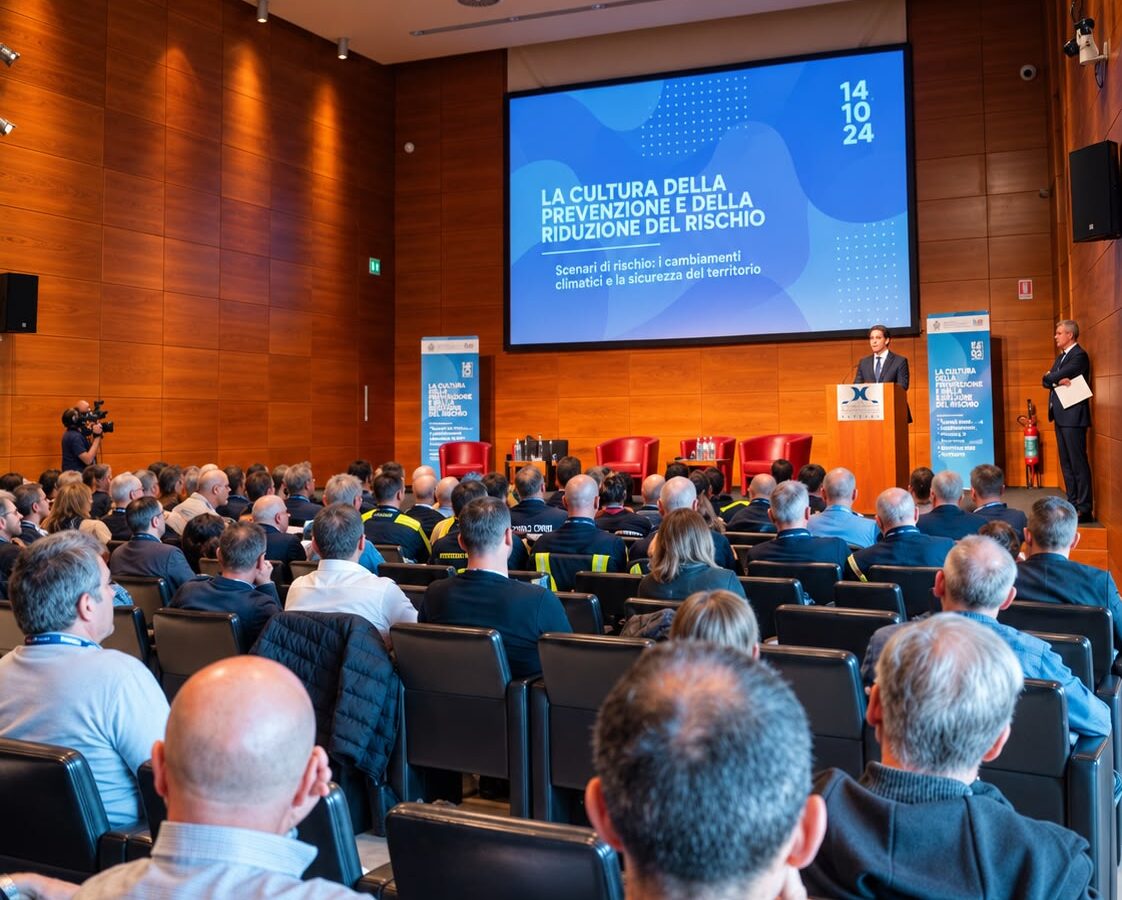
From extreme weather events to fire risks linked to photovoltaic panels and battery storage systems: how can the territory and its buildings be protected by preventing emergencies rather than simply responding once the damage has already occurred? This was the focus of today’s conference, held Wednesday, October 14, at the Kursaal Congress Centre in San Marino, titled “The culture of prevention and risk reduction.”
The initiative, promoted by the State Secretariats for Territory and for Internal Affairs with support from the Civil Protection department, brought together institutional representatives, technicians, professionals and researchers to address emerging safety challenges.
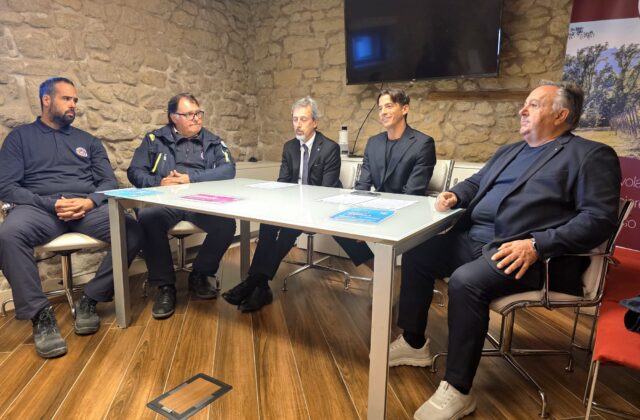
The day began with an audience granted by the Captains Regent. Alongside the two Secretaries of State, institutional greetings were delivered by Paolo Pascucci, rector of the University of San Marino, Alice Parma, regional councillor of Emilia-Romagna, Luca Serfilippi, mayor of Fano, and Pietro Falcioni, head of San Marino’s Civil Protection.
The first part of the conference focused on climate change and territorial safety. The rise in extreme weather events demands a rethinking of planning strategies, improved monitoring and early-warning systems, and stronger coordination between administrations and technical bodies.
Among the speakers were Fabio Ciciliano, head of Italy’s National Civil Protection Department, Norbert Lantschner, ambassador of the Earth Charter, Elena Toth of the University of Bologna, and Maurizio Righetti of the Free University of Bolzano. Discussions also touched on the “Build Back Better” principle – rebuilding after an emergency in ways that enhance safety and reduce future risks.
In the afternoon, attention turned to fire prevention in the era of the energy transition. Under the guidance of Fabio Dattilo, former head of Italy’s National Fire Brigade, participants examined the risks associated with photovoltaic systems, battery storage units, and the facades of new-generation buildings.
This is a matter that directly concerns the design phase as well: fire safety must be assessed from the very start, using tools and analyses capable of identifying critical issues before construction begins. Among those who spoke were Luciano Nigro, Luca Fiorentini, Piergiacomo Cancelliere, Giuseppe Amaro and Francesco Saverio Ciani.
For San Marino, the discussion will also have practical consequences for future urban planning decisions. The guidance that emerged will serve as a reference point in implementing Law 87/2026 on strategic territorial planning and in strengthening the Civil Protection system.
The State Secretariats stress the need for a shared approach involving administrations, professionals, research institutions and businesses. They note that the Republic’s small size calls for particular care in decisions affecting the territory, but can also foster more direct dialogue and faster intervention.
The goal is to make prevention a stable part of territorial planning and building design, rather than limiting it to emergency management alone.