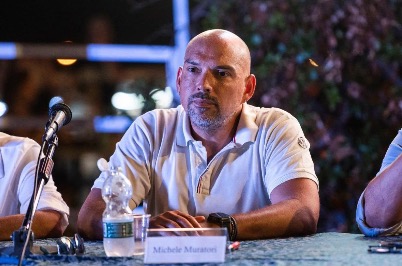
A Pact for purchasing power and productivity, paired with targeted measures against the rising cost of living. This is the proposal put forward by Gemma Cesarini, a councillor with Libera, who in a statement compares the trends in prices and household income in San Marino and calls for a shared path forward between institutions and social partners.
According to data from the National Statistics Office cited by Cesarini, consumer prices rose by roughly 17% overall between 2018 and 2025. In 2025 alone, growth stood at 2.3%, with sharper increases for certain spending categories: food and non-alcoholic beverages rose by 3.7%, meat by 6.5%, bread and cereals by 4.3%, while coffee, tea and cocoa jumped by 15.9%.
On the income side, the councillor points to the Survey on Consumption and Lifestyle of San Marino Families: in 2024, average annual household income stood at €42,995, up 2.8% compared to 2018. The comparison, she notes, requires some caveats: “Household income and individual salary are not the same thing, and this data cannot be used as a direct measure of wages. Moreover, the two income surveys used different methodologies. Still, the comparison remains significant: average household income has not grown at the same pace as the general price level.”
For Cesarini, restoring purchasing power must go hand in hand with economic growth. “That’s why simply calling for wage increases isn’t enough. Pay must recover its purchasing power, but at the same time the wealth produced by the country must also grow. We can’t just ask for wages to run faster. We need to make productivity, investment, innovation and growth run alongside wages.”
This leads to the proposal of a permanent system for monitoring and comparing prices, income, wages and productivity. The proposal does not envisage an automatic link between inflation and wages: “Not a mechanism that automatically ties prices and wages together, since that would be difficult to apply and would fail to account for the different conditions faced by businesses and sectors. Rather, a permanent system for monitoring and comparing trends in prices, income, wages and productivity.”
The stated goal is to act before imbalances become entrenched, striking a balance between protecting workers and ensuring sustainability for businesses. “If, on the other hand, businesses grow, invest and become more productive, a greater share of that value should also be able to flow back to workers. Not automatic wage indexing, but an automatic mechanism for dialogue.”
Alongside this approach, Cesarini proposes selective, temporary measures for families facing the greatest hardship. Once fully operational, the ICEE pilot scheme could help better target public resources. In the meantime, the councillor suggests using the SMaC discount card through a project called “SMaC for purchasing power”.
“During this transitional phase, SMaC could instead become a tool for directly supporting the purchasing power of families in greatest need, through an additional, temporary credit to be used at businesses that choose, on a voluntary basis, to join the ‘SMaC for purchasing power’ project,” Cesarini writes.
The measure would not involve a blanket increase in the discount but rather targeted support, to be refined as the ICEE system develops. “The goal would not be to permanently alter prices or shift new costs onto businesses, but to use an existing infrastructure to temporarily concentrate resources on the families who need them most and to support local consumption.”
The reflection ultimately extends to the demographic challenge, opportunities for young people, business investment and European integration. “The challenge is not choosing between higher wages and competitive businesses, between welfare and development, between residents and cross-border workers. We need to build a system in which these elements can reinforce one another,” the councillor concludes.