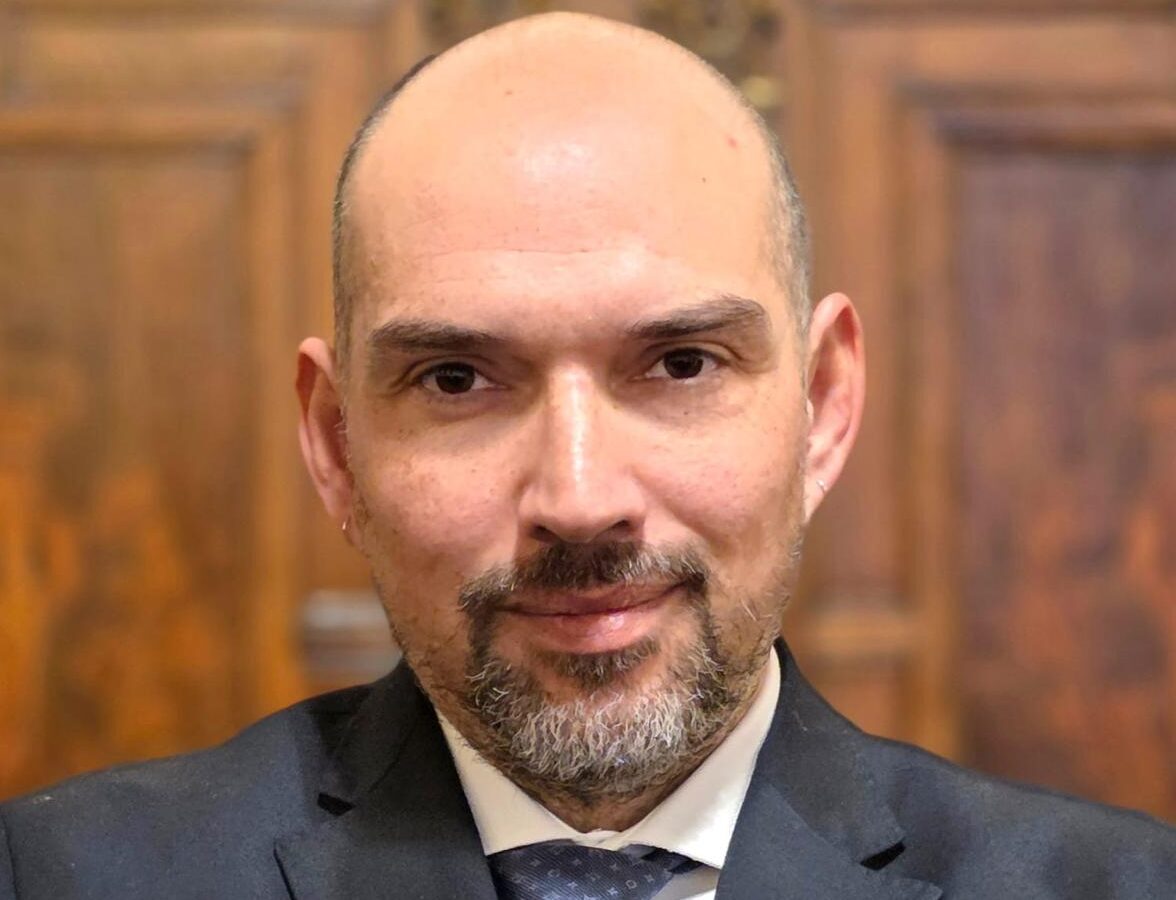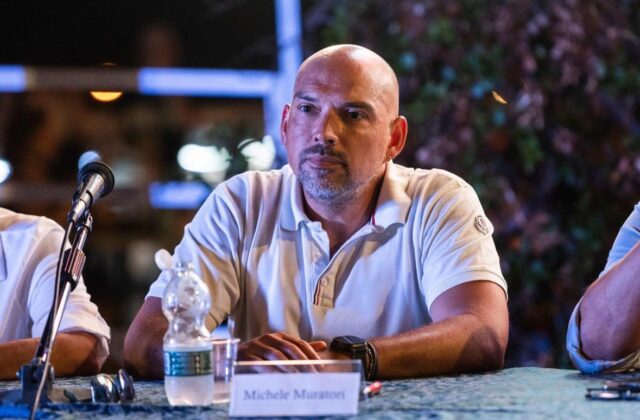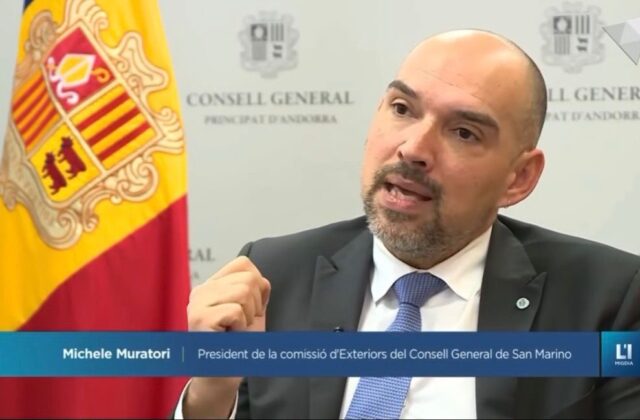
Our ongoing series continues with the in-depth column curated by Michele Muratori, leader of the Libera group, dedicated to analysing current political affairs, the main institutional challenges, and the issues of greatest interest to the Republic of San Marino.
There exists an ancient and powerful image that describes the destiny of international institutions better than any contemporary treatise on geopolitics: the myth of Sisyphus. Condemned by the gods to push an enormous boulder to the top of a mountain only to watch it inevitably roll back down, the Greek hero embodies the perpetual, frustrating, and seemingly futile effort of multilateralism.
Every year in New York, delegations from across the globe gather for the United Nations General Assembly, tasked with the monumental job of pushing the boulder of peace, dialogue, and cooperation up the mountain. And yet, just when the summit seems within reach, the rock crashes back down under the weight of new conflicts, crossed vetoes, and shows of force. This session was no exception, caught between the humanitarian and military tragedy bleeding through the Middle East — from the conflict in Gaza to the abyss opening in Lebanon — and the latent threat of open escalation, made all the more acute by the weary farewell of Secretary-General António Guterres, who opened proceedings by warning against the irreversible trajectory of a fragmented world.
A sense of historic exhaustion was palpable in the corridors of the Glass Palace, as if the giants of the earth were resigning themselves to letting the boulder fall, preferring instead the path of isolation or unilateral force.
The events of these first days illustrate this fault line vividly. The Assembly hall has become the stage for deep fractures, where diplomacy gives way to the theatre of ideological confrontation. This was clear during the highly anticipated and forceful speech by US President Donald Trump.
At the very moment the American leader began outlining the historic standoff with Tehran, threatening total retaliation in the absence of a deal, the Iranian delegation rose and walked out of the hall, leaving an empty chair to symbolise the vast gulf between the two sides. Minutes later, the same scene repeated itself with the Cuban delegation, led by Foreign Minister Bruno Rodríguez Parrilla, who walked out in open protest as soon as the White House described the island as an utterly failed state destined to collapse.
These gestures of rupture, combined with the notable absences of leaders such as Xi Jinping and Vladimir Putin, and the disruptive proposals put forward by Turkish President Erdoğan on abolishing the right of veto, show that the multilateral table is today, more than ever, a minefield.
It is precisely at this moment of crisis and dramatic walkouts that our perspective must shift, because while the great empires can afford the luxury of cynicism and empty chairs, the outlook of a small state reveals an entirely different truth.
For a reality such as San Marino, proud of its identity as the world’s oldest Republic, multilateralism is not one political option among many, nor is it a mere exercise in idealistic rhetoric. On the contrary, it is our very biography. The Titan’s thousand-year history teaches that independence and freedom are not defended through force of arms, but through the masterful exercise of diplomacy and mutual recognition. Through the centuries in which Europe was redrawn by the passage of empires and total conflicts, San Marino managed to preserve its sovereignty by weaving networks of alliances, promoting the primacy of the rule of law, and offering a safe harbour of neutrality and welcome.
From the historic letters of thanks penned by Abraham Lincoln to the complex negotiations within European and international bodies, our survival stands as living proof that the law can be stronger than cannons. Modern multilateralism is the natural evolution of this historic vocation — the instrument that allows a community without armies to be not merely a spectator of history, but a fully sovereign legal actor.
Listening in these hours to the voices of other small states present at the General Assembly — such as Cyprus, through the words of President Nikos Christodoulides, and Luxembourg, through the first address by Grand Duke Guillaume — offers an illuminating key to interpretation. Faced with a faltering system, the Cypriot leader lucidly stressed the need to build critical mass and join forces, reminding us that while we cannot coerce, we can unite.
A concept that resonated with equal intensity in the question raised by the Luxembourg head of state, who asked whether a small country can truly believe international law will protect it when force alone cannot.
From Cyprus to Luxembourg, it becomes clear how lucid and free from imperial calculation the perspective of small states truly is. And it is precisely here that space opens up for a genuine political countermove: parliamentary diplomacy. While the governments of great powers slam doors and leave chairs empty, parliaments can and must weave the more resilient fabric of a new cooperation built from the ground up.
It is no coincidence that our institutions have significantly intensified relations precisely with these states — one need only think of the motion approved by the Foreign Affairs Committee, which mandates further initiatives of dialogue with these two small states belonging to the European Union family. A direct and unfiltered dialogue between representative institutions, demonstrating how the politics of peoples can mend what muscular geopolitics continues to tear apart.
Historically small communities have no tools of military pressure, do not control the flows of global energy markets, and lack the economic power to unilaterally dictate the rules of new technologies — such as artificial intelligence, which this very session of the UN is struggling to regulate. Our only real security lies entirely in the strength and certainty of international law. And when the multilateral system enters crisis, when great powers claim the right of veto not as a tool of high responsibility but as a shield for decision-making paralysis, the world rapidly regresses towards a savage state of nature in which the strongest ends up drawing borders at the expense of the weakest.
The Glass Palace, with all its evident structural limits and consequent contradictions, remains the only place on the planet where a microphone guarantees the same dignity to every people, and where the vote of a thousand-year-old Republic carries exactly the same weight as that of a nuclear superpower.
The contemporary challenge grows even more complex because today’s threats no longer take only the form of traditional weapons, but travel through networks and shifts in our ecosystem. Climate transitions and the algorithms of modernity risk becoming the new colonisers of our century if left without shared ethical rules. For us, actively participating in these global forums means exercising the right of citizenship in the future, ensuring that tomorrow’s guidelines are not written exclusively in the laboratories of Silicon Valley or the halls of power in Beijing.
In an age of opposing blocs and exasperated polarisation, small states can and must claim a role of balance. Free from geopolitical spheres of influence to defend or imperial interests to protect, we have the institutional and moral freedom to be tireless promoters of an active neutrality. This is not a fearful indifference in the face of history’s tragedies, but the ability to offer spaces for mediation, impartiality, and dialogue where others see only non-negotiable strategic positions.
Albert Camus suggested that one must imagine Sisyphus happy, because the struggle itself towards the summit is enough to fill a man’s heart. For those who represent the institutions of a community that has made peace and the rule of law its guiding star, this is not a philosophical illusion but a precise operational mandate.
Yet we know perfectly well that the boulder of international law will roll back down again, that delegations will continue to rise in protest, and that diplomatic tables will sometimes seem to spin in place. Still, the alternative to pushing that stone once more is not impassivity — it is the resigned acceptance of chaos.
Global stability will never be born from a precarious balance of terror among superpowers, but from the courage to defend the dignity of rules and of the smallest voices. Continuing to push is not utopia — it is the only way not to be swept away.
Michele Muratori