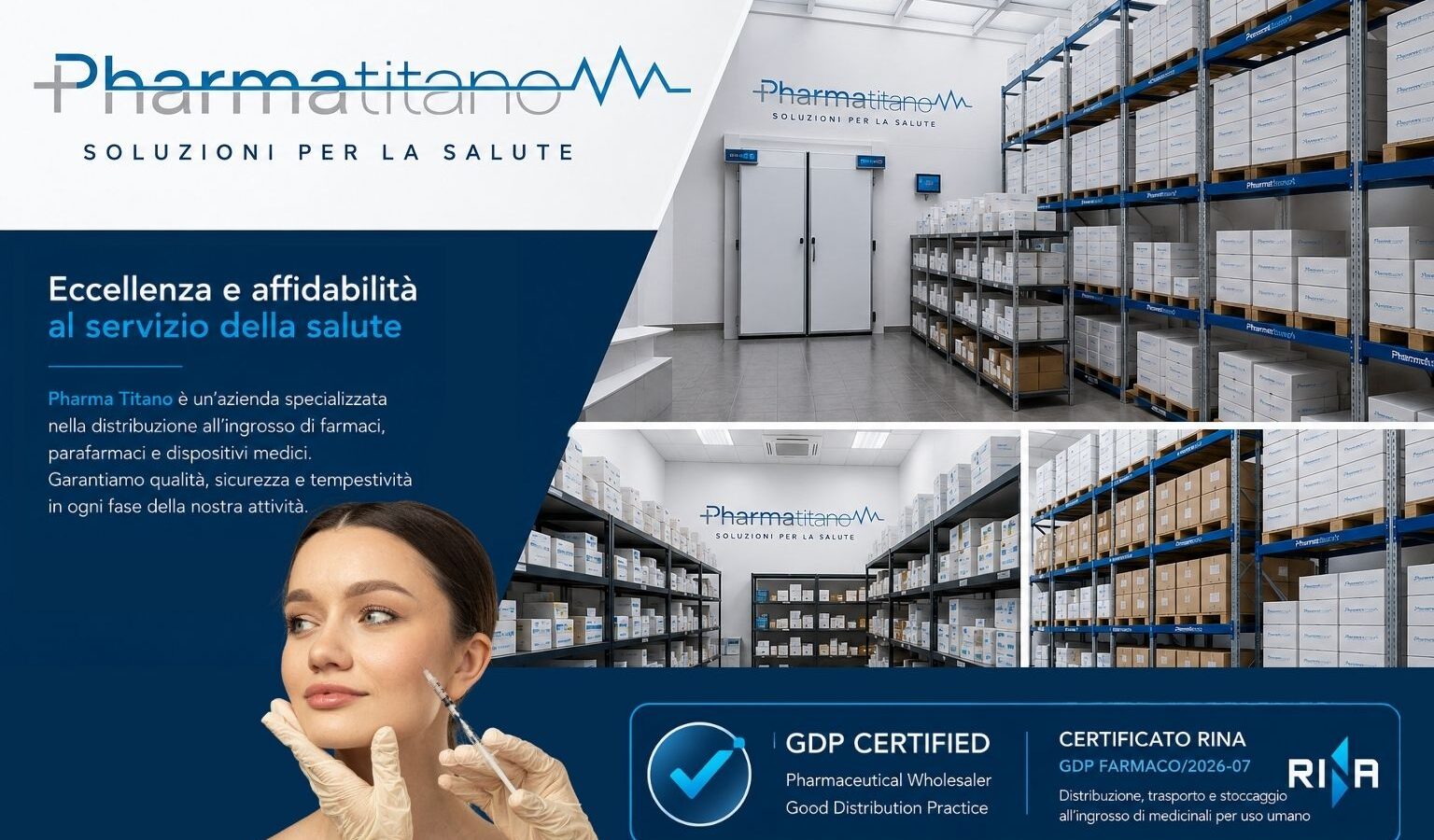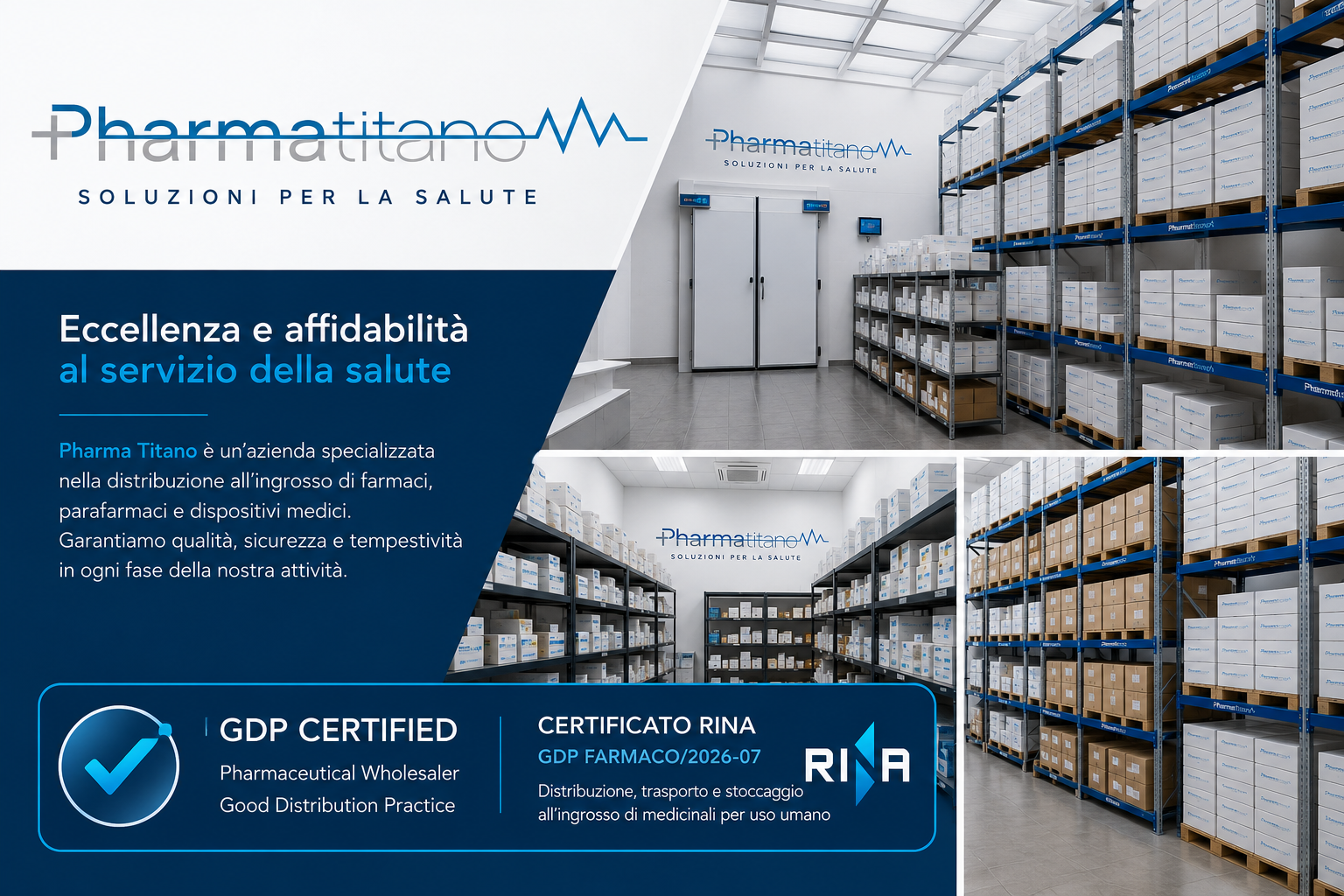
Fillers, biorevitalisation and botulinum toxins: what enters a clinic before reaching the patient, and why a San Marino company has carved out a role supplying doctors.
Behind every aesthetic medicine treatment lies a part the patient never sees: the supply chain that brings the right product to the doctor’s table. Before a syringe of filler or a vial of toxin reaches a clinic, someone has to select it, import it, and guarantee its quality and compliance. This is the ground on which Pharma Titano operates — the San Marino-based company that, in aesthetic medicine, doesn’t treat patients but supplies clinics. A distinction that sounds technical but in fact shapes its entire approach.
Not selling, but assisting
The company’s stated model isn’t that of a simple supplier. The goal, they explain, is to support the doctor across the board: understanding what the clinic needs, building a tailored project, and sourcing the best product available on the market case by case, often thanks to direct relationships with manufacturers. It’s a difference in positioning: rather than selling from a catalogue, the aim is to solve a specific need. In a highly competitive sector, it is precisely this capacity for support that becomes the real advantage.
New-generation botulinum toxins
Among the most sought-after products are botulinum toxins, which work by relaxing the muscles and producing the smoothing effect commonly associated with “botox”. The toxin typically takes two to three days to take effect, and its results last five to six months. The molecule has been engineered to further enhance the aesthetic and tensioning effect and to improve performance in terms of final outcome. Pharma Titano imports several high-profile toxins of this kind, sourced from various countries around the world.
Fillers, biorevitalisation and class 3A devices
The range, however, is broad. Alongside toxins there are fillers, based on hyaluronic acid at different molecular weights or on calcium hydroxyapatite, used to add volume and redefine facial contours: the choice between one and the other depends on the result the doctor wants to achieve. Then there are biorevitalisation treatments, peeling products, and equipment for advanced aesthetic medicine. Products used for injectable treatments, such as fillers, fall under class 3A medical devices, a category with specific requirements on quality, safety and compliance, ensuring adherence to the standards required for their use in aesthetic medicine.
The advantage of a Republic
There’s a reason this kind of work can take root on Titano. San Marino sits outside the European Union but at the heart of Europe, and this position allows it to import and distribute top-tier products — not always accessible through traditional Italian channels — and then supply clinics across the territory. All of this happens under prior authorisation from the San Marino Health Authority (Authority Sanitaria Sammarinese). Direct relationships with manufacturers complete the picture: they mean control over quality, quick response times, and the ability to deliver exactly what the doctor needs.
It’s a quiet, almost invisible supply chain that operates upstream of any single treatment. Yet it is there, in the choice of what enters a clinic, that much of the quality of what the patient ultimately receives is determined. And telling this story helps make sense of a sector the public usually only knows from the side of the results.