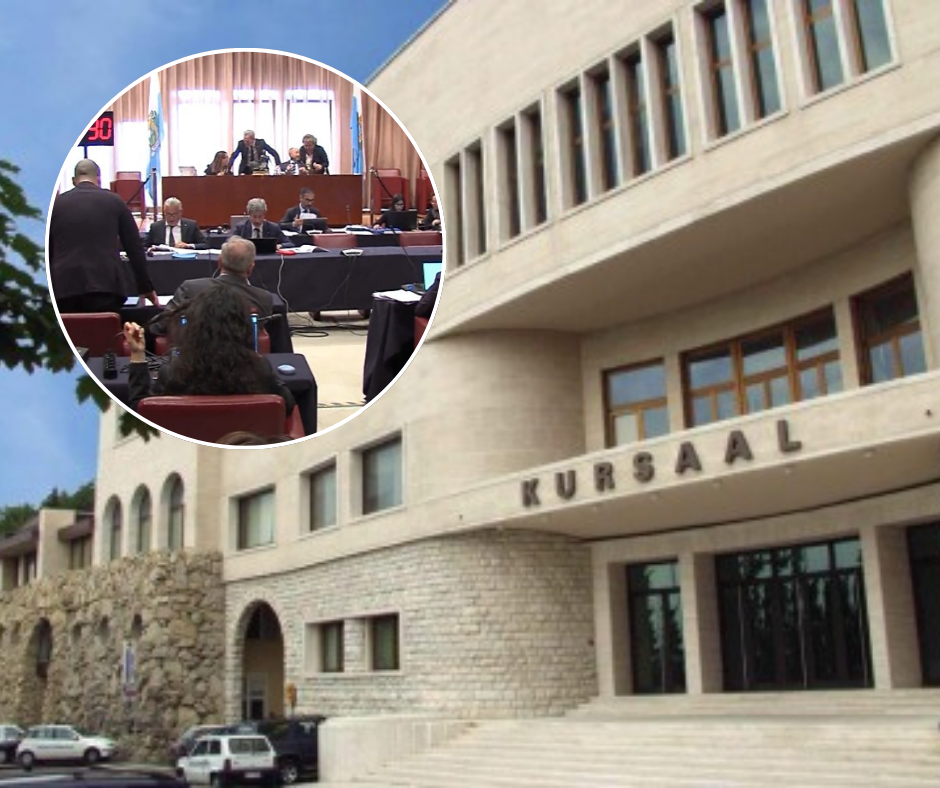
From polling stations in schools to gender changes on official documents, to the recognition of children born to same-sex families. It was above all the lengthy chapter on the Istanze d’Arengo (public petitions) that dominated the sitting of the Grand and General Council (Consiglio Grande e Generale) on Thursday, September 17, with a debate on ethical issues that revealed differing positions not only between majority and opposition, but also within the same political groups.
The first item was the most straightforward. Petition No. 53 asks to change the practice used when school classrooms are turned into polling stations. In practice, it will no longer be necessary to cover or indiscriminately remove posters, drawings and students’ work: only material that could be considered political propaganda or that might influence voters will need to be taken down. The request was accepted by the Government and approved by a majority in the Chamber.
The mood shifted with Petition No. 47, dedicated to the possibility of clearly regulating gender rectification in civil status registers and official documents for people who have undergone a gender-affirmation process. The Government gave a favorable opinion, noting that San Marino currently lacks comprehensive legislation on the matter and that such cases are handled through judicial proceedings or, where possible, by relying on rulings obtained abroad.
On this point, a large part of the Chamber acknowledged the need to update the rules, but debate grew heated over how to get there. Pdcs, Psd, Ar and part of the independents backed a motion accompanying the petition aimed at building a regulatory framework by defining the medical, health and legal aspects. Rete, however, opposed this approach, viewing the document as an additional step that could complicate implementation of the request. Michela Pelliccioni described it instead as “a genuine added value.”
The debate also touched on issues of privacy, data protection, certification of the transition process and health coverage. Views differed, but in the end Petition No. 47 was approved by a majority, as was the accompanying motion.
Even more heated was the debate on Petitions No. 48 and 49, discussed together and dedicated to same-sex families. The first concerns the registration in San Marino of birth or adoption certificates issued abroad; the second asked instead for regulation of parental responsibility and the registration of both parents in civil status registers. The Government spoke in favor of both, placing at the center the need to guarantee legal certainty for minors.
This is where political divisions became sharper. Libera and Rete supported both requests, criticizing the motion drafted by the majority as, in their view, a way of postponing a response to the petitioners’ demands. On the opposite side, speakers stressed the need to examine more closely the legal consequences, the relationship with documents issued abroad, stepchild adoption and issues linked to surrogacy. Differing views also emerged within Repubblica Futura. Despite starting from different positions, common ground remained centered on the protection of the child.
When it came to the vote, however, the two petitions met different fates. No. 48, on the registration of birth and adoption certificates issued abroad, passed by a majority. No. 49, which asked for recognition and regulation of parental responsibility and the registration of both parents in same-sex families, was instead rejected: 14 in favor, 23 against and 14 abstentions. The majority’s motion, which tasks the Government with further review and analysis before returning to the matter, was approved.
A day, then, in which the Istanze d’Arengo brought very concrete but also politically sensitive issues into the Chamber. Three requests were approved, one was rejected: the simplification of rules for polling stations in schools was approved, as was the start of a San Marino framework on gender rectification, and so was the recognition of birth and adoption certificates issued abroad. The request concerning the registration of both parents in same-sex families, however, has been halted — at least for now.