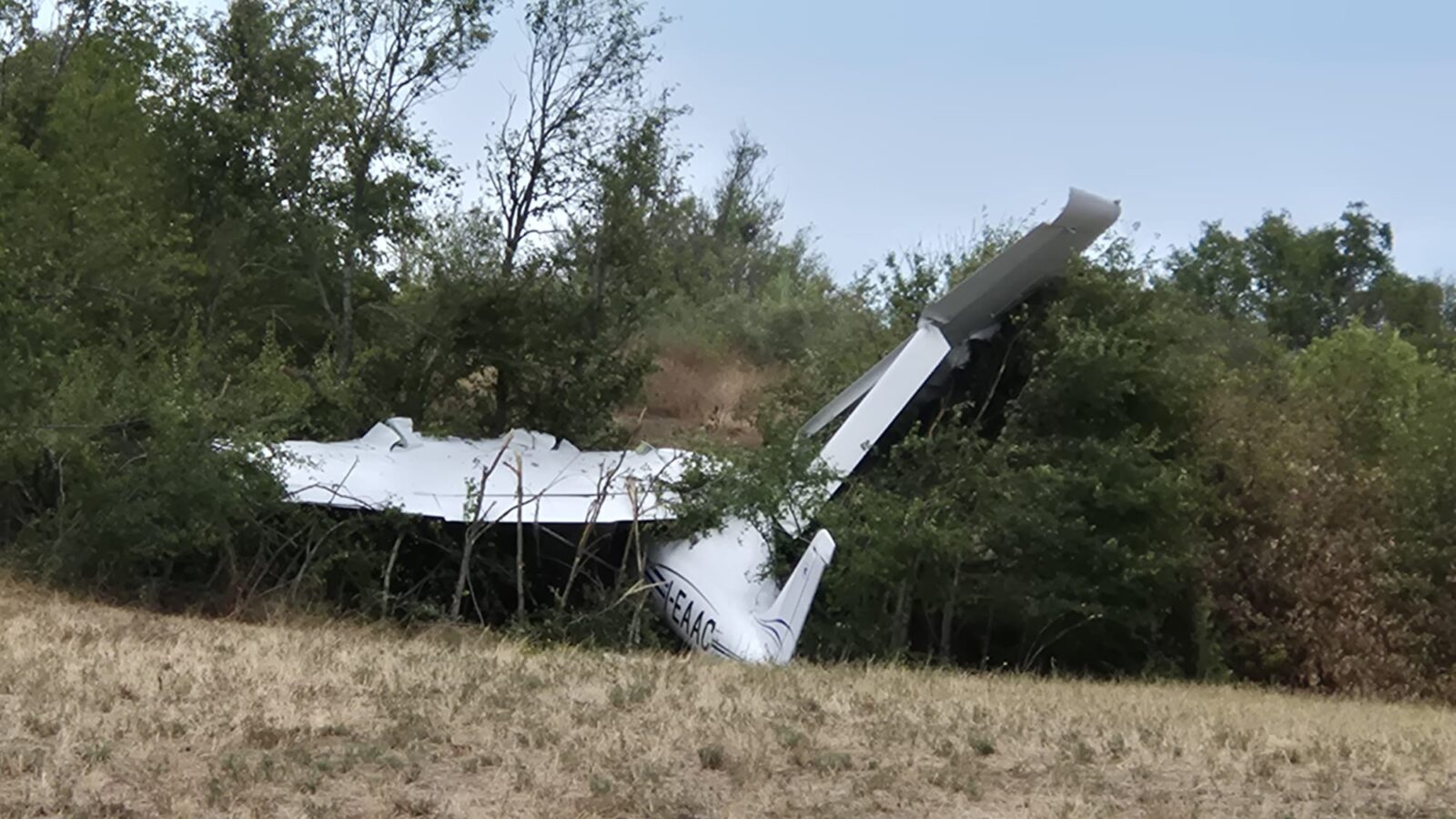
“Causes first, then solutions.” The Torraccia Civic Committee (Comitato Civico Torraccia) has spoken out on the aircraft accident that occurred on 25 August at the Torraccia airfield, where a Tecnam P2008 carrying two people was involved in an incident during landing. Fortunately, both pilots escaped unharmed.
The Committee explains that it initially chose not to take a position while awaiting the results of investigations. “No speculation, no judgments: official inquiries first, then assessments,” reads the statement issued on 1 September. The note comes after certain statements, also reported in the press, suggesting that weather conditions on 25 August had been “optimal, with no technical or operational issues” and that a longer runway could have provided greater safety margins and prevented the impact.
It is precisely on these points that the Committee raises questions. “On the day of the accident, a yellow weather alert was in effect in Emilia Romagna, with forecasts of strong gusts; we don’t know what role the wind played, but the pilots’ initial statements pointed to a possible gust during landing,” the note states. The Committee also recalls that official reports on previous accidents at Torraccia have identified tailwind as one of the relevant factors.
Attention is also drawn to the experience of those on board. “It cannot be ignored that the P2008 involved on 25 August was carrying an instructor and an already licensed pilot,” the statement continues. “While the decision to fly and land rests with the pilots, this is precisely why it’s important to understand which conditions were assessed and what safety margins were deemed sufficient.”
Another issue raised concerns the dimensions of the Torraccia runway. According to figures cited by the Committee, the Tecnam P2008 has a landing distance of roughly 382 metres under standard conditions, compared with the approximately 650 metres available at the San Marino airfield. “Real-world conditions can naturally alter these figures, but this data makes it hard to argue that the aircraft needed a longer runway, or that additional metres would necessarily have prevented the accident,” the Committee maintains.
This leads to the question posed in the statement: “If 650 metres isn’t enough, how many metres are needed to call a runway ‘safe’? 700? 900? A kilometre? Safety cannot be a matter of metres.”
According to the Committee, any potential extension and paving of the runway should also be evaluated in light of its possible consequences for airfield operations. “A longer, paved runway doesn’t just mean more space for the aircraft already using Torraccia. It could mean more traffic and access for a wider range of aircraft, including larger and heavier ones,” the statement continues. Residents believe this prospect would create a different risk profile for the surrounding areas as well.
The Committee also points to the various accidents that have occurred at Torraccia over the past twenty years, four of which are officially recorded, noting that wind has featured among the relevant factors in some cases. For this reason, it is calling for a comprehensive safety assessment of the airfield before any infrastructure work goes ahead.
“Procedures, training, maintenance, emergency management, operating criteria and aircraft compatibility with the airfield: these are the issues we residents have been asking to address for years,” the Torraccia Civic Committee concludes. “Causes first, then solutions. Because safety isn’t measured in metres, but in the ability to prevent accidents.”